

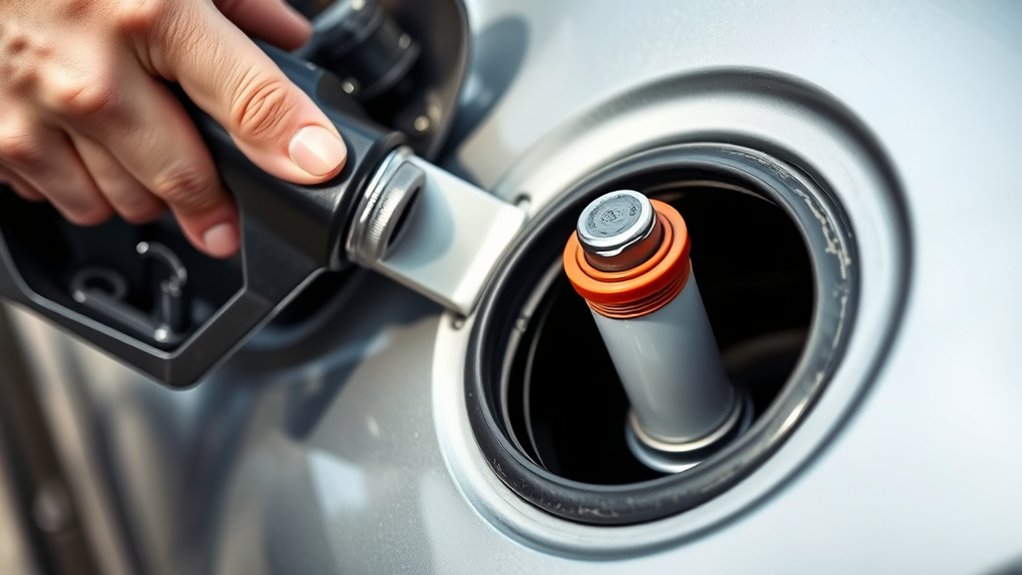
To prevent fuel filter clogs from overfilling gas in your car, it’s important to follow proper fueling habits. Overfilling your gas tank can lead to fuel flooding the charcoal canister, which causes debris buildup and eventually clogs the fuel filter.
Stopping fueling as soon as the pump clicks off automatically is a key step in avoiding this problem. Avoid topping off your tank after the pump shuts off. Filling slowly near the end helps prevent spills and reduces the risk of overfilling.
Use a fuel nozzle with a reliable automatic shutoff and never override the pump. Following these simple steps keeps your fuel system clean and efficient.
If you want to protect your engine longer, there’s more you can do to maintain your fuel filter.
Key Takeaways
- Stop fueling immediately when the pump clicks off to avoid overfilling and flooding the charcoal canister.
- Do not top off or override the pump after the automatic shutoff to prevent excess fuel entering the system.
- Fill slowly near the end of fueling to minimize spills and reduce debris washing into the fuel lines.
- Use fuel nozzles with reliable automatic shutoff features to limit overfilling risks and maintain cleaner fuel flow.
- If overfilling occurs, park safely, drain excess fuel, and replace the fuel filter to prevent clog-related engine issues.
Why Overfilling Causes Fuel Filter Clogs
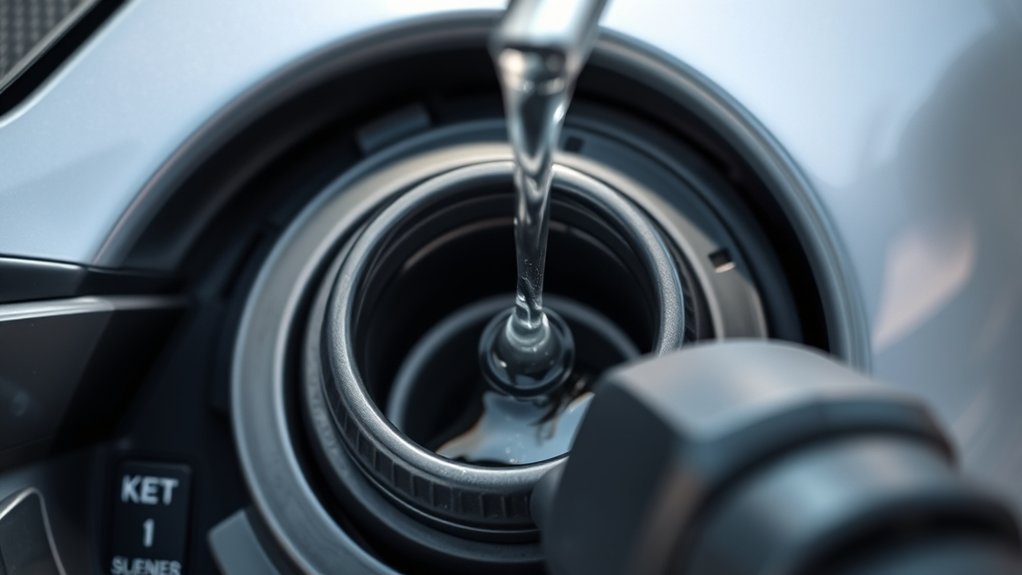
Although it might seem like topping off your tank is harmless, overfilling can actually cause fuel filter clogs. When you keep filling past the automatic shutoff, excess fuel can flood the charcoal canister, which is part of your vehicle’s evaporative emission control system. This flooding washes fuel vapor residue and debris into the fuel lines.
As a result, your fuel filter has to trap more contaminants than usual, leading to quicker buildup and blockages. Over time, this clogs the filter and restricts fuel flow to the engine. You might not notice the damage immediately, but repeated overfilling puts extra strain on your filter, reducing its efficiency and lifespan.
How Fuel Filters Protect Your Engine
Because your engine relies on clean fuel to run smoothly, the fuel filter plays an essential role in protecting it from harmful contaminants. It traps dirt, rust, and debris that enter the fuel tank, preventing them from reaching the engine’s sensitive components.
By filtering out these particles, the fuel filter guarantees that fuel injectors and carburetors work efficiently, avoiding blockages that could reduce performance or cause damage. Without a properly functioning fuel filter, contaminants can cause engine misfires, poor acceleration, and increased wear.
Keeping your fuel filter clean and clear helps maintain fuel flow and engine reliability. So, by understanding how fuel filters protect your engine, you can see why regular maintenance is indispensable to avoid costly repairs and keep your car running at its best.
Signs Your Fuel Filter Is Clogged From Overfilling
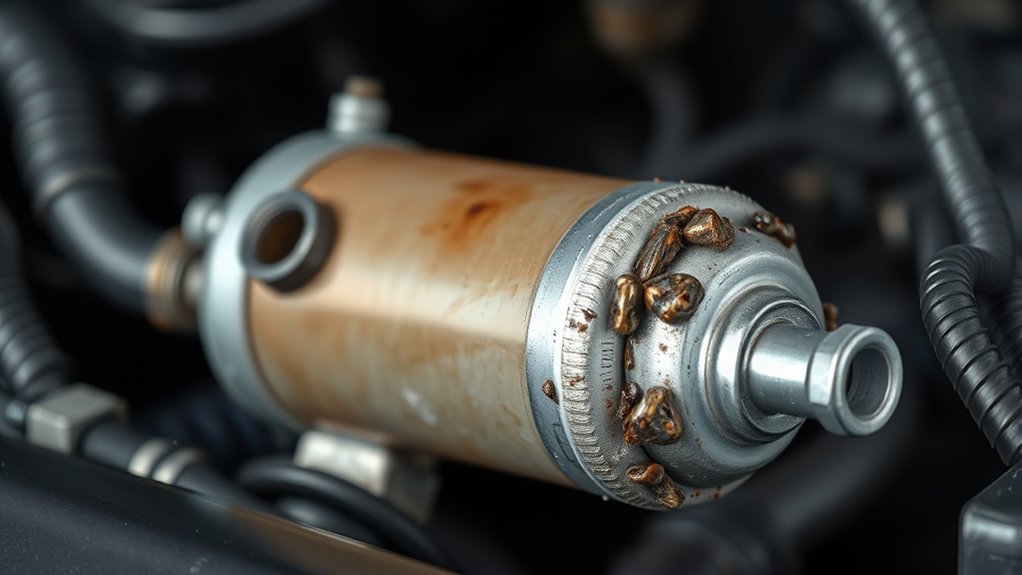
When your fuel filter traps dirt and debris, it can eventually become clogged, especially if your fuel tank is overfilled. This overfilling pushes contaminants into the filter, making it harder for fuel to flow smoothly. You’ll notice some clear signs that your filter needs attention.
- Engine Hesitation: Your car may hesitate or jerk when accelerating because the clogged filter restricts fuel flow.
- Reduced Fuel Efficiency: A clogged filter forces the engine to work harder, causing you to use more gas than usual.
- Difficulty Starting: If your fuel filter is clogged, your engine might struggle to start or stall shortly after ignition.
Recognizing these signs early helps you avoid bigger problems and keeps your car running efficiently.
What Happens If You Ignore a Clogged Fuel Filter?
If you ignore a clogged fuel filter, you’ll notice your engine struggling and losing power. Your fuel consumption will rise as the engine works harder to compensate.
Over time, this neglect can lead to serious engine damage that’s costly to fix.
Engine Performance Issues
Ignoring a clogged fuel filter can quickly lead to noticeable engine performance issues. When your fuel filter is blocked, your engine struggles to get the fuel it needs, which causes several problems:
- Reduced Power: Your engine won’t run as smoothly or accelerate properly because it’s starved of fuel.
- Stalling: You might experience sudden engine stalls, especially under load or at idle, as fuel delivery becomes inconsistent.
- Rough Idling: The engine can run unevenly or vibrate due to irregular fuel flow, making your driving experience uncomfortable.
If you notice these symptoms, don’t overlook them. Addressing a clogged fuel filter promptly ensures your engine runs efficiently and prevents more severe damage down the road.
Increased Fuel Consumption
Engine performance issues caused by a clogged fuel filter often come with another hidden consequence: increased fuel consumption. When your fuel filter restricts flow, your engine struggles to get the right fuel-air mixture. To compensate, your car’s system injects more fuel, thinking it needs to boost power.
This wastes gas and lowers your miles per gallon. You’ll notice your fuel gauge dropping faster than usual, which means more stops at the pump and higher costs. Ignoring this problem only makes your car work harder and consume more fuel over time.
Potential Engine Damage
When you let a clogged fuel filter go untreated, your vehicle’s essential components start to suffer. Ignoring the problem can lead to serious engine damage, costing you time and money.
Here’s what happens if you don’t address a clogged fuel filter:
- Engine Misfires: Restricted fuel flow causes inconsistent combustion, leading to misfires and rough running.
- Fuel Pump Strain: The pump works harder to push fuel through the blockage, increasing wear and risking premature failure.
- Reduced Engine Performance: Insufficient fuel supply lowers power output and responsiveness, making your car sluggish.
How Much Fuel Should You Actually Put in Your Tank?
You should fill your tank close to its ideal capacity without overfilling to avoid fuel spills and pressure issues. Overfilling can cause fuel to expand and damage the filter or other components.
Knowing the right amount to put in helps keep your fuel system running smoothly and prevents clogs.
Optimal Fuel Tank Capacity
Choosing the right amount of fuel to fill your tank can make a significant difference in preventing fuel filter clogs. You want to avoid filling the tank beyond the recommended capacity to keep fuel flowing smoothly and reduce sediment buildup.
Here’s how to determine the optimal fuel tank capacity for your car:
- Check your owner’s manual – It lists the exact tank capacity and recommended fill levels.
- Stop at the first click – The fuel pump nozzle clicks off when your tank reaches its designed capacity; don’t override it.
- Leave some space – Avoid topping off after the pump clicks to prevent fuel overflow and keep the fuel filter clear.
Risks of Overfilling
Although it might seem convenient to fill your tank completely, overfilling can cause serious issues like fuel leaks, increased pressure on the fuel system, and clogged filters. When you top off your tank beyond its recommended capacity, excess fuel can expand and spill, damaging your car’s paint and posing fire hazards.
It also puts extra strain on the vapor recovery system, which can lead to malfunction or failure. This strain often results in fuel filter clogs, reducing engine performance and causing costly repairs. To avoid these problems, stop filling once the pump automatically clicks off.
This guarantees you add just enough fuel without risking overfill-related damage. By fueling responsibly, you protect your car’s components and keep your ride running smoothly.
How to Avoid Overfilling When Refueling
When refueling, taking care not to overfill your tank helps prevent fuel from spilling into the filter and clogging it. To avoid overfilling, follow these simple steps:
- Listen for the click: Most fuel pumps automatically stop when your tank is full. Pay attention and stop pumping immediately when you hear the click sound.
- Avoid topping off: Don’t add extra fuel after the pump shuts off. Topping off can cause fuel to overflow and damage your fuel system.
- Fill slowly near the end: When your tank is almost full, reduce the pump speed to prevent sudden fuel surges that may cause spills.
Using the Right Fuel Nozzle to Prevent Fuel Filter Clogs
Paying attention to the fuel nozzle you use can also help keep your fuel filter clear. Not all nozzles are created equal—some deliver fuel too quickly or lack automatic shutoff features, increasing the risk of overfilling and contaminant buildup. Choose a nozzle with a reliable automatic shutoff to prevent fuel from spilling and entering your fuel filter unnecessarily.
Also, use the correct nozzle size designed for your vehicle’s fuel port to ensure a proper seal and reduce vapor escape. Avoid nozzles that cause splashing or excessive turbulence, as these can introduce debris into the fuel system. By selecting the right fuel nozzle, you minimize contamination risks, promote cleaner fuel flow, and reduce the chances of clogs in your fuel filter.
How Often Should You Replace Your Fuel Filter?
To keep your engine running smoothly, you need to replace your fuel filter at regular intervals. A clogged filter restricts fuel flow, causing poor performance or engine damage. Here’s how often you should replace it:
- Check your owner’s manual – Most manufacturers recommend replacing the fuel filter every 20,000 to 40,000 miles. Follow their specific schedule for your car model.
- Consider driving conditions – Frequent stop-and-go traffic, dusty roads, or poor-quality fuel may require more frequent replacements.
- Watch for symptoms – Hesitation, stalling, or difficulty starting may signal a clogged filter, even if you haven’t hit the mileage mark.
Replacing your fuel filter on time prevents clogs and keeps your fuel system efficient. Don’t wait until problems arise!
How Can You Clean Your Fuel System to Prevent Fuel Filter Clogs?
Although replacing your fuel filter regularly is essential, cleaning your fuel system can further prevent clogs and improve performance. Start by using a high-quality fuel system cleaner added to your gas tank. This breaks down deposits in the fuel lines, injectors, and filter.
Run the cleaner through the system as directed—usually every few thousand miles. Additionally, consider having a professional perform a fuel injection cleaning service if you notice decreased power or rough idling. Regularly inspect and replace your fuel cap’s seal to prevent contaminants.
Keeping your fuel tank clean by avoiding low fuel levels also helps minimize sediment buildup. By maintaining a clean fuel system, you reduce the risk of clogs and keep your engine running smoothly and efficiently.
How to Check Your Fuel Filter for Early Clogs
You’ll want to watch for signs like engine hesitation or reduced power, which could mean your fuel filter is starting to clog. Grab a few basic tools like wrenches and a fuel pressure gauge before you begin.
Then, follow a simple step-by-step process to inspect the filter and catch any blockages early.
Signs of Fuel Filter Blockage
When your engine starts sputtering or losing power, it could mean your fuel filter is clogged. Catching these signs early helps you avoid bigger problems. Here are three clear indicators to watch for:
- Engine hesitation or misfires: A blocked filter restricts fuel flow, causing your engine to hesitate or misfire during acceleration.
- Difficulty starting your car: If fuel can’t reach the engine easily, your car may crank longer or struggle to start.
- Frequent stalling: Inconsistent fuel supply due to a clogged filter can make your engine stall unexpectedly, especially at idle.
If you notice any of these symptoms, it’s time to check your fuel filter to maintain smooth engine performance and prevent costly repairs.
Tools Needed for Inspection
Noticing symptoms like engine hesitation or stalling means it’s time to inspect your fuel filter. To do this effectively, you’ll need a few essential tools. Start with a basic wrench set to loosen fuel line fittings safely.
A fuel pressure gauge helps you measure fuel flow, indicating if the filter is clogged. Have a container ready to catch any spilled fuel, preventing mess and hazards. Safety gloves and goggles protect you from fuel exposure.
A flashlight ensures you can clearly see the filter, especially in tight or dimly lit spaces. Finally, keep some rags handy to clean up spills quickly. Having these tools ready makes your inspection smoother and safer, helping you catch clogs before they cause bigger problems.
Step-by-Step Checking Process
Before diving into the fuel filter inspection, make sure your engine is cool and the vehicle is parked on a flat surface. This guarantees safety and accurate assessment.
Here’s how to check your fuel filter for early clogs:
- Locate the fuel filter, typically along the fuel line between the tank and engine. Use your vehicle’s manual if unsure.
- Disconnect the fuel lines carefully, catching any fuel that may spill. Inspect the filter for dirt, rust, or discoloration.
- Reconnect the lines and start the engine. If it sputters or stalls, the filter may be clogged and needs replacement.
Regular checks like this help prevent fuel delivery issues and keep your engine running smoothly.
What Should You Do If Your Fuel Filter Is Clogged From Overfilling?
If you’ve overfilled your fuel tank and suspect a clogged fuel filter, acting quickly can prevent further damage to your engine. First, stop using the car and park it in a safe area. Check for symptoms like engine sputtering or stalling.
Next, drain any excess fuel if possible to reduce pressure on the filter. Then, inspect the fuel filter for visible debris or contamination. If you’re comfortable, replace the clogged filter yourself following your vehicle’s manual instructions.
If not, take your car to a trusted mechanic who can clean or replace the filter properly. Avoid running the engine until the issue is fixed to prevent strain on fuel pumps or injectors. Prompt action will help restore fuel flow and protect your engine’s lifespan.
Easy Maintenance Tips to Keep Your Fuel Flowing
To keep your fuel system running smoothly, you need to perform regular maintenance that prevents clogs and guarantees consistent fuel flow. By staying proactive, you avoid costly repairs and enhance your car’s performance.
Here are three easy maintenance tips to keep your fuel flowing:
- Use Quality Fuel: Always fill up with fuel from reputable stations to reduce contaminants that clog filters.
- Replace Fuel Filters Regularly: Follow your car manufacturer’s recommended schedule to swap out filters before they clog.
- Keep Your Fuel Tank Clean: Avoid running on near-empty fuel as sediment at the tank bottom can enter the filter and cause blockages.
Stick to these habits, and your fuel system will stay clean and efficient for the long haul.
When to Seek Professional Help for Fuel System Issues
Although regular maintenance can prevent most fuel system problems, some issues require professional attention to avoid further damage. If your car shows persistent symptoms like rough idling, difficulty starting, or sudden power loss, it’s time to see a mechanic.
Also, if you notice fuel odors, leaks, or warning lights on your dashboard, don’t wait. Attempting repairs without proper tools and expertise can worsen fuel filter clogs or damage other components.
A professional can accurately diagnose and fix fuel system issues, ensuring your car runs smoothly and safely. Remember, timely intervention prevents costly repairs down the road, so trust experts when problems go beyond basic maintenance.
Don’t hesitate to schedule a service when in doubt.
Frequently Asked Questions
Can Certain Types of Fuel Cause More Filter Clogs Than Others?
Yes, certain fuels, especially those with impurities or ethanol blends, can clog your fuel filter more quickly.
You’ll want to use high-quality, clean fuel to keep your filter clear and your car running smoothly.
Does Driving Style Affect the Likelihood of Fuel Filter Clogs?
Think of your fuel filter like a coffee sieve—if you rush and dump grounds too fast, it clogs. Yes, aggressive driving can stir up debris, increasing clog risk.
Are Fuel Additives Effective in Preventing Filter Clogs?
Yes, fuel additives can help prevent filter clogs by cleaning deposits and improving fuel flow. You’ll want to choose quality additives and use them regularly to keep your fuel system running smoothly and avoid buildup issues.
How Does Temperature Impact Fuel Filter Performance?
Like a stubborn winter frost, cold temperatures thicken fuel, making your filter work harder. You’ll notice slower flow and possible clogs, so keeping fuel warm helps your filter perform smoothly and keeps your car running strong.
Can Fuel Filter Clogs Damage Other Car Components?
Yes, clogged fuel filters can damage other components like the fuel pump and injectors by restricting fuel flow. You’ll want to replace filters regularly to avoid costly repairs and keep your engine running smoothly.
Conclusion
Now that you know how overfilling can clog your fuel filter, you’re ready to keep your engine running smoothly—no need to channel your inner horse-and-buggy driver! Stick to proper fueling habits, watch for clog signs, and perform regular maintenance.
If things get tricky, don’t hesitate to call a professional. Taking these simple steps prevents costly repairs and keeps your car humming down the road with ease.
Your fuel filter—and your ride—will thank you! Remember, preventing fuel filter clogs from overfilling gas is key to maintaining optimal engine performance and extending your vehicle’s life.

