

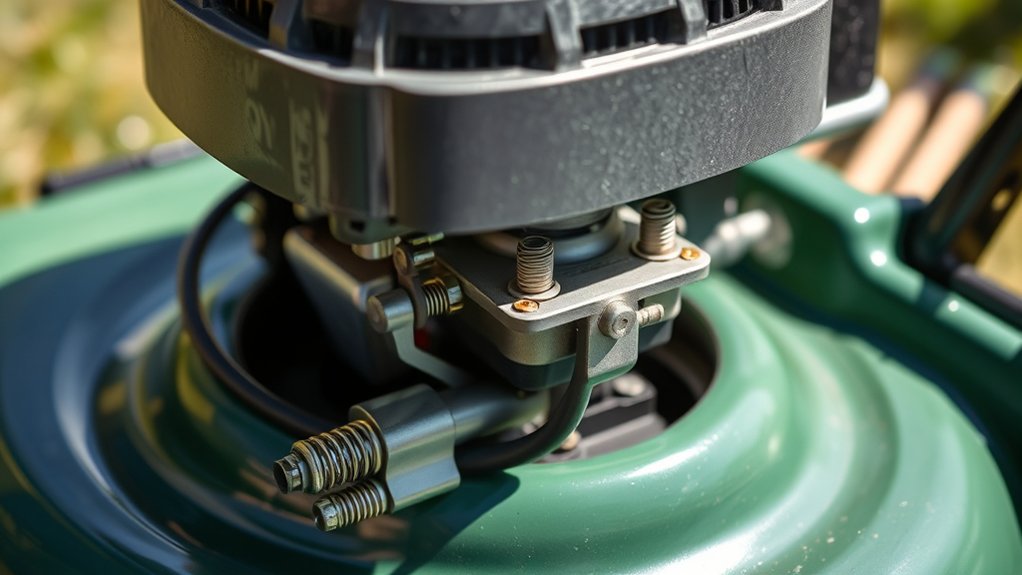
You can locate the carburetor on your lawn mower by finding a small metal box connected to the fuel line and air filter, usually near the engine. The carburetor is a crucial component that mixes air and fuel to power the engine efficiently. Knowing where the carburetor is helps with proper maintenance and troubleshooting.
On push mowers, look by the engine’s side near the air filter. For riding mowers, check under the fuel tank or hood.
The carburetor is often rectangular or square, with visible screws and linkages.
If you want to guarantee proper maintenance or identify issues, there’s more important info ahead. Understanding the carburetor’s location is the first step to keeping your lawn mower running smoothly.
Key Takeaways
- The carburetor is a small metal box connected to the fuel line and air filter near the engine.
- On push mowers, look near the engine’s side close to the air filter for the carburetor.
- On riding mowers, the carburetor is typically under or near the fuel tank, mounted on the engine’s side or front.
- Follow the fuel line and air intake pathways to trace the carburetor’s location.
- Look for visible screws, throttle linkages, and a rectangular or square metal housing as visual clues.
How to Identify the Carburetor on Your Lawn Mower
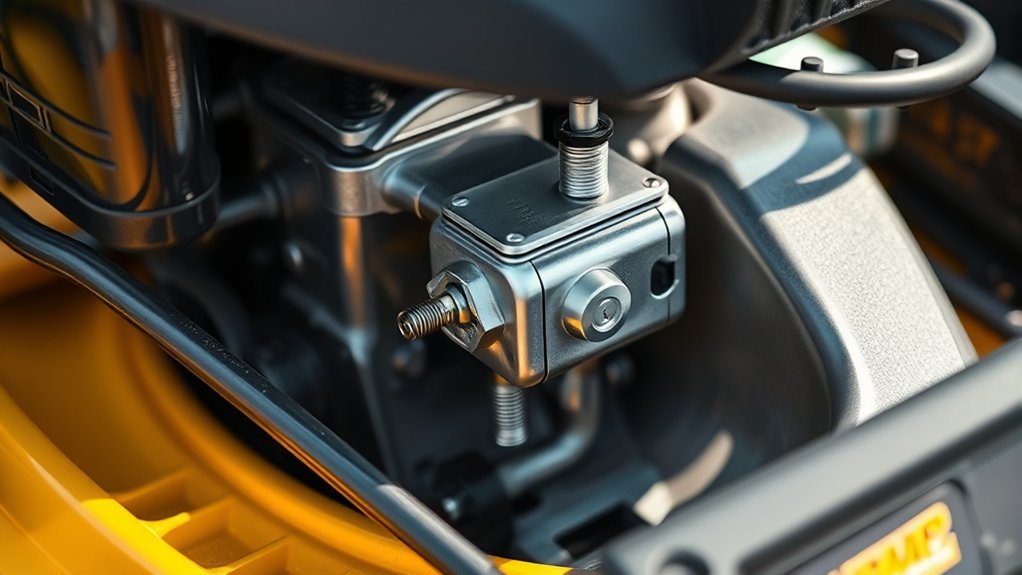
How can you quickly spot the carburetor on your lawn mower? Look for a small, box-like metal part attached near the engine. It usually has a fuel line connected to it and an air filter mounted on or beside it.
The carburetor mixes air and fuel, so you’ll find it between the air filter and the engine intake. Its shape is often rectangular or square, with visible screws and linkages controlling fuel flow. If you trace the fuel line from the gas tank, it’ll lead you right to the carburetor.
Identifying it this way saves time and helps you understand where fuel enters the engine. Once you spot this part, you’ll know exactly where to focus when maintaining or troubleshooting your mower.
Carburetor Location on Different Mower Types
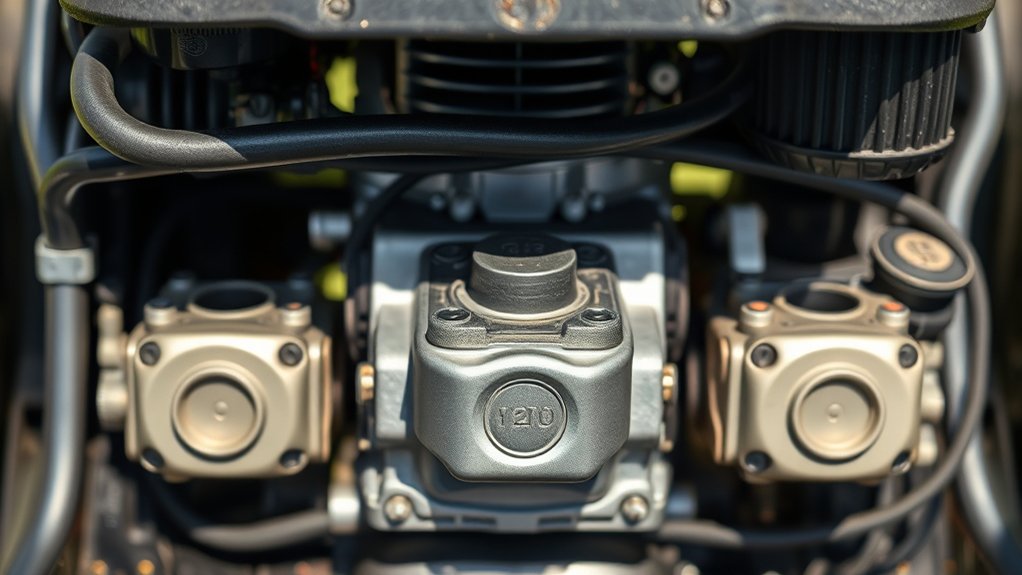
You’ll find the carburetor in different spots depending on your mower type. On push mowers, it’s usually near the engine’s side, while riding mowers have it tucked under the seat or hood.
String trimmers have smaller carburetors located close to the engine’s base for easy access.
Push Mower Carburetor Placement
Although push mowers vary in design, their carburetors are typically found near the engine’s center, attached directly to the intake manifold. When you look at your mower’s engine, you’ll usually spot the carburetor mounted on the side or front, connected to the air filter housing. It’s a small, boxy component with fuel lines running into it, responsible for mixing air and fuel before combustion.
You might need to remove the air filter cover to get a clear view. Since push mowers prioritize compactness, the carburetor sits in an accessible spot for maintenance but remains protected from debris. By locating it near the engine’s core, you can easily perform adjustments or cleanings when your mower runs rough or stalls.
Riding Mower Carburetor Location
Push mower carburetors are usually easy to spot near the engine’s center, but riding mowers have a different setup due to their larger size and more complex engines. On a riding mower, you’ll typically find the carburetor mounted on the side or front of the engine, often beneath an air filter housing.
Since riding mowers have bigger engines, the carburetor is usually more enclosed to protect it from debris and weather. To locate it, open the mower’s hood and look for a metal or plastic cover connected to the fuel line and throttle linkage.
Identifying it might take a little patience, but once you spot the air intake and fuel line, you’re right by the carburetor. This position helps the mower maintain efficient fuel delivery during operation.
String Trimmer Carburetor Position
Where exactly is the carburetor on a string trimmer? Unlike larger mowers, the carburetor on a string trimmer is typically mounted close to the engine, near the air filter housing. You’ll usually find it tucked between the fuel tank and the engine block, connected by fuel lines.
Because string trimmers have compact engines, the carburetor’s position is more accessible but smaller in size. When inspecting or servicing it, you’ll notice it’s often attached to the side of the engine with a few screws. Knowing this location helps you clean or adjust the carburetor without disassembling much.
Just follow the fuel line from the tank, and you’ll spot it quickly. This setup differs from riding mowers, where the carburetor is bulkier and more hidden.
Tools You Need to Access and Inspect the Carburetor
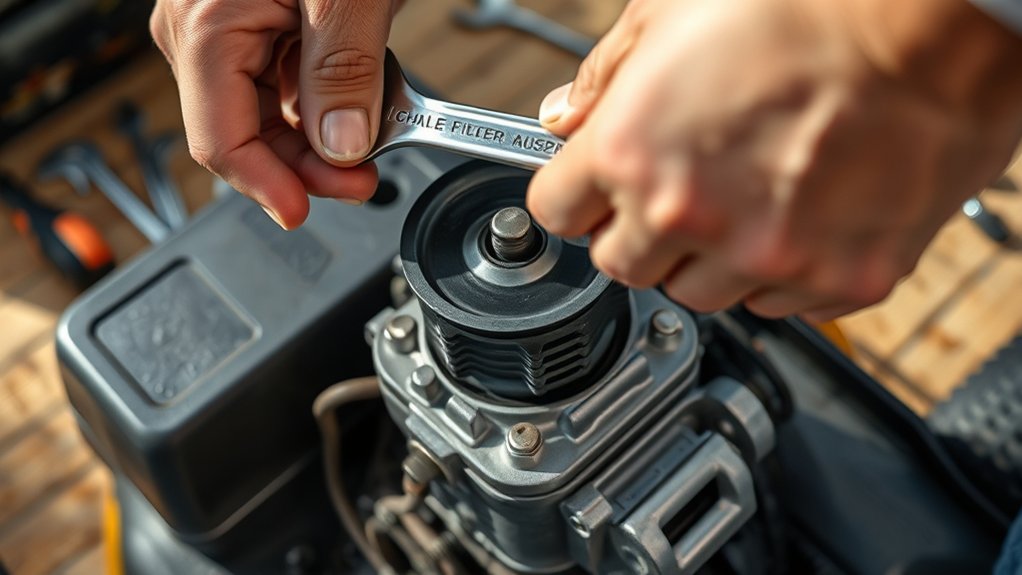
Before you start inspecting the carburetor, you’ll need a few essential tools to make the process easier and safer. Having the right tools on hand guarantees you can access tight spaces and handle small parts without damage.
Here’s a quick list of what you’ll need:
| Tool | Purpose | Tip |
|---|---|---|
| Screwdriver Set | Remove screws and covers | Use magnetic tips for ease |
| Wrench or Socket | Loosen bolts | Match size to mower bolts |
| Cleaning Brush | Clear dirt and debris | Choose a soft-bristle type |
With these tools ready, you’ll be well-prepared to access and inspect your mower’s carburetor efficiently. Don’t forget to work in a clean, well-lit area for better visibility.
How to Remove the Air Filter Cover to Access the Carburetor
You’ll find the air filter cover located near the carburetor, usually on the side of the engine. Grab a screwdriver or wrench, depending on your mower’s model, to remove the cover screws.
Follow these simple steps to carefully take off the cover and reveal the carburetor underneath.
Identify Air Filter Location
How can you quickly spot the air filter on your lawn mower? Look for a rectangular or round plastic or metal cover attached to the side or top of the engine. This cover usually houses the air filter inside.
It’s often secured with clips, screws, or a wing nut, making it easy to remove. The air filter prevents dirt and debris from entering the carburetor, so it’s located close to it. Once you’ve found the cover, you can prepare to remove it to access the carburetor underneath.
Keep in mind the position might vary slightly depending on your mower’s brand and model, but it’s almost always near the engine’s intake area. Identifying this cover is your first step to accessing the carburetor safely.
Tools Needed For Removal
Although removing the air filter cover is usually straightforward, having the right tools on hand will make the process quicker and safer. You’ll mainly need basic hand tools designed for small engine maintenance. Keep these ready before you start.
| Tool | Purpose | Tips |
|---|---|---|
| Screwdriver | Remove screws holding cover | Use correct size & type |
| Socket wrench | For bolts securing cover | Select appropriate socket size |
| Pliers | Grip and remove clips | Use needle-nose for tight spots |
| Clean cloth | Wipe dirt and debris | Prevent dirt falling inside |
| Work gloves | Protect your hands | Wear to avoid cuts and grime |
Gather these, and you’ll be set to access the carburetor efficiently without damaging any parts.
Step-by-Step Cover Removal
Before you start removing the air filter cover, make certain the mower is turned off and cooled down to prevent any accidents. Locate the air filter housing, usually a black or plastic cover on the side or top of the engine. You’ll often find clips, screws, or wing nuts securing it.
Use a screwdriver or your hands, depending on the fasteners, to carefully loosen and remove them. Gently lift the cover off, exposing the air filter and, behind it, the carburetor. Take care not to damage the filter or dislodge any hoses attached nearby.
Once the cover is off, you’ll have clear access to the carburetor for inspection or repair. Remember to keep all parts together to guarantee easy reassembly.
How to Access the Carburetor Under the Fuel Tank
Since the carburetor sits beneath the fuel tank, you’ll need to carefully remove the tank to reach it. First, make sure the mower is off and cooled down. Disconnect the fuel line by loosening the clamp and gently pulling the hose off the tank’s outlet—have a container or rag ready to catch any fuel drips.
Next, unscrew the bolts or fasteners holding the fuel tank in place, then lift it away slowly to avoid spilling fuel. If the tank is stuck, gently wiggle it free without forcing it.
With the tank removed, you’ll see the carburetor mounted directly underneath. This clear access allows you to inspect, clean, or repair the carburetor as needed before reassembling everything securely.
Finding the Carburetor on Riding vs. Push Lawn Mowers
When you’re locating the carburetor, keep in mind that riding and push lawn mowers often have different layouts. On riding mowers, the carburetor is usually tucked under the fuel tank or near the engine’s front, making it slightly harder to spot.
Push mowers tend to have a simpler design, with the carburetor more exposed near the air filter.
To find the carburetor on either type, consider these tips:
- Look for a small metal box connected to the fuel line and air intake.
- Check under or near the fuel tank on riding mowers.
- On push mowers, inspect near the engine’s side, close to the air filter.
- Identify the throttle linkage connected to the carburetor for easier spotting.
This approach helps you quickly pinpoint the carburetor location.
Checking Common Carburetor Problems
Now that you’ve located the carburetor on your lawn mower, you can start identifying common issues that might affect its performance. One frequent problem is the engine running rough or stalling, often caused by a clogged carburetor. Dirt and debris can block fuel flow, so inspect for buildup around the jets and passages.
Another sign is difficulty starting the engine, which may indicate a stuck float or needle valve inside the carburetor. You might also notice black smoke or excessive fuel smell, pointing to a rich fuel mixture from a malfunctioning carburetor.
Finally, if your mower hesitates or lacks power, it could be due to improper adjustment or worn components. Recognizing these issues early helps you address carburetor problems efficiently.
Tips for Maintaining Your Carburetor for Smooth Performance
Although carburetor issues can be frustrating, regular maintenance can keep your lawn mower running smoothly and extend its lifespan. To maintain your carburetor effectively, you should:
Regular carburetor maintenance is key to keeping your lawn mower running smoothly and lasting longer.
- Clean the carburetor regularly to remove dirt and debris that clog fuel passages.
- Use fresh fuel and add a fuel stabilizer if storing your mower for long periods.
- Check and replace the air filter to ensure proper airflow.
- Inspect the carburetor gasket for leaks and replace it if damaged.
Frequently Asked Questions
What Type of Fuel Is Best for My Lawn Mower’s Carburetor?
You should use fresh, unleaded gasoline with an octane rating of 87 or higher for your lawn mower’s carburetor. Avoid fuel with more than 10% ethanol, as it can damage the carburetor and reduce performance.
How Often Should I Replace the Carburetor Gasket?
You should replace the carburetor gasket whenever you notice fuel leaks, poor engine performance, or during a carburetor rebuild.
Regular checks every season help prevent issues, but replacement depends on wear and damage signs.
Can I Use Carburetor Cleaner Instead of Rebuilding It?
Think of carburetor cleaner as a quick rain shower—it washes away grime but won’t fix deep cracks. You can use it to clean, but if your carburetor’s damaged, rebuilding is the real storm you’ll need.
What Symptoms Indicate a Clogged Carburetor Jet?
You’ll notice rough idling, engine stalling, poor acceleration, and difficulty starting when the carburetor jet is clogged.
Your mower might also sputter or lack power, signaling fuel flow issues that need cleaning or repair.
Is It Safe to Modify the Carburetor for More Power?
Tweaking your carburetor for more power isn’t always a walk in the park; you might damage your engine or void warranties. Unless you know exactly what you’re doing, it’s safer to leave it stock or consult a pro.
Conclusion
Now that you know how to locate the carburetor on your lawn mower, you’re one step closer to keeping it running smoothly.
Did you know that up to 60% of small engine problems stem from carburetor issues? Regularly inspecting and maintaining this part can save you time and money.
So, grab your tools, follow the steps, and keep your mower in top shape all season long! Proper carburetor maintenance is key to ensuring a well-functioning lawn mower and preventing costly repairs.

