

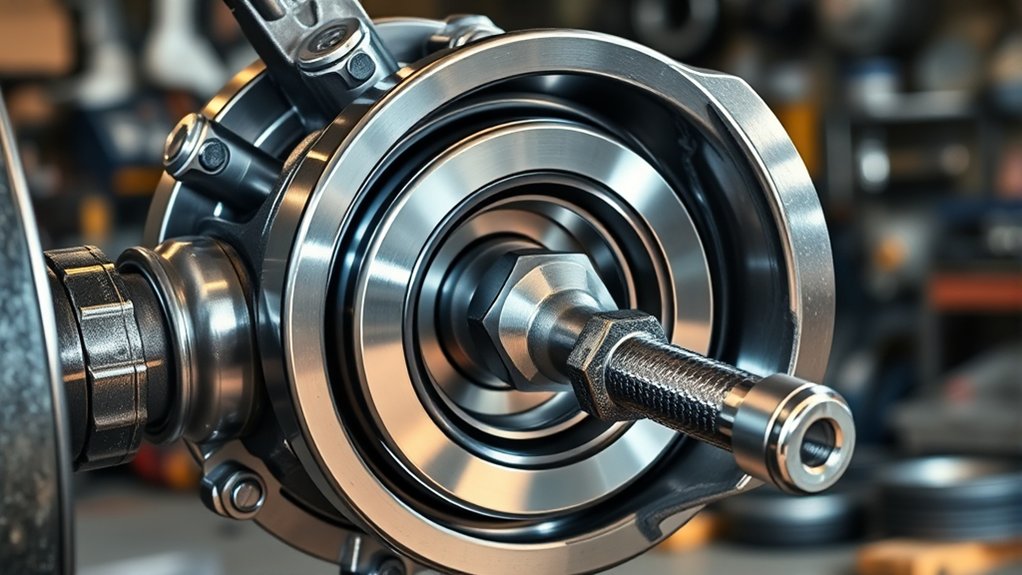
A full float axle is a crucial component in many vehicles, designed to support your vehicle’s weight through the axle housing rather than the axle shaft. This design allows the axle shaft to focus solely on transmitting torque to the wheels, reducing stress and enhancing durability.
Full float axles are especially beneficial for heavy loads and off-road conditions, providing increased safety and reliability. By preventing wheel detachment and minimizing mechanical strain, full float axles offer superior performance compared to other axle types.
Understanding how a full float axle works and how it differs from other axles is essential for maintaining your vehicle’s optimal performance. Proper maintenance ensures you can confidently tackle tough driving challenges with your vehicle.
Key Takeaways
- A full float axle supports vehicle weight through the axle housing, not the axle shaft, enhancing durability and load capacity.
- The axle shaft transmits torque to the wheels but does not bear any vehicle weight, reducing stress and wear on the shaft.
- Hub and bearing assemblies carry the load and allow wheel rotation, with seals protecting components from dirt and moisture.
- Full float axles improve safety by preventing wheel detachment and allowing continued driving even if the axle shaft breaks.
- They provide superior strength and reliability, especially for heavy-duty and off-road vehicles, making maintenance easier and extending component life.
What Is a Full Float Axle and Why It Matters
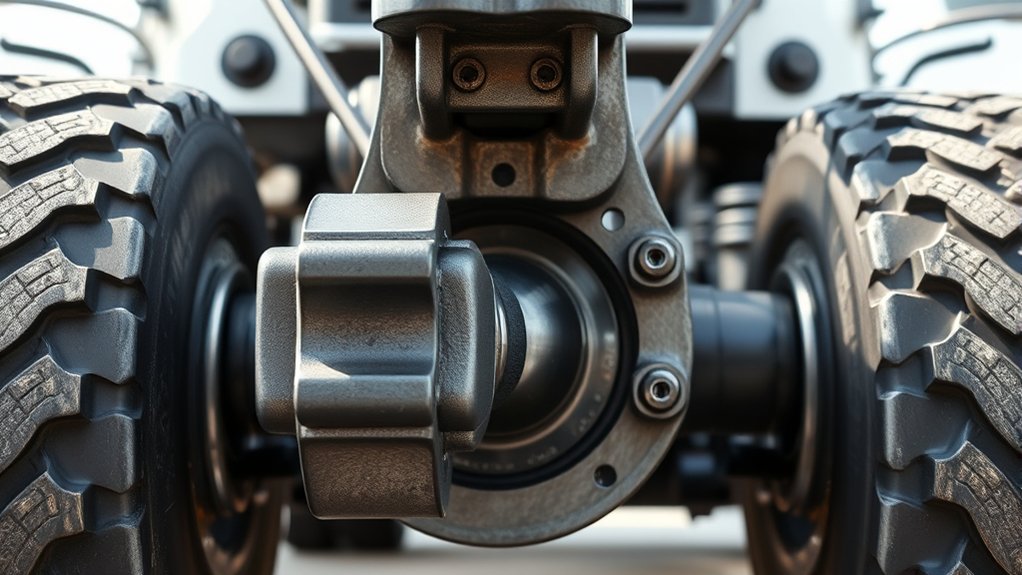
What makes a full float axle different from other axle types? You’ll find that it supports the vehicle’s weight entirely through the axle housing, not the axle shaft itself. This design means the axle shaft only transmits torque, reducing stress and wear.
You’ll appreciate the durability this brings, especially if you’re hauling heavy loads or driving off-road. Since the axle shaft isn’t bearing the vehicle’s weight, it’s less likely to break under pressure. This setup also makes repairs easier because the wheel hub and bearing assembly can be serviced without removing the axle shaft.
Knowing why a full float axle matters helps you understand its role in providing strength and reliability, critical for vehicles that demand heavy-duty performance and long-lasting components.
Full Float Axle vs. Semi-Float Axle: What’s the Difference?
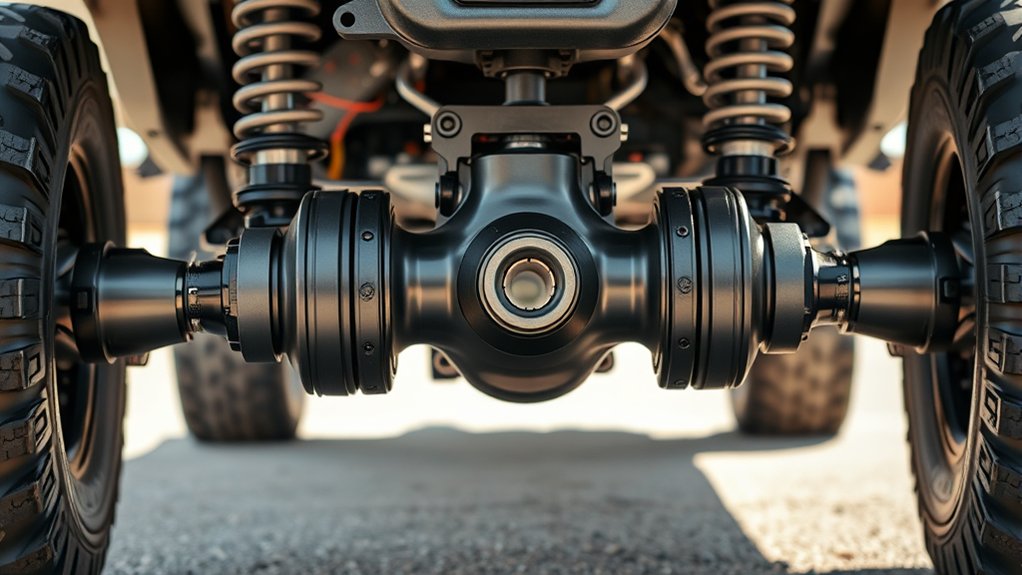
Although both full float and semi-float axles serve to transfer power to the wheels, they differ considerably in design and application. A full float axle supports the vehicle’s weight on the axle housing and uses a separate shaft to deliver power, which means the axle shaft only handles torque. This setup is stronger and ideal for heavy-duty use since the axle shaft can be removed without disturbing the wheel.
On the other hand, a semi-float axle combines weight support and power delivery in the axle shaft itself, making it simpler but less robust. If you’re working with lighter loads or standard vehicles, semi-float axles are common and cost-effective. But for durability and easier maintenance in heavy-duty scenarios, full float axles stand out.
The Key Components of a Full Float Axle
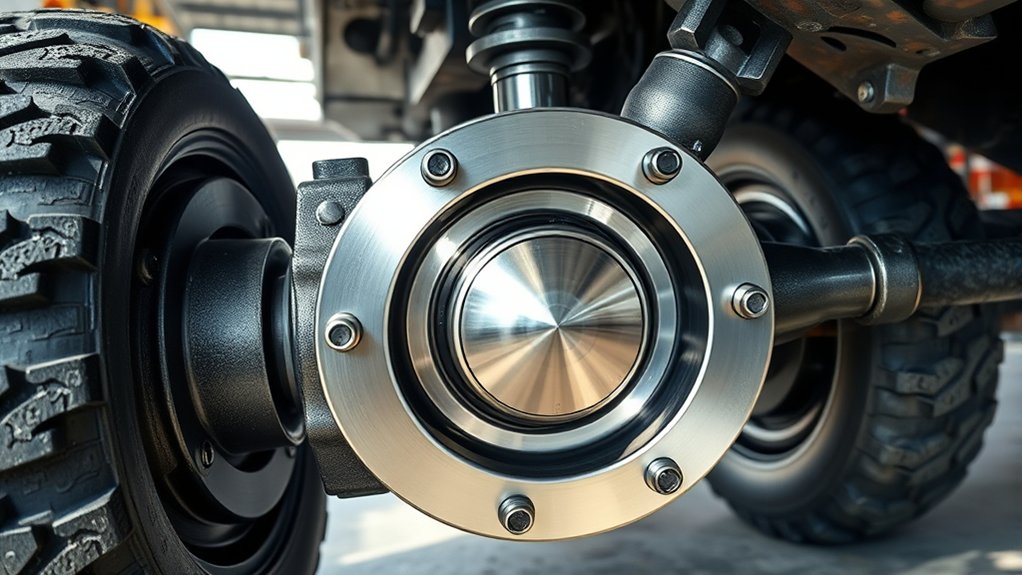
Now, let’s look at the key components that make full float axles unique. You’ll want to understand how the axle shaft design works alongside the bearing and hub assembly.
These parts play essential roles in strength and durability.
Axle Shaft Design
Because the axle shaft plays a crucial role in transmitting torque from the differential to the wheels, understanding its design is essential when examining full float axles. The axle shaft in a full float setup is designed primarily to transfer rotational force without bearing the vehicle’s weight. It’s typically a solid, robust steel rod with splines on both ends—one set connects to the differential, while the other fits into the wheel hub.
This shaft must handle high torque loads and resist twisting or bending under stress. Unlike semi-float axles, the full float axle shaft doesn’t support the vehicle’s weight; that job belongs to the axle housing and bearings. This design enhances durability and simplifies axle shaft replacement since the load-bearing parts are separate.
Bearing and Hub Assembly
What makes the bearing and hub assembly so essential in a full float axle? It’s the critical connection that supports the vehicle’s weight and allows the wheels to spin smoothly. When you look at this assembly, you’ll find it includes the hub, bearings, and seals working together to ensure durability and efficiency.
Here’s why you should pay attention to this assembly:
- Load Support: It carries the full weight of the vehicle, relieving stress from the axle shaft.
- Smooth Rotation: Bearings reduce friction, enabling the wheel to rotate freely and efficiently.
- Protection: Seals keep dirt and moisture out, preventing premature wear and damage.
Understanding this assembly helps you appreciate how full float axles manage heavy loads while maintaining reliability.
How Full Float Axles Support Heavy Loads
How do full float axles manage to carry such heavy loads without compromising performance? They do it by separating the load-bearing and rotational functions. In a full float design, the axle shaft doesn’t bear the vehicle’s weight.
Instead, the hub and bearings support that load, allowing the axle shaft to focus solely on transmitting torque. This setup reduces stress on the axle shaft, minimizing the risk of bending or breaking under heavy loads. Because the axle shaft isn’t carrying the vehicle’s weight, you get increased durability and reliability, especially in demanding applications like trucks or off-road vehicles.
This design also simplifies maintenance, since the axle shaft can be removed without disturbing the wheel assembly or the load-bearing components.
Power Transfer in Full Float Axles
When you step on the gas, how does a full float axle transfer that power to the wheels without faltering? The key lies in its robust design that separates load-bearing from torque transmission. The axle shaft’s primary job is to deliver rotational force, while the housing and bearings carry the vehicle’s weight.
This separation ensures power flows efficiently without compromising structural integrity.
Here’s how the power transfer works in a full float axle:
- The driveshaft sends torque to the differential inside the axle housing.
- The differential gears split power evenly between the wheels.
- Axle shafts connect the differential to the wheel hubs, rotating to drive the wheels.
This setup keeps power delivery smooth and reliable, especially under heavy loads or tough driving conditions.
Why Trucks Prefer Full Float Axles
Because trucks often carry heavy loads and face demanding conditions, they rely on full float axles for their strength and durability. You’ll find that full float axles support the vehicle’s weight through the axle housing rather than the axle shafts, so the shafts focus solely on transferring power. This setup reduces stress on the axle shafts, making them less likely to fail under pressure.
When you drive a truck with full float axles, you benefit from easier maintenance since axle shaft removal doesn’t compromise wheel support. Plus, if an axle shaft breaks, you can keep driving safely on the remaining shafts until repairs are made. That’s why full float axles are the preferred choice for trucks that demand reliability and consistent performance.
How Full Float Axles Boost Durability and Safety
Although full float axles might seem like just another mechanical component, they play an essential role in enhancing both the durability and safety of your vehicle. By design, they separate the axle shaft from bearing the vehicle’s weight, reducing stress and wear on critical parts. This separation means you get longer-lasting components and fewer unexpected breakdowns.
Full float axles improve vehicle durability and safety by reducing stress on critical parts and preventing breakdowns.
Here’s how full float axles boost durability and safety:
- Improved load distribution: The vehicle’s weight is supported by the axle housing, not the shaft, preventing bending or breaking.
- Enhanced bearing protection: Bearings handle only rotational forces, minimizing damage and extending lifespan.
- Easier maintenance: You can replace axle shafts without disturbing the wheel hub, reducing downtime and risk during repairs.
With these benefits, full float axles keep your vehicle running reliably and safely.
Signs You Need a Full Float Axle Upgrade
If you notice excessive wheel play or keep dealing with axle shaft damage, it’s a clear sign your current setup isn’t cutting it. You might also struggle with off-road performance, which means it’s time to contemplate a full float axle upgrade.
Upgrading can help you avoid these issues and improve your vehicle’s reliability.
Excessive Wheel Play
When you notice your wheels wobbling or feeling loose while driving, it’s a clear sign of excessive wheel play that demands immediate attention. This issue not only affects your vehicle’s handling but also jeopardizes your safety. Excessive wheel play often signals worn-out bearings, damaged axle components, or loose hub assemblies, all of which compromise the stability of your wheels.
Ignoring this can lead to uneven tire wear and increased risk of wheel detachment. Upgrading to a full float axle can provide the strength and reliability needed to eliminate these concerns. Pay attention to these key indicators:
- Noticeable wobble or vibration in the steering wheel
- Clunking noises when turning or driving over bumps
- Uneven tire wear patterns or premature tire damage
Addressing excessive wheel play promptly keeps you safe and improves your ride quality.
Frequent Axle Shaft Damage
How often do you find yourself dealing with axle shaft damage? If broken or bent shafts are becoming a regular headache, it’s a clear sign your current setup can’t handle the stress. Traditional semi-floating axles put all the vehicle’s weight and torque directly on the axle shafts, making them more prone to failure under heavy loads or rough conditions.
This constant strain can lead to frequent repairs, leaving you frustrated and your vehicle unreliable. Upgrading to a full float axle can relieve this pressure by transferring the load to the axle housing instead of the shaft itself. That means your axle shafts only handle torque, dramatically reducing the chance of damage and boosting overall durability for the long haul.
Off-Road Performance Issues
Why does your vehicle struggle on rough terrains despite its rugged build? The answer often lies in your axle design. If you notice frequent wheel vibrations, difficulty maintaining traction, or axle shaft bending during off-road adventures, it’s a clear sign your current setup can’t handle the stress.
Upgrading to a full float axle can address these issues by distributing load more effectively and improving durability.
Look out for these signs:
- Wheel wobbling or vibrations on uneven surfaces
- Reduced traction when navigating obstacles
- Bent or damaged axle shafts after off-road use
Switching to a full float axle enhances your vehicle’s off-road performance, giving you confidence and reliability in challenging conditions.
Full Float Axle Maintenance Tips
Although full float axles are designed for durability, you’ll need to perform regular maintenance to keep them running smoothly and prevent costly repairs. Start by checking the axle housing for cracks or leaks, as these can let contaminants in and cause damage. Make sure to change the differential fluid at recommended intervals to maintain proper lubrication.
Grease the spindle bearings frequently to avoid wear and overheating. Keep an eye on the axle seals and replace them if they show signs of wear or leakage. Tighten all bolts and fasteners to the manufacturer’s specifications to prevent loosening during off-road use.
Finally, clean the axle assembly regularly, removing mud and debris that can accelerate wear. Following these steps will help you extend the life of your full float axle.
How to Inspect a Full Float Axle for Damage
When inspecting your full float axle, start by looking for any visible signs of damage like cracks or dents. Don’t forget to check the bearings and seals for wear or leaks. Catching these issues early can save you from costly repairs down the road.
Visual Damage Signs
Before you immerse yourself in complex diagnostics, start by visually inspecting the full float axle for obvious signs of damage. Look closely at the axle housing and the area where the axle shaft meets the wheel hub. Any visible cracks, dents, or bends could compromise the axle’s integrity.
Also, check for any rust or corrosion that might weaken the metal over time.
Pay attention to:
- Cracks or fractures along the axle tube or flange, indicating structural issues
- Deformation or bending suggesting impact damage or heavy loads
- Corrosion spots that could worsen and lead to failure
Catching these visual damage signs early helps you prevent costly repairs and ensures your vehicle stays safe on the road.
Bearing and Seal Check
After spotting any visible damage on the full float axle, you’ll want to inspect the bearings and seals next. Begin by removing the axle shaft to access the bearings. Check the bearings for signs of wear, such as pitting, rust, or roughness when you rotate them.
Any unusual noise or resistance indicates they need replacement. Next, examine the seals for cracks, tears, or leaks, which can allow contaminants inside and cause premature bearing failure. Make sure the seals fit snugly and aren’t hardened or brittle.
If you find damaged bearings or seals, replace them promptly to maintain proper axle function and prevent further damage. Regular inspection helps guarantee your full float axle stays reliable and extends its service life.
Installing a Full Float Axle: What You Need to Know
Although installing a full float axle might seem intimidating at first, you can handle the process smoothly with the right tools and preparation. Start by ensuring your vehicle is securely lifted and supported. Remove the old axle carefully, keeping track of all components.
Installing a full float axle is manageable with proper tools, preparation, and careful removal of the old axle.
When you install the new full float axle, make sure to properly align it and tighten all bolts to the manufacturer’s specifications.
Here’s what you need to focus on:
- Use quality grease to lubricate bearings and seals before installation.
- Double-check the torque on all fasteners to avoid loosening during operation.
- Inspect the axle housing for any damage or wear that could affect performance.
Taking these steps will help you install your full float axle confidently and correctly.
Common Vehicle Applications for Full Float Axles
When you need maximum durability and load capacity, full float axles are the go-to choice in many heavy-duty vehicles. You’ll find them commonly used in trucks, SUVs, and commercial vehicles designed to carry heavy loads or tow trailers. Off-road vehicles also rely on full float axles because they handle rough terrain better, reducing the risk of axle failure.
Additionally, full float axles are popular in agricultural and construction equipment, where strength and reliability are critical. If you drive a vehicle that demands high payload capacity or frequently hauls heavy equipment, chances are it uses full float axles. This design ensures your wheels stay securely attached even under extreme stress, making full float axles essential for heavy-duty applications.
How Full Float Axles Affect Performance and Handling
Full float axles provide the strength needed for heavy-duty use, but they also influence how your vehicle performs and handles on the road or trail. Because the axle shaft only transmits torque and doesn’t bear the vehicle’s weight, you get improved durability and reliability under tough conditions. This design means you can push your vehicle harder without worrying about axle failure.
When you install full float axles, you’ll notice:
- Enhanced load capacity, allowing safer towing and hauling
- Better resistance to bending and breaking during off-road driving
- More consistent power delivery, improving traction and control
These benefits combine to give you a confident driving experience, especially when tackling heavy loads or rough terrain.
Frequently Asked Questions
Can Full Float Axles Be Used in Electric Vehicles?
Yes, you can use full float axles in electric vehicles. They provide strong support and handle heavy loads well, making them ideal for EVs designed for off-road or heavy-duty applications.
These axles offer durability and reliability, which are critical in demanding conditions. Their design helps distribute weight more effectively, enhancing vehicle stability. This makes full float axles a practical choice for EVs that require robust performance.
What Materials Are Full Float Axles Typically Made From?
Like a knight’s armor, full float axles are typically forged from high-strength steel or alloy steel. These materials give you the durability and toughness needed to handle heavy loads and rough terrain without breaking a sweat.
How Does Weather Impact Full Float Axle Performance?
You’ll find weather affects full float axles by causing rust and corrosion if exposed to moisture. Extreme cold can thicken lubricants, reducing efficiency. Regular maintenance and proper sealing help keep performance steady despite weather changes.
Are Full Float Axles Compatible With Off-Road Modifications?
You might think full float axles can’t handle off-road mods, but they actually excel with them. They support heavy loads and rough terrain, so you’ll get durability and strength while upgrading your suspension or tires for tougher trails.
What Is the Average Lifespan of a Full Float Axle?
You can expect a full float axle to last around 150,000 to 200,000 miles with proper maintenance. Regular inspections and timely repairs will keep it running smoothly, especially if you avoid extreme off-road abuse.
Proper care and attention can significantly extend the lifespan of your axle. Neglecting maintenance or subjecting it to harsh conditions may lead to premature failure.
Staying proactive with upkeep ensures reliability and performance over many miles.
Conclusion
When you choose a full float axle, you’re picking strength and reliability. It carries heavy loads while keeping your wheels secure, and it’s designed to handle tough conditions without faltering. You’ll notice the difference in performance and handling, especially when the road gets rough or the weight piles on.
So, whether you’re hauling or cruising, understanding full float axles means you’re ready for the ride, ready for the challenge, and ready to roll. Full float axles provide superior durability, enhanced load capacity, and improved safety. Knowing how a full float axle works ensures you make the best choice for strength, reliability, and performance on any terrain.

