

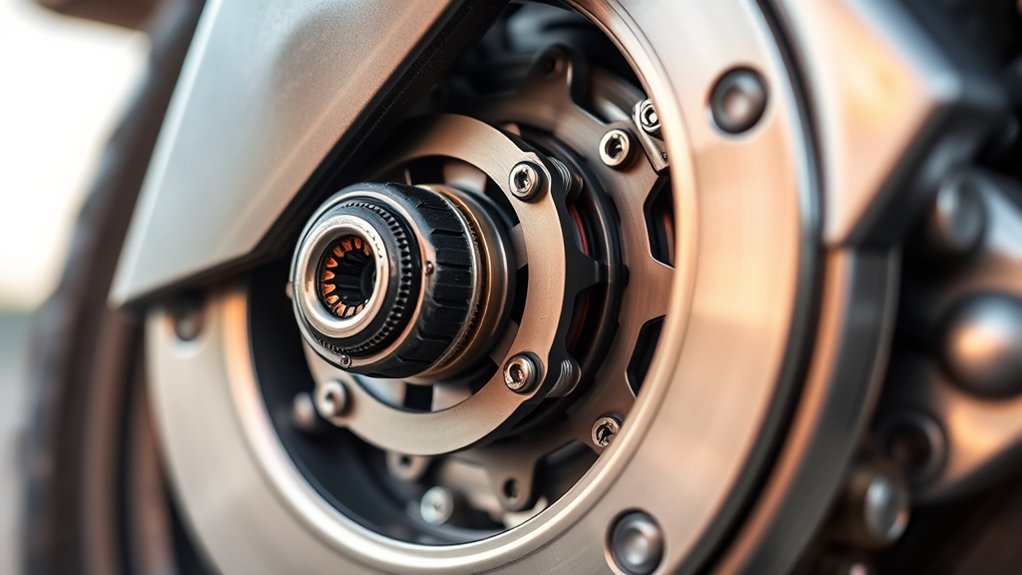
You control your motorbike’s power and smooth gear changes by using the clutch, a crucial component in the bike’s drivetrain system. The clutch works by engaging and disengaging the engine’s power to the transmission, allowing you to shift gears without causing damage or jerks. Understanding how a motorbike clutch works step by step can improve your riding experience and help you maintain your bike effectively.
When you pull the clutch lever, it separates clutch plates inside the engine, stopping power transfer to the transmission. This separation allows you to change gears smoothly without grinding.
Releasing the lever lets springs press the plates back together, reconnecting the engine to the drivetrain seamlessly. This reconnection ensures power flows to the wheels, helping you manage speed precisely.
Regular maintenance and knowing how each clutch part functions will help you ride confidently and extend your motorbike’s lifespan.
Key Takeaways
- Pulling the clutch lever compresses springs, separating clutch plates to stop power transfer from engine to transmission.
- Releasing the clutch lever allows springs to press plates together, transferring power smoothly for gear engagement.
- Alternating friction and steel plates inside the clutch grip each other to transmit engine power to the drivetrain.
- Proper clutch cable tension ensures full plate disengagement and prevents slipping or premature wear.
- Adjusting the clutch lever controls power delivery, enabling smooth gear changes and precise speed control.
What Is a Motorbike Clutch and Why It Matters
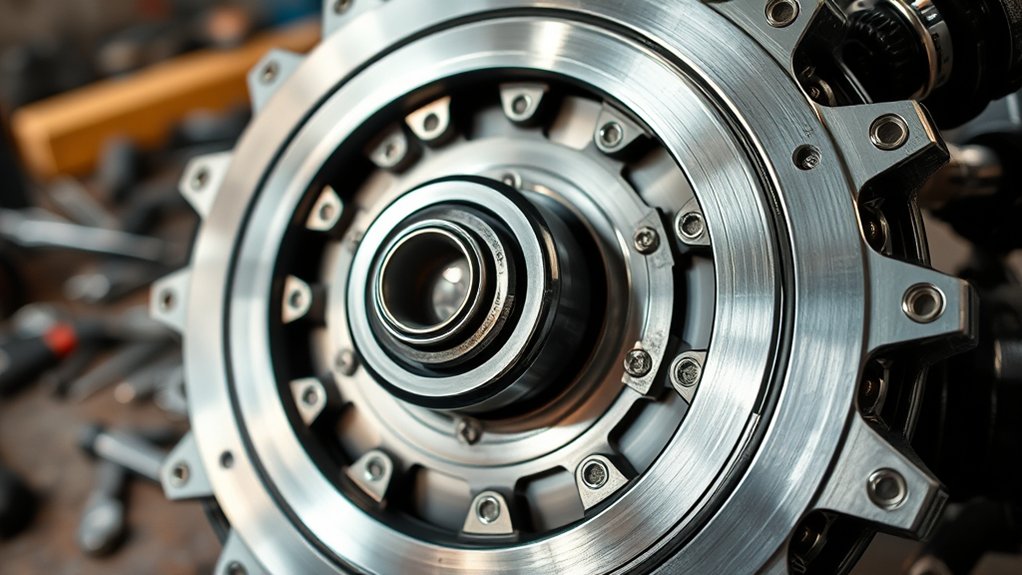
Although you might not notice it while riding, the motorbike clutch plays an essential role in controlling power from the engine to the wheels. It’s the device that lets you smoothly engage or disengage the engine’s power, helping you start, stop, and shift gears without damaging the transmission.
When you pull the clutch lever, you temporarily disconnect the engine from the drivetrain, allowing you to change gears or come to a stop without stalling. Without the clutch, you’d struggle to control your bike’s speed and performance effectively.
Understanding its importance means you can appreciate why proper clutch operation is key to a smooth ride, better control, and longer-lasting bike components. It’s the bridge between your engine’s power and the road.
What Are the Main Parts of a Motorbike Clutch?
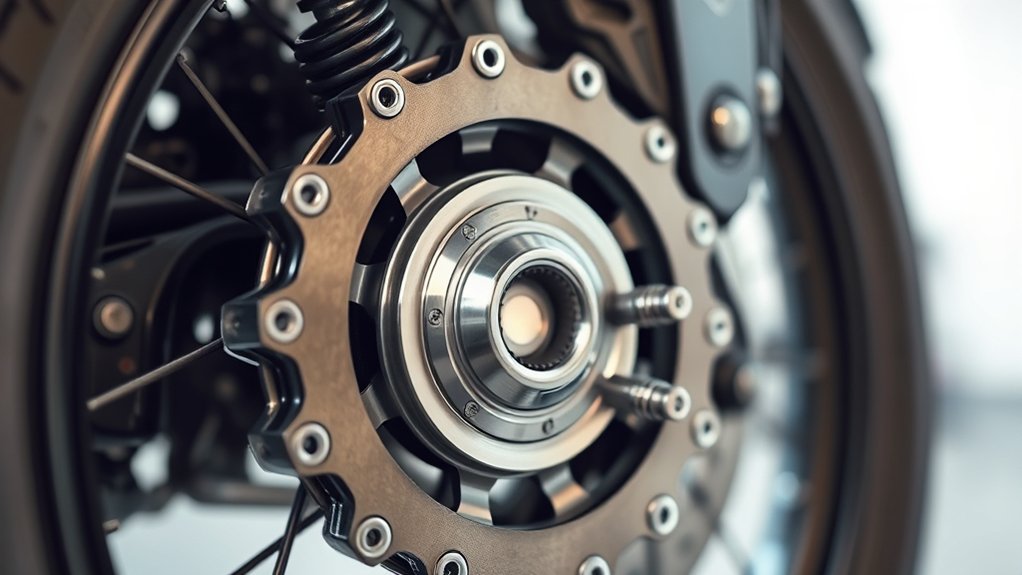
Since the clutch controls the connection between your engine and wheels, it’s made up of several key parts that work together seamlessly. Understanding these parts helps you grasp how the clutch functions and how to maintain it.
Here are the main components:
| Part | Function | Location |
|---|---|---|
| Clutch Plates | Transfer power between engine and transmission | Inside clutch basket |
| Clutch Basket | Holds plates and rotates with engine | Connected to engine |
| Pressure Plate | Applies pressure to plates for engagement | Presses plates together |
| Springs | Provide force to keep plates engaged | Around pressure plate |
| Clutch Hub | Connects plates to transmission input shaft | Central assembly |
| Release Mechanism | Disengages clutch when lever pulled | Linked to clutch lever |
Each part plays a crucial role in smooth power transfer.
How the Clutch Lever Controls Engine Power
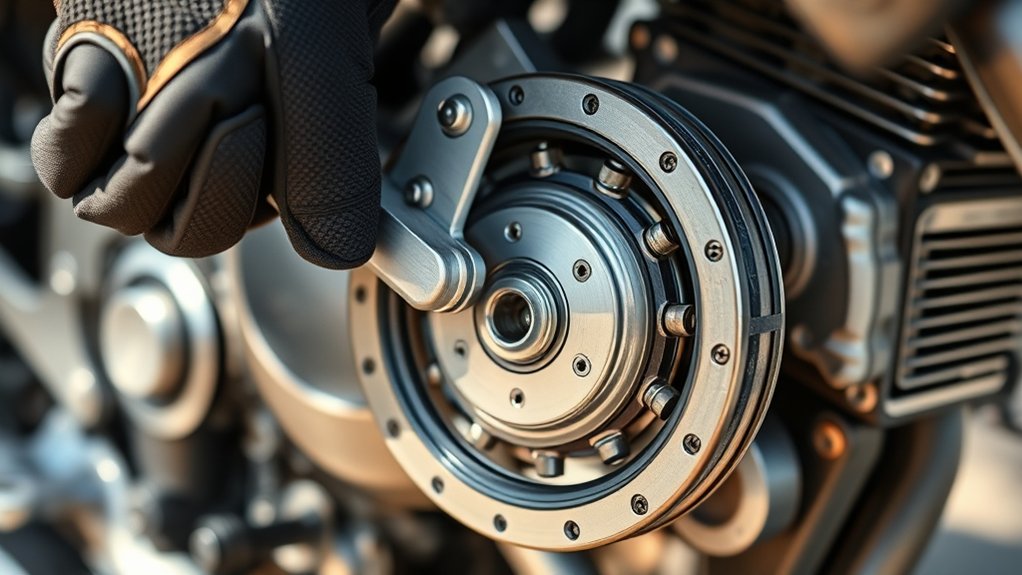
Understanding the main parts of the clutch helps you see how the clutch lever controls engine power. When you pull the clutch lever, you’re actively managing the connection between the engine and the transmission. This action lets you control when power flows to the wheels, enabling smooth starts and gear changes.
Here’s what happens when you use the clutch lever:
- Pulling the lever compresses the clutch springs.
- This action separates the clutch plates inside the engine.
- Power transfer from the engine to the transmission temporarily stops.
- Releasing the lever reconnects the plates, restoring engine power to the drivetrain.
How Clutch Plates Engage and Disengage Power
When you engage the clutch plates, they press tightly together to transfer engine power smoothly to the transmission. Inside the clutch assembly, alternating friction and steel plates are stacked. When the clutch lever is released, springs push these plates together, causing friction plates to grip the steel ones.
This connection allows engine power to flow through the plates to the gearbox, propelling your motorbike forward. When you pull the clutch lever, the pressure plate moves away, separating the clutch plates. This disengages the engine from the transmission, stopping power transfer.
Why Smooth Motorbike Clutch Control Matters for Shifting
Controlling the clutch lever smoothly lets you manage how the plates engage and disengage, which directly affects your gear shifts. When you master smooth clutch control, you’ll notice better acceleration, less wear, and improved ride comfort.
Jerky or abrupt clutch use can lead to sudden jolts that unsettle your balance, accelerated wear on clutch plates and transmission, and difficulty in finding the right gear engagement point. It also increases the risk of stalling or engine strain.
What Are the Different Types of Motorbike Clutches?
You’ll find two main types of motorbike clutches: wet and dry. Wet clutches offer smoother engagement and better cooling, while dry clutches provide a more direct feel and quicker response.
Understanding their differences helps you choose the right clutch for your riding style.
Wet Clutch Advantages
Although wet clutches may not grab as quickly as dry clutches, they offer several key advantages that make them popular in many motorbikes. When you choose a wet clutch, you benefit from its reliable performance and durability. The clutch plates stay immersed in oil, which keeps them cool and reduces wear over time.
This means you get smoother engagement and longer clutch life. Plus, wet clutches handle heat better, so they’re less likely to slip under heavy use.
Here’s why you might prefer a wet clutch:
- Provides consistent cooling through oil immersion
- Offers smoother and quieter operation
- Extends clutch plate lifespan due to reduced wear
- Handles higher heat loads without slipping
These perks make wet clutches ideal for everyday riding and touring.
Dry Clutch Characteristics
Wet clutches offer smooth, quiet operation thanks to their oil bath, but dry clutches bring a different set of benefits that might suit your riding style better. Dry clutches operate without oil, making them simpler and easier to maintain. They provide more direct power transfer and tend to have a distinctive sound that many riders enjoy.
However, they can wear faster and may feel harsher during engagement.
Here’s a quick comparison of clutch types:
| Clutch Type | Key Characteristics |
|---|---|
| Wet Clutch | Smooth, quiet, oil-cooled |
| Dry Clutch | Direct feel, louder, easier maintenance |
| Multi-Plate | Compact, high torque capacity |
Choosing the right clutch depends on your bike and riding preferences.
Signs Your Clutch Needs Repair or Adjustment
If your motorbike starts slipping gears or feels less responsive when you engage the clutch, it’s a clear sign that something might be wrong. Ignoring these signs can lead to more serious damage and costly repairs. You should watch for specific symptoms that indicate your clutch needs repair or adjustment.
- The clutch lever feels loose or spongy when pulled
- Difficulty shifting gears or unexpected gear drops
- Burning smell coming from the clutch area
- Engine revs increase without corresponding acceleration
Noticing any of these means it’s time to inspect and possibly adjust or repair your clutch. Staying on top of these signs keeps your bike running smoothly and safely.
Troubleshooting Basic Clutch Problems
You’ll often face common clutch issues like slipping or sticking, which can affect your ride. Knowing how to diagnose clutch slippage helps you spot trouble early.
Plus, adjusting the clutch cable properly can fix many problems and keep your bike running smoothly.
Common Clutch Issues
Why does your motorbike clutch sometimes slip, drag, or feel spongy? These common clutch issues usually point to a few typical problems you can check yourself. Slipping happens when the clutch plates don’t fully engage, often due to worn friction plates or incorrect cable adjustment.
Dragging means the clutch isn’t fully disengaging, which can make shifting tough. A spongy lever feel usually indicates air in the hydraulic line or stretched cables.
Watch out for these issues:
- Worn or contaminated clutch plates
- Incorrect cable tension or stretched cables
- Air trapped in hydraulic clutch lines
- Weak or broken clutch springs
Addressing these basics helps keep your clutch working smoothly and prevents more serious damage.
Diagnosing Clutch Slippage
When your motorbike’s clutch slips, it can cause a loss of power and make riding unsafe. To diagnose clutch slippage, first check if the engine revs rise without a corresponding increase in speed when you accelerate. This is a clear sign the clutch isn’t fully engaging.
Next, inspect the clutch plates for wear or glazing by removing the clutch cover. Worn or oil-contaminated plates reduce friction, causing slippage. Also, look for weak or broken clutch springs, which fail to press the plates together firmly.
If your bike uses a wet clutch, verify the oil is clean and at the correct level, as dirty or insufficient oil can cause slippage. Identifying these issues early helps you fix the problem before it worsens.
Adjusting Clutch Cable
Although clutch slippage can stem from worn parts, many basic clutch problems arise from improper cable adjustment. You should regularly check the clutch cable tension to guarantee smooth operation. If the cable’s too loose, the clutch won’t fully disengage, causing gear grinding.
If it’s too tight, the clutch may slip or wear prematurely. Here’s how to adjust it:
- Locate the clutch cable adjuster near the handlebar or engine.
- Loosen the locknut and turn the adjuster to increase or decrease cable tension.
- Aim for about 2-3 mm of free play at the clutch lever for ideal performance.
Tighten the locknut after adjustment to keep the setting secure.
Proper cable adjustment helps you avoid unnecessary wear and improves overall clutch function.
Tips to Maintain Your Motorbike Clutch
Since the clutch plays a crucial role in your motorbike’s performance, you’ll want to keep it in top condition. Regularly check the clutch cable for proper tension and signs of wear. Lubricate the cable to ensure smooth movement and prevent sticking.
Inspect the clutch plates during servicing; replace them if they’re worn or damaged to avoid slipping. Avoid riding with the clutch partially engaged, as it causes unnecessary wear. Keep an eye on the fluid level if you have a hydraulic clutch, topping it off as needed with the correct type.
Clean the clutch components to prevent dirt buildup, which can impair function. By following these simple steps, you’ll extend your clutch’s lifespan and maintain smooth, reliable gear shifting every time you ride.
How Clutch Knowledge Improves Your Riding
Understanding how your clutch works gives you better control over your bike, letting you shift gears smoothly and confidently. You’ll also treat your engine more gently, which helps it last longer.
With this knowledge, you’ll ride smarter and enjoy every mile.
Enhanced Control Techniques
When you master how your motorbike clutch works, you gain precise control over your bike’s power delivery and speed. This knowledge lets you adjust your riding style to various road conditions, improving safety and performance. You’ll feel confident managing power during slow maneuvers or quick accelerations.
Here’s how enhanced clutch control benefits you:
- Modulate power smoothly in tight spots or heavy traffic.
- Prevent stalling by feathering the clutch at low speeds.
- Control wheel spin on slippery surfaces.
- Maintain engine braking by partially engaging the clutch.
Smoother Gear Transitions
Although shifting gears might seem straightforward, knowing exactly how your clutch engages and disengages lets you make smoother, quicker changes. When you understand the clutch’s friction point, you can precisely modulate the lever, preventing jerky movements or abrupt power loss. This control helps you match engine speed to the new gear, reducing stress on the transmission and making each shift feel seamless.
Instead of rushing through gear changes, you’ll anticipate and execute them fluidly, improving ride comfort and stability. With clutch knowledge, you avoid sudden jolts or stalls, especially during slow maneuvers or acceleration. Ultimately, mastering clutch control means your gear switching becomes second nature, letting you focus on the road and enjoy a more responsive, enjoyable ride every time.
Increased Mechanical Sympathy
Because you control the clutch with precision, you protect your bike’s engine and transmission from unnecessary wear. Understanding how the clutch works helps you develop mechanical sympathy, which means you treat your bike more gently and extend its lifespan. When you ride with clutch knowledge, you:
- Avoid harsh gear changes that strain internal components
- Reduce heat buildup by minimizing clutch slipping
- Maintain smooth power delivery to prevent sudden shocks
- Detect early signs of clutch or transmission issues
This improved connection between you and your machine not only enhances performance but also lowers maintenance costs. By respecting the clutch’s role, you guarantee your motorbike runs reliably and feels more responsive, making every ride safer and more enjoyable.
Common Clutch Problems and How to Spot Them
If your motorbike’s clutch starts slipping, sticking, or feeling unusually stiff, you’re likely facing common clutch issues that need immediate attention. Slipping often means worn clutch plates; you’ll notice the engine revving without corresponding acceleration.
If the clutch feels stiff or hard to pull, your cable might be frayed or improperly adjusted, or the hydraulic system could have air bubbles. Sticking or grabbing clutches usually result from dirt or debris caught between the plates or insufficient lubrication.
You might also experience difficulty shifting gears smoothly or hear strange noises when engaging the clutch. Regularly check your clutch cable tension, fluid levels, and inspect for leaks. Spotting these signs early helps you prevent more serious damage and assure your motorbike stays safe and responsive on the road.
Easy Ways to Extend Your Clutch’s Lifespan
To keep your motorbike’s clutch working smoothly for longer, you’ll want to adopt a few simple habits that reduce wear and tear. Taking care of your clutch not only saves money but also guarantees safer rides. Here are some easy ways to extend your clutch’s lifespan:
Simple habits can reduce clutch wear, save money, and ensure safer, smoother rides.
- Avoid resting your hand on the clutch lever while riding; it causes unnecessary slipping.
- Shift gears smoothly and avoid aggressive clutch engagement to minimize friction.
- Regularly check and adjust the clutch cable for proper free play and tension.
- Use the right type of clutch fluid and replace it as recommended in your bike’s manual.
Frequently Asked Questions
Can I Upgrade My Motorbike Clutch for Better Performance?
Yes, you can upgrade your motorbike clutch for better performance. You’ll want to choose high-quality components like stronger springs or a slipper clutch, and consider professional installation to guarantee smoother engagement and improved durability.
Upgrading these parts can significantly enhance your bike’s responsiveness and control. It’s important to match the clutch components with your riding style and bike specifications.
Consulting a professional mechanic can help you select the best options and ensure proper fitting. This way, you’ll get the most out of your upgraded clutch system.
How Does Clutch Size Affect Motorbike Handling?
Oh sure, because clutch size is the secret to racing like a pro! Bigger clutches add weight, slowing handling, while smaller ones might slip.
You’ll want a balanced size to keep control sharp and smooth.
What Tools Are Needed to Replace a Motorbike Clutch?
You’ll need a socket set, screwdrivers, clutch holding tool, torque wrench, and possibly a flywheel puller.
Don’t forget gloves and a service manual to guide you through your motorbike clutch replacement safely and accurately.
Does Clutch Type Impact Fuel Efficiency?
Yes, your clutch type can impact fuel efficiency. A smoother, more efficient clutch reduces engine strain and power loss, helping you use less fuel.
Choosing the right clutch helps you ride more economically and enjoy better mileage.
How Do Weather Conditions Affect Clutch Performance?
You’ll find wet or cold weather can make your clutch slip or feel less responsive, while rain might cause clutch plates to stick.
Adjusting your riding and maintenance helps keep performance steady despite changing conditions.
Conclusion
Understanding how your motorbike clutch works is like mastering the rhythm of a dance—it lets you seamlessly control power and shift gears smoothly. By knowing its parts, operation, and maintenance, you’ll ride with confidence and extend your clutch’s life. Keep an eye out for common issues, and treat your clutch with care.
With this knowledge, you’ll enjoy a smoother, safer, and more responsive ride every time you hit the road. Proper clutch maintenance and understanding clutch operation are key to preventing problems. This ensures your motorbike performs at its best and enhances your riding experience.

