


You make work easier with a wheel and axle by multiplying your force, so you need less effort to move or lift objects. This simple machine uses mechanical advantage to reduce the effort required for tasks. When you turn the larger wheel, it spins the smaller axle, letting you cover more distance with less force.
This reduces friction and supports weight better, making tasks like steering, lifting, and transporting smoother and safer. The design of the wheel and axle helps distribute force efficiently, which is why it’s used in many tools and machines.
Understanding how size and mechanics affect this system can help you use tools more efficiently. By knowing the relationship between the wheel’s size and the axle’s size, you can predict how much easier a task will become.
This knowledge allows for better application in everyday activities and engineering solutions. Using this simple machine correctly saves energy and improves performance.
Key Takeaways
- The wheel and axle reduce effort by allowing objects to roll instead of being lifted or dragged, minimizing friction.
- Mechanical advantage from a larger wheel relative to the axle multiplies input force, making tasks easier.
- They enable smooth and controlled movement, reducing strain during steering and transporting heavy loads.
- Turning the wheel applies force over a greater radius, decreasing the effort needed for lifting or opening mechanisms.
- Their design improves efficiency in various tools and vehicles, saving energy and increasing productivity.
What Is a Wheel and Axle?
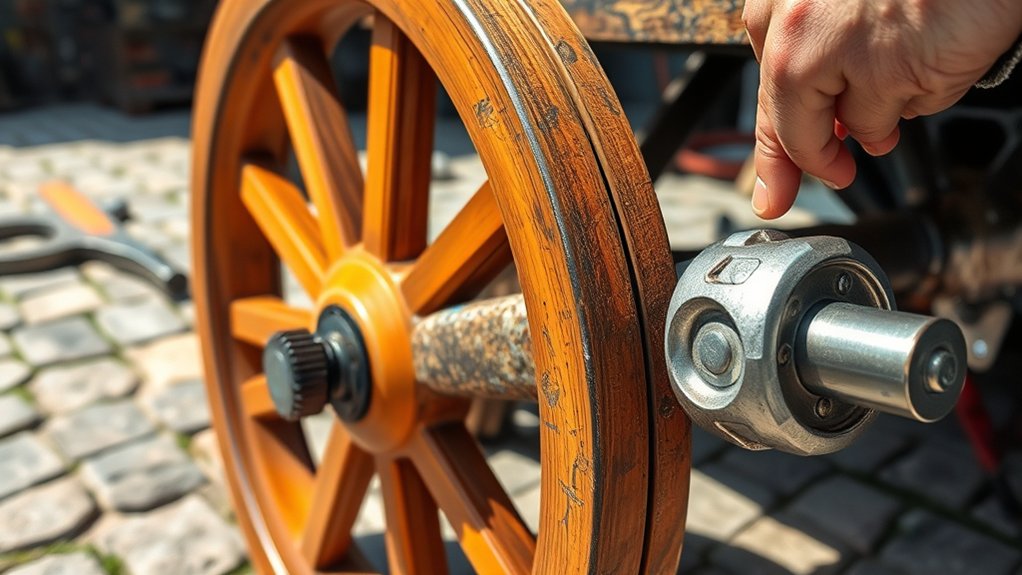
Although it may seem simple, a wheel and axle is a powerful machine that helps you move objects more easily. It consists of a large wheel attached to a smaller cylindrical rod called the axle. When you turn the wheel, the axle spins as well, allowing you to transfer force efficiently.
This setup reduces the effort needed to move or lift loads because the wheel’s larger radius makes turning easier compared to rotating the axle directly. You’ll find wheel and axle systems everywhere—from car tires to doorknobs—because they make tasks smoother and less tiring.
What Is Mechanical Advantage and Why It Matters
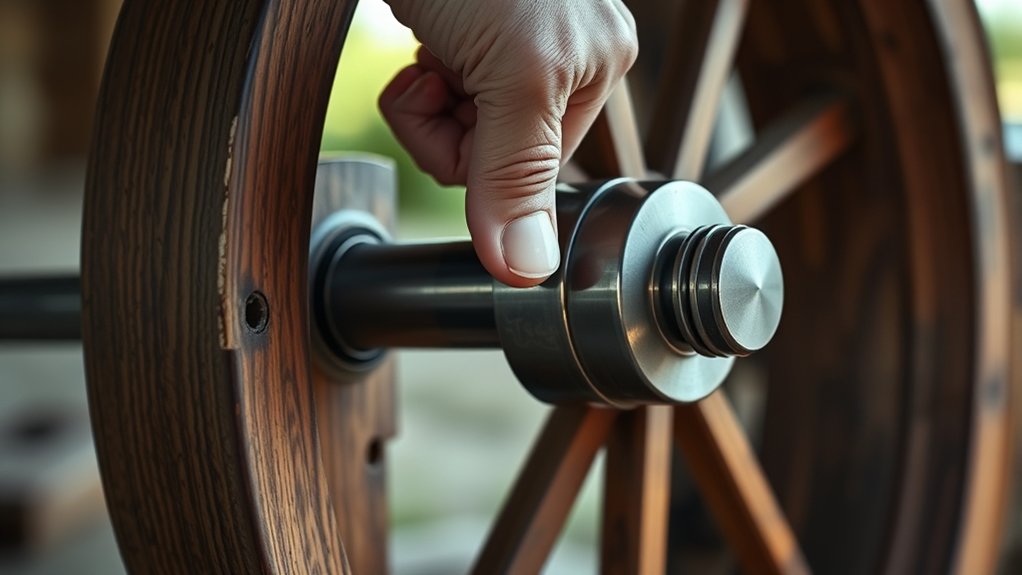
You’ll want to understand mechanical advantage because it shows how simple machines like the wheel and axle make work easier. It’s the ratio of output force to input force, letting you see how much effort you save.
Knowing this helps you use tools more effectively and get tasks done faster.
Definition Of Mechanical Advantage
When you use a wheel and axle, mechanical advantage helps you understand how much easier the tool makes your work. Mechanical advantage is a number that tells you how much a machine multiplies your force. If the mechanical advantage is greater than 1, the machine lets you use less effort to move an object.
It’s like getting extra muscle power without doing extra work. You can calculate it by dividing the radius of the wheel by the radius of the axle.
Think of mechanical advantage as:
- A measure of force amplification
- A way to compare input and output forces
- A way to predict how much easier a task becomes
Knowing this helps you see why wheel and axle systems are so useful.
Importance In Simple Machines
Why does mechanical advantage matter so much in simple machines? Because it shows you how much easier a machine makes your work. When you use a wheel and axle, mechanical advantage tells you how much less force you need to move an object.
This means you can lift heavy loads or turn things with less effort. Understanding mechanical advantage helps you choose the right tool for the job, saving your energy and time. It also explains why simple machines like the wheel and axle have been essential throughout history—they multiply your input force, making tasks manageable.
How a Wheel and Axle Makes Moving Objects Easier
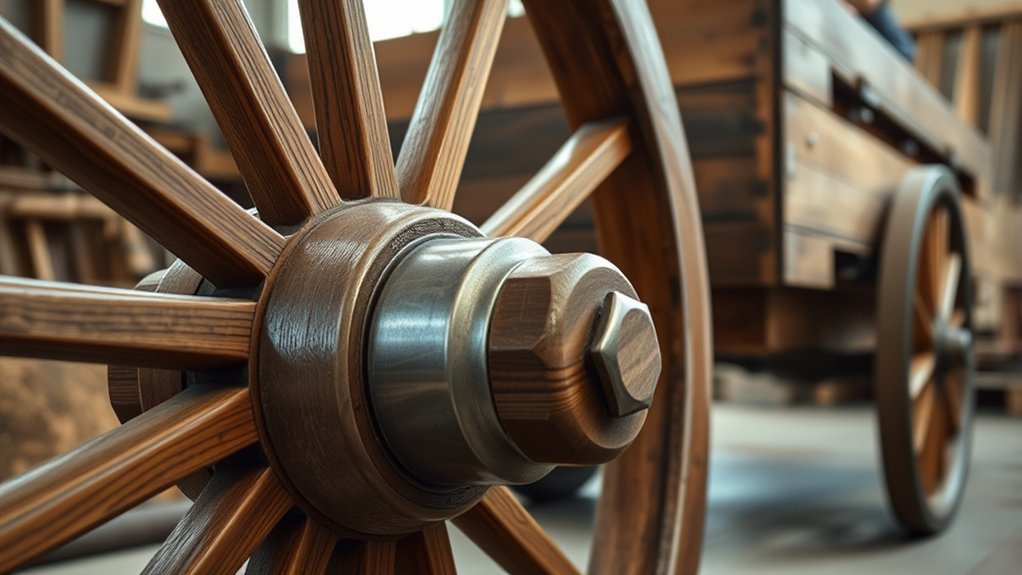
How does a wheel and axle make moving heavy objects feel so much easier? When you use this simple machine, it reduces the effort needed to move something by allowing you to roll it instead of lifting or dragging. The wheel turns smoothly on the axle, minimizing friction and letting you apply less force over a longer distance.
A wheel and axle reduce effort by letting you roll heavy objects smoothly, minimizing friction and force.
Think about these scenarios:
- You push a heavy cart with wheels instead of carrying the load.
- A rolling barrel moves easily across the floor, thanks to its circular shape.
- A doorknob’s wheel and axle let you open a heavy door effortlessly.
In each case, the wheel and axle work together to multiply your force, making heavy objects easier to move.
How Wheel and Axle Size Affects Performance
What difference does the size of the wheel and axle make in their performance? When the wheel is larger compared to the axle, you get a greater mechanical advantage. This means you can apply less force to move or lift an object.
A bigger wheel allows you to cover more distance with the same amount of effort, making work easier. Conversely, if the axle is larger relative to the wheel, you’ll need more force to turn the system, reducing efficiency. The size ratio directly influences how much force you save and how smoothly the system operates.
Everyday Examples of Wheel and Axle Systems
You use wheel and axle systems more often than you realize, from rolling your office chair to turning a doorknob. These simple machines also play a big role in transportation, like on bicycles and cars.
Let’s explore how these everyday examples make your work easier.
Common Household Applications
Although you might not always notice them, wheel and axle systems are everywhere around your home, making everyday tasks easier and more efficient. These simple machines reduce the effort needed to move objects or perform chores. When you use them, you’re benefiting from clever engineering that saves time and energy.
Here are some common household applications you likely use daily:
- Doorknobs: Turning the knob rotates the axle, opening the door smoothly.
- Rolling office chairs: Wheels attached to axles let you glide across the floor effortlessly.
- Manual can openers: The turning handle spins a wheel connected to a cutting blade, slicing open cans with minimal force.
Next time you interact with these objects, you’ll appreciate how wheel and axle systems simplify your life.
Transportation Uses Explained
How do wheel and axle systems make traveling easier? They reduce friction and help you move heavy loads with less effort. Think about your bicycle—when you pedal, the wheels turn on axles, allowing you to glide smoothly over surfaces.
Cars use the same principle; their wheels rotate on axles, supporting the vehicle’s weight and enabling swift movement. Even airplanes rely on wheel and axle systems during takeoff and landing to roll on runways. Wheelbarrows combine a wheel and axle to help you transport heavy materials effortlessly.
Without these systems, moving objects would require far more strength and energy. By harnessing the mechanical advantage of wheels and axles, transportation becomes faster, more efficient, and less tiring for you every day.
How Vehicles Use This Machine to Improve Efficiency
Why do vehicles rely so heavily on wheels and axles? Because they reduce friction and make movement smoother, letting you travel farther with less effort. When you use wheels and axles, the vehicle’s engine doesn’t have to work as hard, saving fuel and improving overall efficiency.
Here’s how wheels and axles boost vehicle efficiency:
- They distribute weight evenly, preventing wear and tear on the vehicle’s parts.
- They allow for smoother rolling over surfaces, reducing energy loss.
- They convert rotational motion from the engine into forward movement effectively.
How a Wheel and Axle Helps With Turning and Steering
When you turn a wheel, the axle helps guide the direction smoothly, giving you better control. This setup also means you don’t have to use as much force to steer.
Understanding how the wheel and axle work together shows why turning feels easier and more precise.
Improved Directional Control
Although steering might seem simple, a wheel and axle system plays a crucial role in giving you precise control over direction. When you turn the wheel, the axle transfers that movement smoothly to the wheels, helping you navigate accurately. This system allows small steering inputs to result in controlled, predictable changes in direction, making it easier to stay on course.
Here’s how it improves directional control:
- It translates your hand movements into smooth turns, avoiding jerky motions.
- It provides feedback through the wheel, letting you feel the road and adjust accordingly.
- It helps maintain stability during turns, preventing sudden shifts that could throw you off balance.
With this control, you steer confidently and precisely every time.
Reduced Steering Effort
Since turning the steering wheel requires effort, the wheel and axle system reduces the force you need to apply, making steering easier and less tiring. When you turn the steering wheel, the large wheel amplifies your input, allowing the smaller axle connected to the wheels to turn with less effort. This mechanical advantage means you don’t have to strain your hands or arms, even when maneuvering heavy vehicles or tight turns.
The wheel’s larger radius multiplies your force, so small movements translate into smoother, more controlled steering. Without this system, steering would demand much more strength and fatigue you quickly. Thanks to the wheel and axle, you can steer precisely and comfortably, improving safety and control every time you take a turn.
How Rolling Carts and Trolleys Save Energy
How exactly do rolling carts and trolleys help you save energy? They reduce the force you need to move heavy loads by using wheels and axles to roll instead of slide. This simple mechanism lowers friction, making it easier for you to push or pull items without tiring quickly.
When you use rolling carts or trolleys, you:
- Glide heavy boxes smoothly across floors instead of dragging them.
- Maneuver loads effortlessly through tight spaces or long distances.
- Avoid straining your muscles, preserving your energy for other tasks.
How Doorknobs Use the Wheel and Axle to Reduce Force
Ever wondered why turning a doorknob feels so easy? It’s because the doorknob acts as a wheel connected to a smaller axle inside the door’s locking mechanism. When you grip the round knob and turn it, you’re applying force over a larger radius—the wheel.
This force transfers to the smaller axle, which requires less effort to rotate. The wheel’s larger diameter compared to the axle means you don’t have to push hard; you gain mechanical advantage. This setup reduces the force needed to operate the lock, making opening doors smooth and effortless.
How Wheel and Axle Systems Help Lift Heavy Loads
When you need to lift a heavy load, a wheel and axle system can make the task much easier. By turning the larger wheel, you apply less force to move the smaller axle, which then lifts the load. This mechanical advantage lets you lift weights that would otherwise require much more effort.
Think about how these systems work in everyday tools:
- A hand winch uses a wheel and axle to raise boats out of the water with less effort.
- A pulley system with a wheel and axle helps lift construction materials safely.
- A car jack uses this system to lift vehicles for tire changes quickly and efficiently.
How Industries Rely on Wheel and Axle for Productivity
Why do so many industries depend on wheel and axle systems to boost productivity? Because these simple machines let you move heavy loads and materials faster with less effort, saving time and energy.
Whether you’re in manufacturing, transportation, or construction, wheel and axle mechanisms help you streamline tasks and increase output. For example, conveyor belts use wheels to transport goods smoothly, and cranes rely on axles to lift heavy items efficiently.
Here’s a quick look at how different industries use them:
| Industry | Application |
|---|---|
| Manufacturing | Conveyor belts |
| Transportation | Vehicle wheels |
| Construction | Cranes and pulleys |
| Agriculture | Farm equipment wheels |
| Warehousing | Rolling carts |
Common Misconceptions About Wheel and Axle Machines
Although wheel and axle machines seem straightforward, you might be surprised by some common misconceptions that cloud their true function and efficiency. Many people think these machines always reduce the force needed, but sometimes they trade force for speed or distance instead.
Others assume the larger the wheel, the easier the work, but the relationship depends on the context and specific setup. You may also believe wheel and axle machines work only for simple tasks, but they’re integral to complex systems too.
Here are three misconceptions to clear up:
- They always decrease the effort required, ignoring speed or distance trade-offs.
- Bigger wheels mean less effort, regardless of the axle size.
- They’re only useful for basic, manual tasks, not advanced machinery.
How Understanding Wheel and Axle Can Help You Use Tools Better
Clearing up misconceptions about wheel and axle machines helps you see their true potential in everyday tools. When you understand how these simple machines work, you can use tools more effectively and efficiently. For example, knowing that a larger wheel requires less force to turn means you can apply the right amount of effort without straining yourself.
This insight helps when using screwdrivers, door knobs, or even bicycles. You’ll also recognize why certain tools have larger wheels or handles—they’re designed to multiply your input force and make tasks easier. By appreciating the mechanics behind the wheel and axle, you’ll handle tools with greater confidence and avoid unnecessary fatigue.
Ultimately, getting your work done faster and with less effort becomes possible.
Frequently Asked Questions
Who Invented the Wheel and Axle?
You can’t credit a single person with inventing the wheel and axle because it emerged thousands of years ago during the Bronze Age. Early humans developed it gradually to improve transportation and tools, revolutionizing daily life.
When Was the Wheel and Axle First Used in History?
You’d find the wheel and axle making its grand debut around 3500 BCE in Mesopotamia, quietly transforming daily life. It wasn’t just a new tool; it was the dawn of smoother journeys and easier tasks for you.
What Materials Are Best for Making Wheel and Axle Systems?
You’ll want strong, durable materials like steel or aluminum for the axle and tough rubber or plastic for the wheel. These materials reduce friction and wear, ensuring your wheel and axle system works smoothly and lasts longer.
Can Wheel and Axle Systems Be Powered by Electricity?
Yes, you can power wheel and axle systems with electricity; electric motors convert electrical energy into mechanical energy, driving wheels with up to 90% efficiency.
This makes your devices smoother and more energy-efficient.
How Do Wheel and Axle Systems Compare to Pulleys?
You’ll find wheel and axle systems rotate objects, while pulleys change force direction. Both reduce effort, but pulleys help lift loads vertically.
Each suits different tasks, so you choose based on the job’s needs.
Conclusion
Now that you know how a wheel and axle make work easier, you can appreciate their timeless magic—like a knight relying on his trusty steed, these simple machines boost your strength and efficiency.
By understanding mechanical advantage and how size impacts performance, you’ll use tools smarter, not harder. Whether lifting heavy loads or moving objects, the wheel and axle is your silent partner in productivity.
In conclusion, the wheel and axle remains essential in everyday tasks, demonstrating how mechanical advantage makes work easier. This simple machine continues to drive innovation and efficiency, proving that even the oldest inventions still power progress today.

