

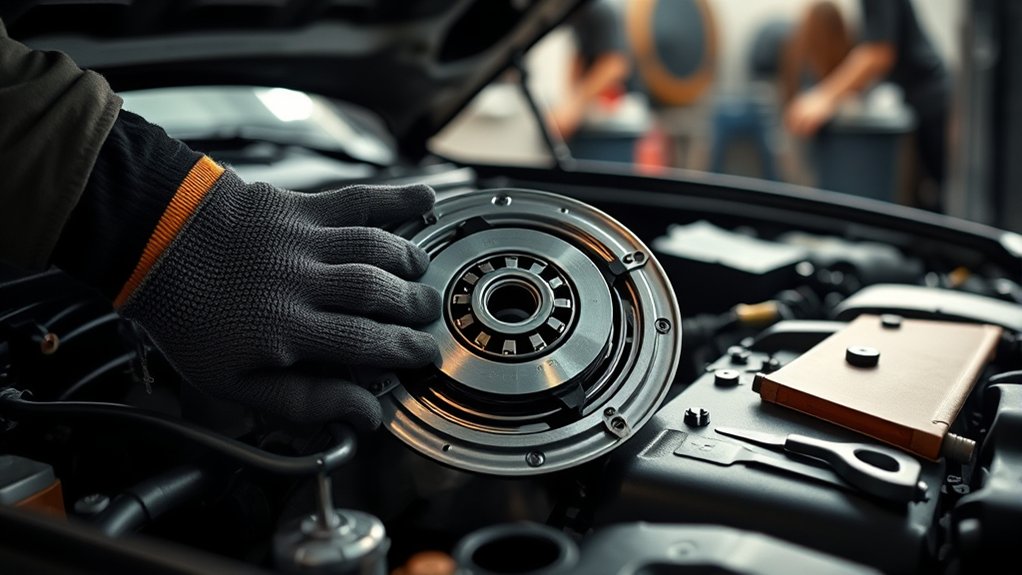
To break in your new clutch effectively, start by inspecting all components and topping off the clutch fluid.
Proper clutch break-in ensures smooth operation, longevity, and optimal performance.
Engaging the clutch gradually is key—release the pedal slowly and find the friction point while matching engine and road speed.
Avoid riding the clutch by keeping your foot off the pedal when not shifting.
Engage the clutch smoothly and shift fully before releasing the pedal.
Drive steadily at moderate speeds, steering clear of stop-and-go traffic and hills.
Keep these basics in mind, and you’ll guarantee a lasting, smooth clutch operation.
Following these essential steps will help you perfect the clutch break-in process with ease.
Key Takeaways
- Inspect clutch components and fluid levels before starting the break-in process.
- Release the clutch pedal slowly and use the friction point for smooth engagement.
- Avoid riding the clutch by keeping your foot off the pedal when not shifting.
- Shift gears fully and ease off the clutch gradually to prevent sudden engagement.
- Drive at moderate speeds (20-40 mph) and avoid stop-and-go traffic during break-in.
How Long Should You Break In a New Clutch?
Although the exact break-in period can vary depending on your clutch type and vehicle, you should generally plan to break in a new clutch for at least 500 miles. This initial phase is vital to allow the clutch components to wear in smoothly and establish proper friction surfaces. During these first miles, you’ll want to avoid aggressive starts, heavy loads, and riding the clutch pedal.
Instead, focus on gentle acceleration and smooth gear changes. Keep in mind that some manufacturers might recommend a longer or shorter break-in, so it’s smart to check your vehicle’s manual. By dedicating time to this process, you’ll extend your clutch’s lifespan and guarantee it functions effectively.
Taking it easy during this period pays off with better performance.
Preparing Your Car for a New Clutch Break-In

Before you start breaking in your new clutch, make sure to inspect all clutch components for any signs of wear or damage. Check your clutch fluid levels and top them off if needed to guarantee smooth operation.
Taking these steps will help your break-in process go smoothly and extend the life of your clutch.
Inspect Clutch Components
When preparing your car for a new clutch break-in, you need to carefully inspect all clutch components to guarantee everything functions smoothly. Start by examining the clutch disc for any signs of damage or uneven wear. Check the pressure plate to ensure its springs are intact and not warped.
Inspect the release bearing for smooth rotation and absence of noise or roughness. Don’t forget to look over the pilot bearing or bushing; it should spin freely without resistance. Verify that the clutch fork operates without binding, and all mounting bolts are tight.
Catching any issues now helps prevent premature clutch failure and ensures your break-in process goes as planned. A thorough inspection lays the foundation for a reliable, long-lasting clutch performance.
Check Fluid Levels
How do you guarantee your clutch system operates smoothly during break-in? Start by checking your fluid levels carefully. Proper hydraulic fluid ensures smooth clutch engagement and prevents premature wear.
Here’s what you need to do:
- Locate the clutch master cylinder reservoir under the hood
- Check the fluid level against the “Full” and “Low” marks
- Use the manufacturer-recommended clutch fluid type
- Inspect fluid condition; replace if it looks dirty or contaminated
- Top off the fluid if it’s below the recommended level, avoiding spills
Maintaining the right fluid level helps avoid air bubbles in the system, which can cause inconsistent clutch behavior. Before you hit the road for break-in, ensure your clutch hydraulic system is in top shape to promote a flawless clutch bed-in process.
How to Engage Your Clutch Gradually for Longevity
To protect your new clutch, you need to engage it smoothly every time you shift. Apply pressure gradually to avoid sudden wear and tear.
This controlled approach helps extend your clutch’s lifespan considerably.
Smooth Clutch Engagement
Although it might be tempting to release the clutch quickly, engaging it gradually guarantees smoother shifts and extends the clutch’s lifespan. You want to avoid sudden jerks that stress the clutch components.
Instead, focus on a controlled, steady release to let the clutch plates mesh gently. This approach reduces wear and helps you feel the clutch’s bite point clearly.
To engage your clutch smoothly, keep these tips in mind:
- Start releasing the clutch pedal slowly as you apply gentle throttle
- Find the friction point where the clutch begins to engage
- Avoid riding the clutch by keeping the pedal fully down or up
- Match engine speed with road speed for seamless progressions
- Practice in low-traffic areas to build your muscle memory and confidence
Following these steps guarantees your clutch breaks in properly and lasts longer.
Controlled Pressure Application
When you apply pressure to the clutch pedal gradually, you give the clutch plates time to engage smoothly, preventing unnecessary wear. Instead of slamming the pedal down or releasing it too quickly, ease into it with steady, controlled movements. This allows the friction material to bed in properly without overheating or slipping excessively.
Focus on feeling the bite point—the moment the clutch begins to engage—and gently increase pressure from there. Avoid sudden or harsh inputs that can cause premature wear or damage. By mastering controlled pressure application, you extend your clutch’s lifespan and ensure smoother gear shifts.
How to Avoid Riding the Clutch During Break-In
Because riding the clutch puts unnecessary wear on its components, you should keep your foot off the pedal whenever possible during break-in. This means fully engaging or disengaging the clutch instead of partially pressing it. Avoid resting your foot on the pedal, as even slight pressure causes slipping and heat buildup.
Focus on these actions to prevent riding the clutch:
- Use the clutch only when shifting or stopping
- Rest your foot beside the pedal, not on it
- Engage the clutch smoothly and quickly
- Avoid holding the clutch halfway during stops
- Practice proper foot positioning for better control
Smooth Shifting Tips for Clutch Break-In
Keeping your foot off the clutch pedal except during shifts and stops helps reduce wear, but how you shift matters just as much. When breaking in your clutch, focus on smooth, deliberate gear changes. Press the clutch pedal fully before shifting to avoid grinding gears.
Don’t rush the process; allow the engine speed to match the transmission before you release the clutch. Ease off the pedal gradually to prevent sudden engagement, which can cause unnecessary friction. Avoid abrupt acceleration right after a shift to minimize strain on the clutch plates.
What Are the Best Driving Conditions for Breaking in Your Clutch?
Although breaking in a clutch requires patience, choosing the right driving conditions can make the process smoother and more effective. You want to avoid stop-and-go traffic or steep hills that force excessive clutch use.
Instead, focus on steady, moderate-speed driving where you can shift gears smoothly without slipping the clutch too much. Ideal conditions help prevent overheating and premature wear.
Here are the best driving conditions for *conditioning* your clutch:
- Light to moderate traffic with minimal stops
- Flat or gently rolling terrain
- Moderate speeds between 20-40 mph
- Avoiding heavy loads or towing
- Short trips to gradually warm the clutch
Following these conditions ensures a controlled break-in that extends your clutch’s lifespan.
How to Tell When Your New Clutch Is Properly Broken In
Once you’ve followed the proper break-in procedures, you’ll start noticing signs that your new clutch is settling in. The first sign is smoother engagement when you press the pedal—there won’t be any jerking or slipping. You’ll also feel consistent pedal resistance without sudden changes.
Another indicator is improved responsiveness; your car will shift gears more seamlessly, and you won’t hear any unusual noises like grinding or squealing. Pay attention to how the clutch feels during acceleration—if it grips firmly without slipping under heavier loads, it’s a good sign.
Frequently Asked Questions
What Tools Are Needed to Install a New Clutch?
You’ll need a clutch alignment tool, socket set, torque wrench, screwdrivers, and a jack with stands. Don’t forget safety gloves and possibly a flywheel holder to keep everything steady during installation.
Can I Use Any Type of Oil During Clutch Break-In?
You shouldn’t use just any oil during clutch break-in. Stick to the manufacturer’s recommended type and grade to guarantee proper performance and avoid damage.
Using the wrong oil can cause slipping or premature wear.
How Much Does a New Clutch Installation Typically Cost?
A new clutch installation typically costs between $500 and $1,500—like buying a small spaceship! You’ll pay for parts and labor, but prices vary depending on your car model, location, and mechanic’s rates.
What Are Common Signs of a Failing Clutch?
You’ll notice slipping during acceleration, difficulty shifting gears, a spongy or sticking clutch pedal, strange noises when pressing the pedal, or burning smells.
These signs usually mean your clutch is wearing out and needs attention soon.
Is It Necessary to Replace the Flywheel With the Clutch?
Think of the flywheel as your clutch’s dance partner—it doesn’t always need replacing. You only swap it if it’s damaged or worn.
Otherwise, you can save time and money by keeping it intact with your new clutch.
Conclusion
Breaking in your new clutch might seem like a hassle, but it’s actually a simple process that pays off big time. Just like when you break in new shoes and they get comfier with each step, your clutch gets smoother and lasts longer the more you treat it right.
So, stick to those gentle starts and smooth shifts—before you know it, you’ll be cruising with a clutch that feels like it’s been part of your car forever. Proper clutch break-in ensures optimal performance and extends the life of your vehicle’s transmission.
By following these essential steps, you’ll enjoy a reliable, smooth-driving experience with your new clutch for many miles to come.

