


You’ll first spot signs like rough idling or sluggish starts showing your diesel fuel filter needs changing. Changing a diesel fuel filter is essential for maintaining engine performance and fuel efficiency.
Gather wrenches, a new filter, gloves, and safety gear before starting the process.
Park safely, disconnect the battery, and let the engine cool. Locate the filter along the fuel line, then relieve pressure before removing the old one to avoid spills.
Install the new filter snugly, prime the system, and check for leaks.
Keep going to uncover more tips for a smooth replacement. Following these steps ensures your diesel engine runs cleanly and efficiently. Proper maintenance prevents costly repairs down the line.
Key Takeaways
- Park on a flat surface, engage the parking brake, and disconnect the negative battery terminal for safety.
- Locate the diesel fuel filter along the fuel line, typically near the engine bay or fuel tank.
- Relieve fuel system pressure before carefully disconnecting the fuel lines from the old filter.
- Remove the old filter, lubricate the new filter gasket, and install the new filter by hand, tightening per specs.
- Prime the fuel system after installation and check for leaks before starting the engine.
How to Tell When Your Diesel Fuel Filter Needs Changing
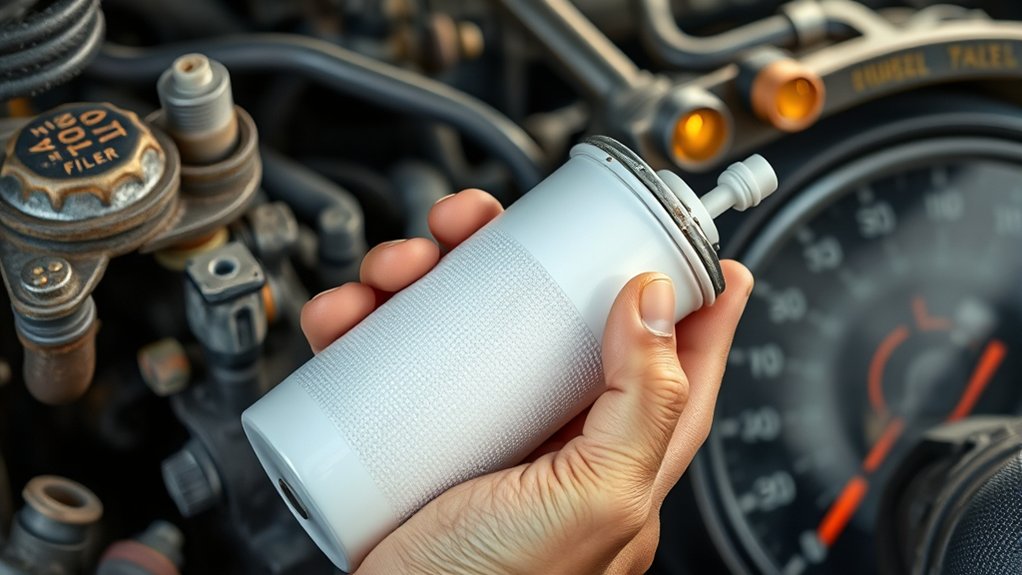
Although diesel fuel filters typically last thousands of miles, you’ll need to change yours when you notice signs like reduced engine power, rough idling, or difficulty starting. These symptoms often mean your filter is clogged and restricting fuel flow. You might also detect unusual engine noises or increased exhaust smoke, which can indicate contamination.
Pay attention if your fuel gauge seems inaccurate or if the engine hesitates during acceleration. Some vehicles have warning lights or indicator gauges that signal filter issues—don’t overlook them. Regularly checking the filter’s condition during routine maintenance helps you avoid breakdowns.
If you drive in dusty environments or use lower-quality fuel, expect to replace the filter more frequently. Staying alert to these signs ensures your diesel engine runs smoothly and efficiently.
How to Gather Tools and Materials for the Job
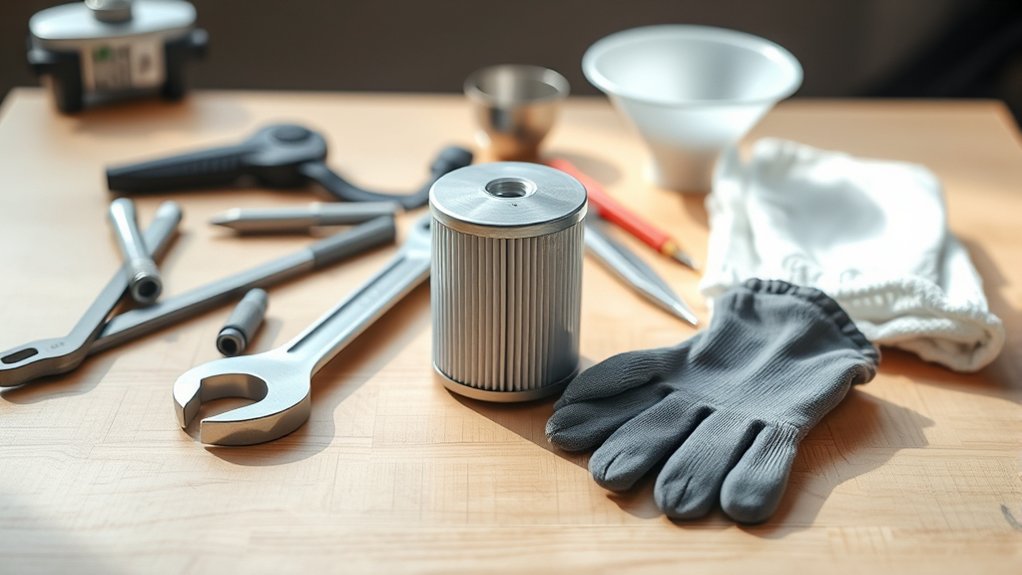
Noticing signs that your diesel fuel filter needs changing is just the first step—now you’ll want to gather the right tools and materials to get the job done efficiently. Having everything ready beforehand saves time and prevents frustration during the process.
Here’s a quick checklist to help you prepare:
| Tools | Materials |
|---|---|
| Wrench set | Replacement diesel fuel filter |
| Screwdrivers (flat & Phillips) | Clean rags |
| Fuel line clamps | Container for draining fuel |
Make sure the replacement filter matches your vehicle’s specifications. Also, having gloves and safety glasses on hand is a smart precaution, though not listed in the main table. Once you’ve gathered these essentials, you’re ready to move on to preparing your vehicle safely.
How to Safely Prepare Your Vehicle for Diesel Fuel Filter Replacement
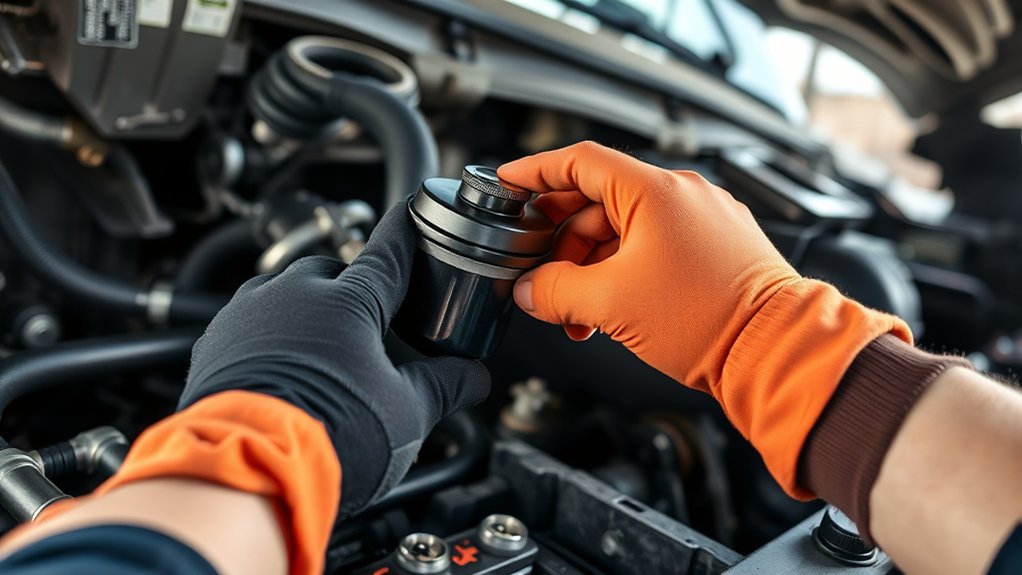
Where should you start when preparing your vehicle for a diesel fuel filter replacement? First, ensure the engine is cool to avoid burns. Then, follow these steps to prepare safely:
- Park on a flat surface and engage the parking brake to prevent movement.
- Disconnect the negative battery terminal to avoid electrical hazards.
- Wear safety gloves and goggles to protect your hands and eyes from fuel exposure.
- Place a drip pan or absorbent cloth beneath the filter area to catch any spilled diesel.
Taking these precautions helps you work safely and keeps your vehicle stable throughout the replacement process.
Now you’re ready to move on without risking injury or damage.
How to Locate and Access the Diesel Fuel Filter
Once your vehicle is safely prepared, the next step is to find the diesel fuel filter so you can access it for replacement. Typically, the fuel filter is located along the fuel line between the fuel tank and the engine. Check near the engine bay or under the vehicle close to the fuel tank.
On many trucks and SUVs, you’ll find it mounted on the frame rail or inside a protective casing. Consult your owner’s manual for the exact location—it’s the quickest way to avoid confusion.
Make sure you have enough light and the right tools ready. You might need to remove protective covers or panels to access the filter. Keep the area clean to prevent dirt from entering the fuel system during replacement.
How to Remove the Old Diesel Fuel Filter Without Spills
Before you start removing the old diesel fuel filter, make sure to have spill prevention tools like rags and a drip pan ready. Carefully disconnect the fuel lines to avoid any leaks or spills.
Taking these steps will keep your workspace clean and safe.
Prepare Spill Prevention Tools
Although changing the diesel fuel filter can be straightforward, preparing proper spill prevention tools is essential to avoid messes and environmental hazards. You’ll want to gather items that keep your workspace clean and protect the environment.
- Absorbent pads or rags – Place these under the filter area to catch drips.
- A drip tray or shallow pan – Position this directly below the filter to collect any fuel spills.
- Disposable gloves – Wear gloves to protect your hands from fuel and make cleanup easier.
- Plastic bags or containers – Use these to safely store the old filter and any soaked materials for proper disposal.
Having these tools ready helps you handle spills efficiently and keeps your workspace safe during the filter change.
Safely Disconnect Fuel Lines
How do you disconnect diesel fuel lines without causing spills? First, relieve the fuel system pressure by loosening the fuel cap and using the vehicle’s pressure relief method.
Then, place an absorbent pad or container under the connection to catch any drips. Use the proper tools to carefully loosen the fuel line fittings—avoid twisting or bending the lines to prevent damage.
Disconnect slowly to control any residual fuel flow.
Here’s a quick reference for safe disconnection:
| Step | Action |
|---|---|
| Pressure Relief | Loosen fuel cap, depressurize |
| Spill Control | Use absorbent pads, drip tray |
| Line Removal | Use correct tools, disconnect slowly |
How to Install the New Diesel Fuel Filter Correctly
Once you’ve removed the old filter and cleaned the housing, you’ll want to carefully prepare the new diesel fuel filter for installation to guarantee it functions properly and prevents leaks. First, check the new filter for any damage or debris before handling.
Second, lubricate the rubber gasket with a bit of clean diesel or engine oil to ensure a tight seal. Third, align the filter properly with the housing threads and gently screw it in by hand, avoiding cross-threading.
Fourth, tighten the filter according to the manufacturer’s specifications—usually about three-quarters of a turn after the gasket contacts the base. Following these steps ensures a secure fit and peak fuel flow.
How to Prime the Diesel Fuel System and Check for Leaks
Why is priming the diesel fuel system essential after installing a new filter? Priming removes air trapped in the fuel lines, ensuring smooth engine operation and preventing hard starts or stalling. To prime, locate the primer pump—usually a manual bulb or lever near the filter.
Pump it steadily until you feel resistance, signaling the fuel system is full. Next, check for leaks by inspecting all connections around the filter and fuel lines. Start the engine and watch closely; any fuel drips or wet spots indicate a loose fitting or damaged seal.
Tighten or replace parts as needed to avoid fuel loss and engine issues. Proper priming and leak checks guarantee your diesel engine runs reliably after the filter change.
Frequently Asked Questions
How Often Should Diesel Fuel Filters Be Replaced for Different Vehicle Types?
You should replace diesel fuel filters every 10,000 to 25,000 miles, depending on your vehicle type. Trucks need more frequent changes, around 10,000-15,000 miles, while smaller vehicles can go up to 20,000-25,000 miles.
Can Using a Wrong Fuel Filter Damage My Diesel Engine?
Using the wrong fuel filter is like wearing the wrong shoes on a hike—it can seriously hurt your diesel engine. It’ll clog, leak, or starve fuel flow, causing damage and costly repairs you don’t want to face.
What Are the Signs of a Clogged Diesel Fuel Filter?
You’ll notice your engine sputtering, losing power, or struggling to start. It might stall frequently, run roughly, or show decreased fuel efficiency.
A clogged diesel fuel filter often triggers these performance issues.
Are There Any Additives to Extend Diesel Fuel Filter Life?
You can gently support your diesel filter’s longevity by using fuel additives designed to cleanse and protect. These magic helpers reduce contaminants and moisture, giving your filter a longer, healthier life without demanding immediate replacement.
How Much Does a Typical Diesel Fuel Filter Replacement Cost?
You’ll typically pay between $50 and $150 for a diesel fuel filter replacement, depending on your vehicle and labor costs. Doing it yourself can save money, but professional service guarantees it’s done right.
Conclusion
Changing your diesel fuel filter doesn’t have to be intimidating. With careful preparation, proper tools, and precise steps, you can prevent pesky problems and protect your powertrain.
Remember to routinely review your filter’s condition to keep your diesel engine running smoothly. By following these simple steps, you’ll swiftly secure a safer, stronger, and smoother drive.
Stay sharp, stay safe, and savor the satisfaction of self-servicing success! Regular diesel fuel filter maintenance is key to ensuring optimal engine performance and longevity.

