


To disconnect your fuel filter safely and efficiently, it’s important to follow a clear step-by-step process. Properly disconnecting the fuel filter prevents fuel leaks and ensures your vehicle runs smoothly. Before starting, gather essential tools, gloves, and safety gear to protect yourself.
First, park your vehicle on a flat surface to maintain stability. Relieve the fuel pressure by removing the fuel pump fuse and cycling the ignition a few times. This step reduces the risk of fuel spray when disconnecting the filter.
Next, locate the fuel filter using your vehicle’s manual and clear the area around it. Use the correct tools to carefully disconnect the fuel lines, making sure to catch any fuel drips with rags or containers.
Finally, loosen the mounting clips and gently remove the filter. Keep following these steps for smooth replacement and thorough inspection.
Key Takeaways
- Relieve fuel pressure by removing the fuel pump fuse and turning the ignition on to avoid fuel spray.
- Locate the fuel filter using the owner’s manual and clear any debris or covers blocking access.
- Wear safety gloves and goggles, and prepare a container or rag to catch fuel drips during disconnection.
- Use the correct fuel line disconnect tool and clips to safely detach fuel lines from the filter.
- Loosen mounting bolts or clips and carefully remove the fuel filter, inspecting it for damage before replacement.
How to Prepare Safely and Gather Tools
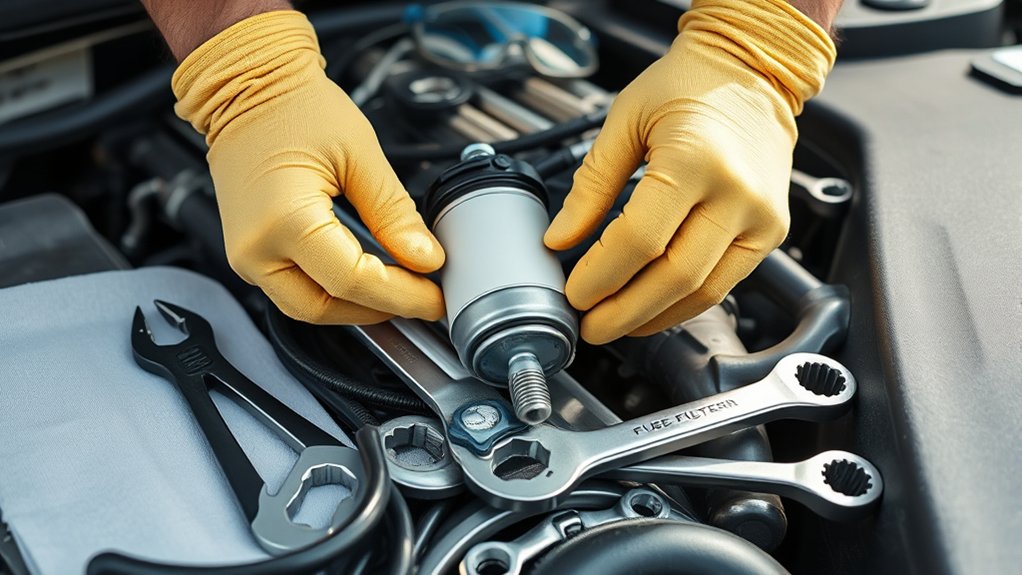
Before you begin disconnecting the fuel filter, make sure you prepare safely and gather all necessary tools. Start by parking your vehicle on a flat surface and turning off the engine to prevent any accidents. Wear safety gloves and goggles to protect yourself from fuel spills.
Have a fire extinguisher nearby, just in case. Next, gather essential tools like a wrench set, screwdrivers, and a container to catch any leaking fuel. You’ll also need rags for cleaning spills and possibly replacement O-rings or seals.
Double-check that you have all these items at hand before you start. Taking these steps guarantees you work efficiently and reduces the risk of injury or damage while disconnecting the fuel filter.
How to Relieve Fuel Pressure Before Disconnecting
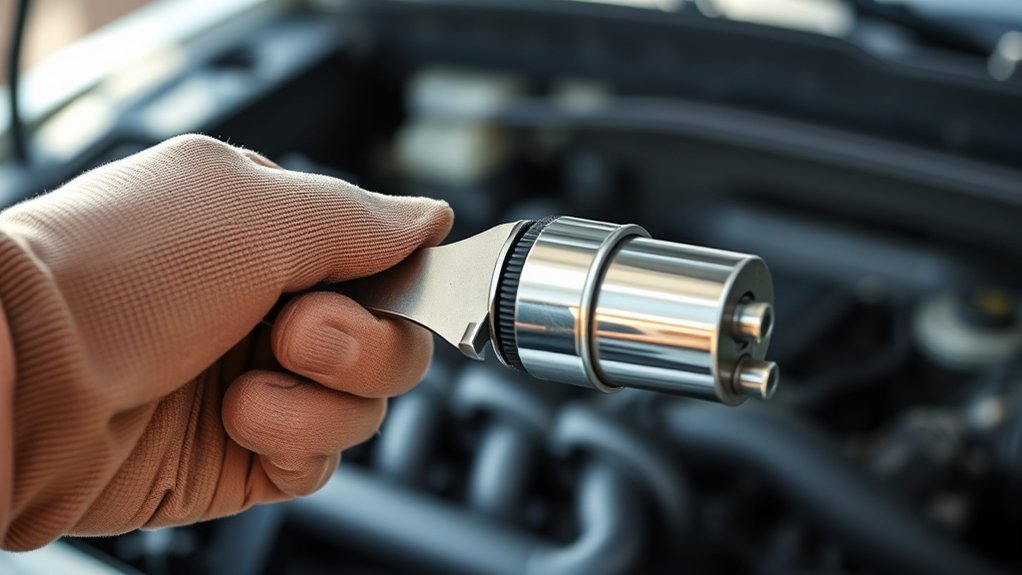
One of the key steps to safely disconnecting your fuel filter is relieving the fuel pressure in the system. Start by locating the fuel pump fuse or relay in your vehicle’s fuse box and remove it to prevent the fuel pump from running.
Next, turn the ignition key to the “on” position for a few seconds without starting the engine; this lets the fuel pressure drop. You can repeat this step a couple of times to ensure the pressure is fully alleviated.
Some vehicles have a fuel pressure relief valve on the fuel rail—if yours does, carefully press the valve to release any remaining pressure. Taking these steps reduces the risk of fuel spray when disconnecting the filter, keeping you safe and the job cleaner.
How to Locate and Access the Fuel Filter
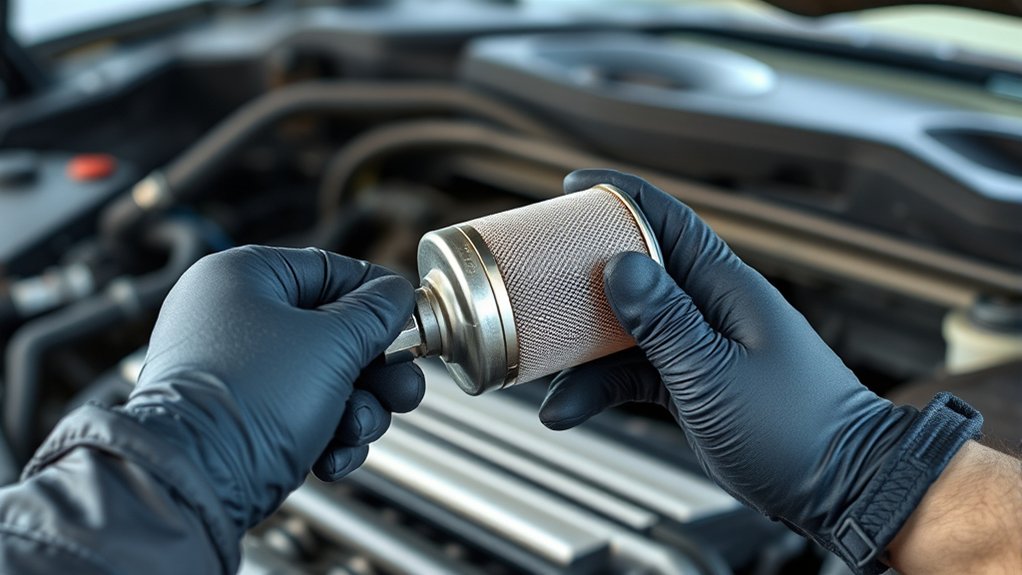
With the fuel pressure safely relieved, you can now focus on locating your vehicle’s fuel filter. Check your owner’s manual for the exact location—it’s usually along the fuel line either under the car near the fuel tank or inside the engine bay. In many vehicles, the filter is inside a metal or plastic housing with fuel lines attached.
Use a flashlight to spot the fuel filter if it’s tucked away in a dark area. Once located, clear any debris or components blocking your access, like engine covers or splash shields, using the appropriate tools. Make sure the area is clean to prevent dirt from entering the fuel system when you disconnect the filter.
Now you’re set to proceed with fuel filter removal safely and efficiently.
How to Disconnect Fuel Lines Without Fuel Spills
Before disconnecting the fuel lines, make sure you have the right tools and fuel line clips ready. You’ll also want to relieve the fuel pressure to avoid leaks. Taking these steps helps you prevent spills and keep your workspace clean.
Prepare Fuel Line Tools
Gathering the right tools is essential to disconnect fuel lines without causing spills. You’ll need a set of fuel line disconnect tools specifically designed for your vehicle’s connectors. These tools slip into the fuel line fittings, releasing the clips that hold the lines in place.
Have a small container or rag ready to catch any residual fuel that may drip during disconnection. A pair of safety gloves protects your hands from fuel exposure, while safety goggles shield your eyes. Additionally, keep a flathead screwdriver handy for gently prying stubborn clips if needed.
Before starting, verify you have a clean workspace and good lighting to clearly see the connections. Being well-prepared with these tools helps you work efficiently and safely, minimizing mess and risk.
Use Fuel Line Clips
Although disconnecting fuel lines can seem tricky, using the proper fuel line clips makes the process much easier and prevents fuel spills. These clips securely pinch the fuel lines, stopping fuel from leaking once you disconnect the filter.
Before you start, select clips that fit your fuel line diameter snugly. Slide the clip onto the line, then carefully disconnect the fuel filter. The clip will hold the line closed, minimizing spills and keeping your workspace cleaner.
When reinstalling, remove the clips to restore fuel flow. Using fuel line clips not only saves you from messy fuel drips but also speeds up the job by giving you better control.
Always keep a rag handy just in case, but clips greatly reduce the risk of spills during disconnection.
Control Fuel Pressure
Using fuel line clips helps reduce spills, but controlling the fuel pressure is what truly prevents fuel from spraying when you disconnect the lines. Before you start, relieve the fuel system pressure by locating the fuel pump fuse or relay and removing it. Then, start the engine and let it run until it stalls, ensuring the pressure drops.
Next, turn off the ignition and disconnect the negative battery terminal for safety. If your vehicle has a Schrader valve on the fuel rail, use a fuel pressure gauge to release any remaining pressure carefully. By following these steps, you’ll minimize fuel spray and avoid messy spills when disconnecting the fuel lines.
Taking command of fuel pressure ensures a safer, cleaner job every time you replace the fuel filter.
How to Remove the Fuel Filter From Its Mounting
Before you start removing the fuel filter from its mounting, make sure the engine is cool and the vehicle is securely supported. Locate the fuel filter, usually found along the fuel line under the vehicle or near the engine bay. Identify the mounting bracket or clip holding the filter in place.
Use a wrench or socket to loosen and remove any bolts or screws securing the bracket. If the filter is held by clips, carefully pry them open with a flathead screwdriver. Gently wiggle the filter free from its mounting without damaging the fuel lines.
Keep a rag handy to catch any residual fuel that may leak. Once detached, carefully lower or remove the filter, preparing it for the next step.
How to Inspect and Replace the Fuel Filter
Once you’ve removed the fuel filter from its mounting, the next step is to carefully inspect it for signs of wear or clogging. Look closely at the filter body and connections to ensure there’s no damage or buildup that could block fuel flow. If the filter appears dirty or damaged, it’s time to replace it.
To inspect and replace the fuel filter properly, you should:
- Check the filter element for discoloration or debris.
- Examine the seals and fittings for cracks or deterioration.
- Compare the old filter with the new one to confirm compatibility.
When installing the new filter, make sure to align it correctly and secure it firmly in the mounting to avoid leaks. Your engine will thank you for the clean fuel flow!
Common Signs You Need to Replace Your Fuel Filter
Although a fuel filter might seem like a small component, it plays an essential role in keeping your engine running smoothly. When it gets clogged, you’ll notice several signs indicating it’s time for a replacement. Your engine may hesitate or sputter during acceleration, or you might experience difficulty starting your vehicle.
Reduced fuel efficiency is another common symptom, as a blocked filter restricts fuel flow. Additionally, your engine might misfire or idle roughly. If you detect a strong fuel smell or see the check engine light come on, don’t overlook these warning signs.
Replacing a worn-out fuel filter ensures your engine gets clean fuel, preventing damage and maintaining performance. Keep an eye on these symptoms to avoid costly repairs down the road.
Frequently Asked Questions
What Types of Fuel Filters Are Most Common in Vehicles?
You’ll most often find cartridge and spin-on fuel filters in vehicles. Cartridge filters sit inside a housing, while spin-on filters screw directly onto the fuel line.
Both help keep your engine running smoothly by trapping debris.
Can a Clogged Fuel Filter Cause Engine Overheating?
Yes, a clogged fuel filter can cause engine overheating because it restricts fuel flow, making your engine work harder.
You’ll notice poor performance and increased engine temperature if the filter isn’t replaced promptly.
How Often Should a Fuel Filter Be Replaced for Diesel Engines?
You should replace your diesel engine’s fuel filter every 15,000 to 25,000 miles.
Did you know a clogged filter can reduce fuel efficiency by up to 15%?
Staying timely keeps your engine running smoothly.
Are There Any Aftermarket Fuel Filter Brands Recommended?
You’ll want to check out brands like Bosch, Fram, and Mann-Filter for reliable aftermarket fuel filters. They offer quality, fit well, and keep your engine running smoothly without breaking the bank or compromising performance.
What Are the Environmental Disposal Methods for Used Fuel Filters?
You should recycle used fuel filters properly since over 80% of automotive waste can be reclaimed. Take them to hazardous waste centers or auto shops to prevent soil and water contamination. Don’t toss them in regular trash!
Conclusion
Now that you know how to disconnect your fuel filter safely, you’re one step closer to better engine performance. Did you know that a clogged fuel filter can reduce your fuel efficiency by up to 20%?
Keeping it clean not only saves you money at the pump but also helps your car run smoother. Follow these steps regularly, and you’ll avoid costly repairs down the road.
You’ve got this! Remember, proper fuel filter maintenance is key to optimal fuel efficiency and a healthy engine. Regularly disconnecting and cleaning your fuel filter ensures your vehicle runs at its best.

