


You’ll know your fuel filter is bad if your engine hesitates, stalls, or struggles with power and acceleration. These are common signs of a clogged fuel filter restricting fuel flow. Hard starts, frequent misfires, and rough idling are also key symptoms to watch for.
Unusual noises like knocking or sputtering often accompany these issues. These symptoms happen because the filter is clogged, restricting fuel flow and risking engine damage. If you’re experiencing these problems, it’s essential to inspect and replace the fuel filter promptly.
Regular maintenance and timely replacement can prevent costly repairs. Discover how to identify and fix these fuel filter problems effectively to keep your engine running smoothly.
Key Takeaways
- Engine hesitation, stalling, or sudden power loss often indicate a clogged fuel filter restricting fuel flow. Difficulty starting the engine and frequent misfires signal inadequate fuel delivery from a bad fuel filter.
- Noticeable decline in acceleration and engine power, especially under load or uphill, suggests fuel filter blockage. Rough idling, unusual knocking, or sputtering noises during acceleration can result from restricted fuel supply.
- Long engine cranking times and inconsistent responsiveness when pressing the gas pedal are symptoms of a failing fuel filter.
How a Fuel Filter Works and Why It’s Important
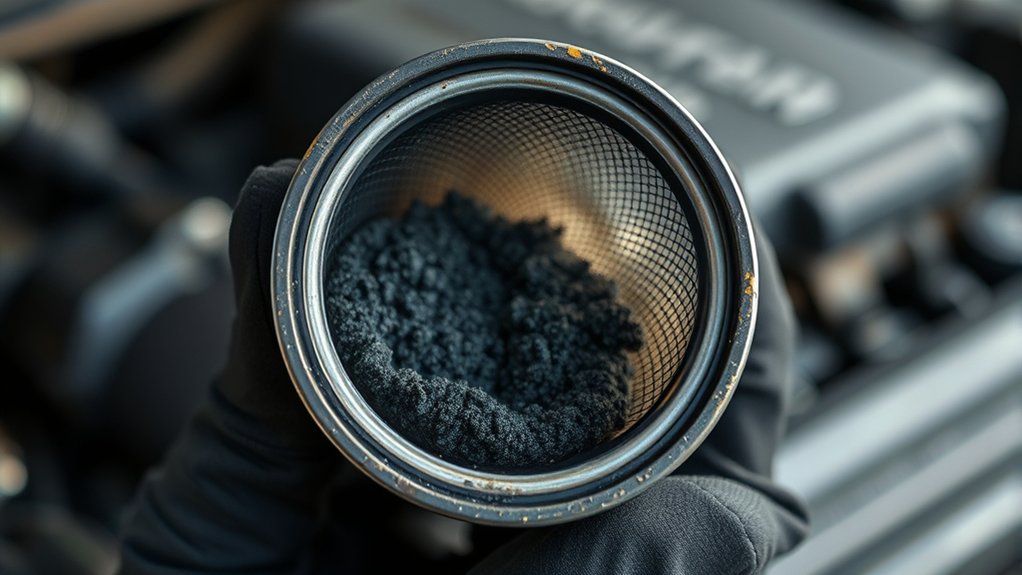
How exactly does a fuel filter work, and why should you care? Your fuel filter’s job is simple but crucial: it traps dirt, rust, and other contaminants before they reach your engine. By catching these impurities, it guarantees that only clean fuel gets to your engine’s components, helping everything run smoothly.
You should care because a clogged or dirty fuel filter can restrict fuel flow, which impacts your vehicle’s performance and efficiency. It protects your fuel injectors and engine from damage caused by debris. Regularly maintaining or replacing your fuel filter keeps your engine healthy and prevents costly repairs down the road.
Engine Hesitation and Stalling Caused by a Bad Fuel Filter
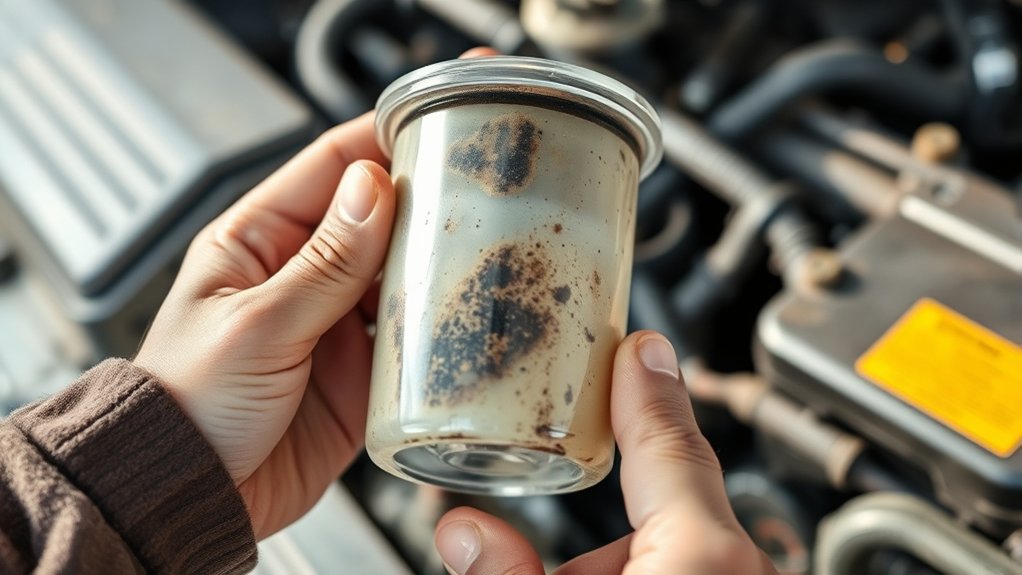
You might notice your engine hesitating or losing power when the fuel filter gets clogged. This restriction reduces fuel flow, causing your vehicle to stall unexpectedly. Recognizing these signs can help you address a bad fuel filter before it leads to bigger problems.
Engine Performance Drops
When your engine hesitates or stalls unexpectedly, a clogged fuel filter might be the culprit. As the filter gets dirty, it restricts fuel flow, causing your engine to struggle for power. You’ll notice your car feels sluggish, especially when accelerating or driving uphill.
The engine may misfire or hesitate because it’s not getting the consistent fuel supply it needs. This drop in performance often feels like a sudden lack of responsiveness when you press the gas pedal. If you ignore these signs, your engine could suffer long-term damage due to fuel starvation.
Checking and replacing a bad fuel filter restores proper fuel flow, helping your engine run smoothly, maintain power, and avoid these frustrating dips in performance.
Unexpected Stall Occurrences
Why does your engine suddenly stall or hesitate without warning? One common culprit is a bad fuel filter. When the filter gets clogged, it restricts fuel flow, causing your engine to struggle for the fuel it needs.
This lack of fuel can lead to hesitation during acceleration or even unexpected stalling, especially when you’re idling or driving uphill. You might notice your engine cutting out briefly or feeling like it’s about to stall. Ignoring these signs can lead to more serious issues, like damaging your fuel pump.
If you experience these sudden stalls or hesitation, checking your fuel filter should be a priority. Replacing a clogged filter often restores smooth engine operation and prevents those annoying, dangerous stalls on the road.
Loss of Engine Power and Acceleration Due to Fuel Filter Issues
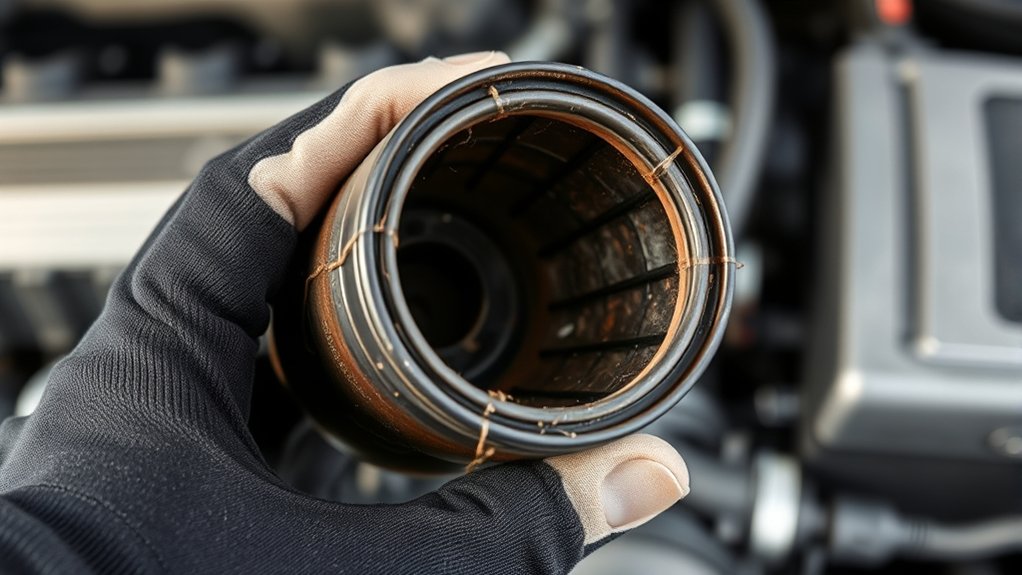
Although other issues can cause similar symptoms, a clogged fuel filter often leads to noticeable loss of engine power and sluggish acceleration. When the fuel filter is dirty or blocked, it restricts fuel flow to your engine, making it struggle to get the amount of fuel it needs. You’ll likely feel your car hesitate when you press the gas pedal or notice slower response during acceleration.
This reduced fuel supply can make your engine feel weak, especially when climbing hills or carrying heavy loads. If you experience these symptoms, it’s a good idea to inspect or replace the fuel filter promptly. Keeping it clean guarantees your engine gets consistent fuel flow, helping maintain peak power and smooth acceleration every time you drive.
Difficulty Starting and Frequent Misfires From a Faulty Fuel Filter
A clogged fuel filter doesn’t just sap your engine’s power—it can also make starting your car a real challenge. When the filter restricts fuel flow, your engine struggles to get the proper fuel mixture, causing hard starts or failure to start altogether. You might notice the engine turning over longer than usual before catching.
Additionally, a faulty fuel filter can cause frequent misfires. Since the engine isn’t receiving a steady fuel supply, combustion becomes inconsistent, resulting in rough idling or sudden jerks while driving. These misfires not only reduce performance but can also harm your engine over time.
If you experience these symptoms, it’s wise to check your fuel filter and replace it if necessary to restore smooth operation.
Engine Noises Caused by a Bad Fuel Filter
You might notice unusual knocking or rough idling sounds when your fuel filter is clogged. These noises often signal that your engine isn’t getting enough fuel.
Paying attention to engine misfire noises can help you catch a bad fuel filter early.
Unusual Engine Knocking
Why does your engine suddenly start making knocking sounds? A clogged fuel filter can restrict fuel flow, causing your engine to run lean—meaning it doesn’t get enough fuel for proper combustion. This lean condition leads to uneven fuel-air mixtures in the cylinders, resulting in abnormal combustion events like knocking or pinging.
You’ll notice these knocking noises especially during acceleration or under heavy load when your engine demands more fuel. Ignoring this can lead to engine damage over time. If you hear unusual knocking and suspect your fuel filter, it’s wise to check or replace it promptly.
A clean fuel filter guarantees steady fuel delivery, helping your engine run smoothly and quietly without those unsettling knocking sounds.
Rough Idling Sounds
When your engine idles roughly, it often signals that your fuel filter isn’t allowing fuel to flow smoothly. A clogged filter restricts fuel delivery, causing the engine to struggle at low speeds. You might notice inconsistent sounds or vibrations when your car is just sitting still, which can be frustrating and concerning.
Here are common rough idling signs linked to a bad fuel filter:
- Uneven or fluctuating engine RPMs during idle
- Choppy or sputtering sounds coming from the engine bay
- Increased engine vibrations felt inside the cabin
If you experience these symptoms, it’s a good idea to inspect or replace the fuel filter promptly. Doing so helps restore smooth fuel flow and prevents further engine strain.
Engine Misfire Noises
Although engine misfire noises can stem from various issues, a clogged fuel filter is a common culprit that disrupts the fuel supply to your engine. When your fuel filter gets clogged, it restricts the flow of gasoline, causing inconsistent combustion in the engine cylinders. You might notice a sudden sputter, hesitation, or popping sound while accelerating or idling.
These misfire noises happen because your engine isn’t getting enough fuel to maintain smooth operation. If you hear these noises regularly, especially alongside other symptoms like rough idling or poor acceleration, it’s a strong sign your fuel filter needs attention. Don’t ignore these sounds; replacing a bad fuel filter can restore proper fuel flow and prevent further engine damage.
Poor Fuel Efficiency and Higher Emissions From a Clogged Fuel Filter
If your fuel filter gets clogged, you’ll likely notice a drop in your vehicle’s fuel efficiency and an increase in emissions. A clogged filter restricts fuel flow, forcing your engine to work harder and burn more fuel to maintain performance. This inefficiency not only wastes gas but also leads to incomplete combustion, producing higher emissions.
A clogged fuel filter reduces efficiency and increases emissions by restricting fuel flow and causing incomplete combustion.
Here’s why this happens:
- Reduced fuel supply causes poor combustion, lowering mileage.
- Strained engine components increase pollutant output.
- Unburned fuel and contaminants exit through the exhaust, raising emissions.
How to Check and Replace a Clogged Fuel Filter
Since a clogged fuel filter can severely impact your vehicle’s performance, you’ll want to check it regularly and replace it as needed. Start by locating the fuel filter—usually along the fuel line or near the fuel tank. Relieve fuel system pressure, disconnect the filter, and inspect for debris or discoloration.
If blocked, replace it with a new one.
| Step | Tool Needed | Tip |
|---|---|---|
| Locate filter | Flashlight | Check your owner’s manual |
| Relieve pressure | Wrench | Wear safety glasses |
| Replace filter | New fuel filter | Ensure correct filter model |
Following these steps keeps fuel flowing smoothly and your engine running efficiently.
Frequently Asked Questions
How Often Should a Fuel Filter Be Replaced for Different Car Models?
You should replace your fuel filter every 20,000 to 40,000 miles, but it varies by car model. Check your owner’s manual for specific intervals, and don’t skip replacements to keep your engine running smoothly.
Can a Bad Fuel Filter Damage Other Engine Components?
A bad fuel filter can wreak havoc like a tornado in your engine bay, damaging fuel injectors and the fuel pump. You’ll want to replace it quickly to avoid costly repairs and keep your engine running smoothly.
Are There Any Specific Tools Needed to Replace a Fuel Filter?
You’ll need a wrench or socket set to remove the fuel filter, plus a container to catch fuel spills.
Sometimes, special fuel line disconnect tools are required, depending on your vehicle’s make and model.
Can Using Low-Quality Fuel Affect the Fuel Filter’s Lifespan?
Using low-quality fuel can reduce your fuel filter’s lifespan by up to 50%. You’ll notice clogging faster, leading to poor engine performance.
Is It Safe to Drive With a Partially Clogged Fuel Filter?
It’s not safe to drive with a partially clogged fuel filter because it can cause poor engine performance and stalling. You should replace it promptly to avoid damage and guarantee your vehicle runs smoothly.
Conclusion
Did you know that a clogged fuel filter can reduce your engine’s performance by up to 15%? If you notice hesitation, stalling, or poor fuel efficiency, it’s time to check your fuel filter. Keeping it clean not only improves power and acceleration but also helps your engine run smoothly and last longer.
Don’t ignore these signs—regularly inspecting and replacing your fuel filter can save you from costly repairs down the road. Paying attention to fuel filter symptoms ensures optimal engine health. Remember, a bad fuel filter affects fuel flow and overall vehicle performance.

