

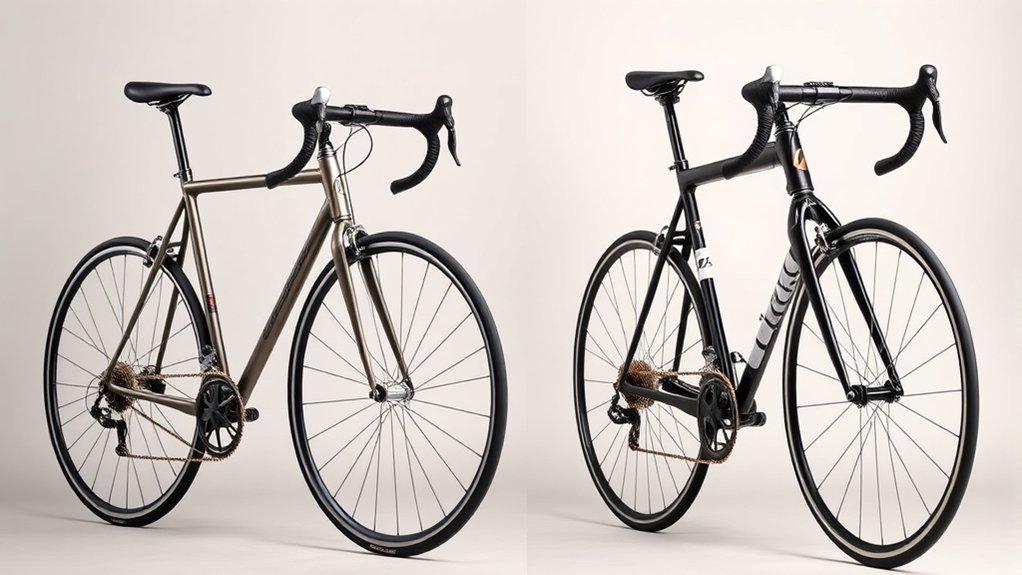
When choosing between fixed gear and road bikes, understanding the key size differences is essential for optimizing fit, comfort, and handling. Fixed gear bikes typically have compact frames with steeper seat tube angles, shorter top tubes, and higher handlebars. These features create a more upright, responsive ride ideal for urban environments.
In contrast, road bikes are designed with longer wheelbases, slacker angles, and lower handlebars to enhance stability and aerodynamics. Tire widths, chainstay lengths, and standover heights also differ significantly between the two types.
These variations are tailored to support either agile city riding or long-distance comfort. By exploring these size elements, you can better appreciate how each bike influences your overall ride experience.
Whether you prioritize quick maneuverability or sustained performance, frame geometry plays a crucial role.
Key Takeaways
- Fixed gear bikes have more compact frames with steeper angles, while road bikes feature longer wheelbases and slacker angles for endurance.
- Fixed gear bikes use shorter top tubes for upright comfort; road bikes have longer top tubes promoting aerodynamic posture.
- Handlebar height is higher on fixed gear bikes for visibility, whereas road bikes have lower handlebars for speed and aerodynamics.
- Fixed gear bikes typically have shorter chainstays for increased maneuverability, while road bikes have longer chainstays for stability at high speeds.
- Tire widths differ: fixed gear bikes use wider tires (28mm–32mm) for urban comfort; road bikes prefer narrower tires (23mm–28mm) to reduce rolling resistance.
Why Size Differences Matter When Choosing Fixed Gear Vs Road Bikes
Although fixed gear and road bikes may look similar, their size differences considerably affect your comfort and performance. When you choose a bike that fits well, you ride more efficiently and avoid unnecessary strain. Fixed gear bikes often have a slightly different sizing approach, which can impact how you position yourself on the bike.
If the size isn’t right, you might experience discomfort during longer rides or struggle with control and balance. Road bikes usually offer a range of sizes tailored to optimize speed and endurance, so selecting the correct size helps you maintain an aerodynamic posture without sacrificing comfort.
Paying attention to these size distinctions guarantees you enjoy better handling, reduce fatigue, and maximize your overall cycling experience, whether you’re commuting or training.
Frame Geometry Differences Between Fixed Gear And Road Bikes
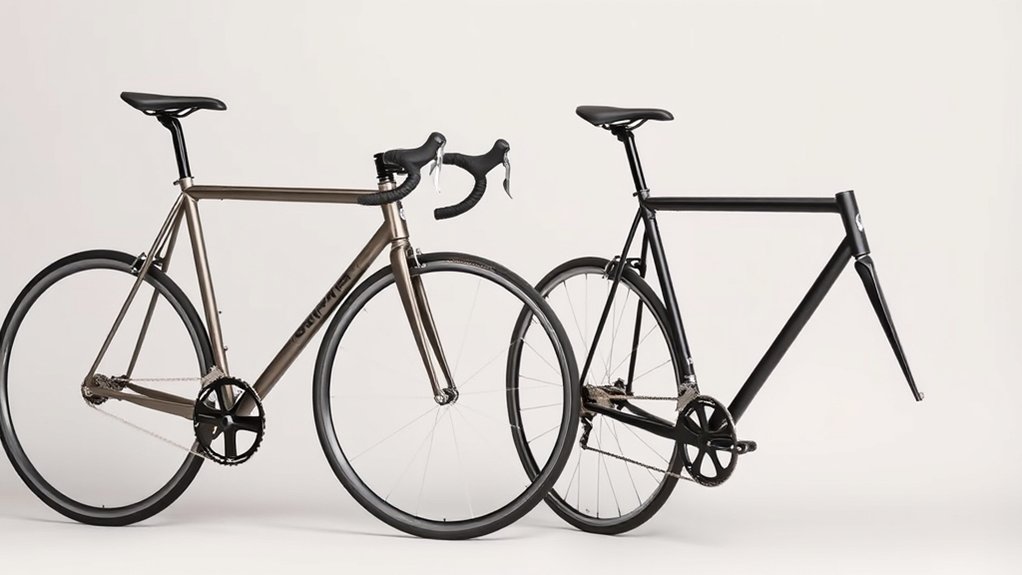
Understanding how frame geometry differs between fixed gear and road bikes helps explain why sizing impacts your ride comfort and control. Fixed gear bikes often feature a more aggressive, compact frame with steeper angles, which puts you in a more upright position. This design enhances maneuverability and responsiveness, ideal for urban riding and quick turns.
Road bikes, on the other hand, prioritize endurance and speed, offering longer wheelbases and slacker angles that provide stability and comfort over long distances. When you choose a fixed gear, expect a tighter fit that favors agility. Opting for a road bike means a geometry that supports sustained power output and reduces fatigue.
Knowing these differences ensures you pick a frame that matches how you want to ride.
Wheel Size Differences In Fixed Gear Vs Road Bikes
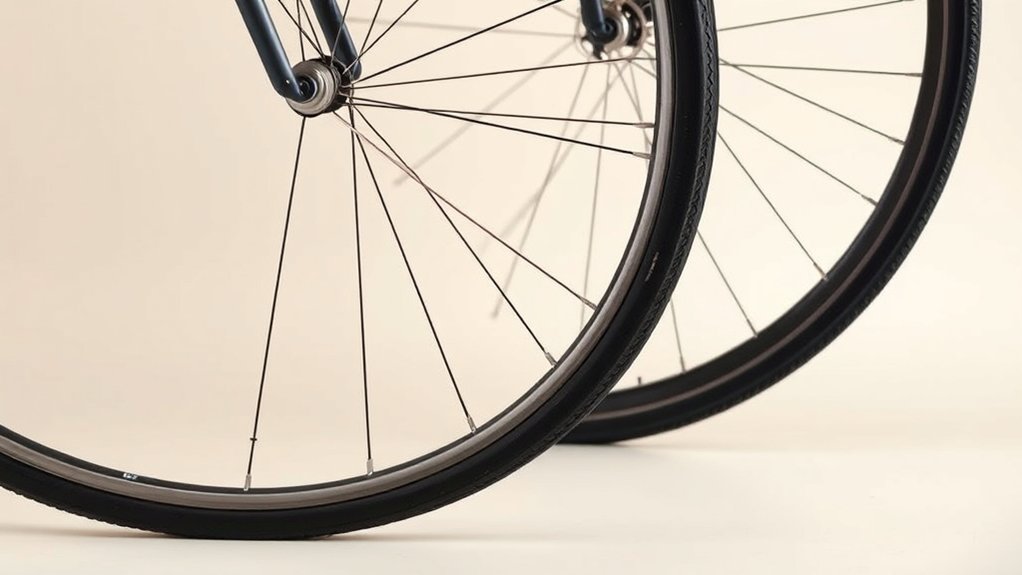
When you compare fixed gear and road bikes, you’ll notice they usually share the same standard wheel diameter, but tire widths can vary quite a bit. Fixed gear bikes often sport narrower tires for speed and simplicity, while road bikes offer a wider range for comfort and performance.
These differences directly affect how smooth or responsive your ride feels.
Standard Wheel Diameter
Since wheel size directly affects ride quality and performance, knowing the standard wheel diameters for fixed gear and road bikes helps you choose the right fit. Both types typically use 700c wheels, measuring about 622mm in diameter, which provides a good balance of speed and maneuverability.
Fixed gear bikes often stick with this size because it suits urban riding and track cycling, offering quick acceleration and responsive handling. Road bikes also favor 700c wheels for their efficiency and smooth rolling on paved surfaces. While you might find some variations in older or specialty models, 700c remains the standard wheel diameter for both.
Understanding this helps you avoid compatibility issues when selecting wheels or tires, ensuring your bike performs as expected on the road or track.
Tire Width Variations
How wide should your bike’s tires be? Fixed gear bikes usually come with narrower tires, often between 23mm and 28mm. These slim tires reduce weight and rolling resistance, making it easier for you to accelerate quickly on smooth city roads.
Road bikes, meanwhile, offer more variety in tire width. You might find tires ranging from 25mm up to 32mm or wider, depending on the model and riding style. Wider tires on road bikes provide better stability and can handle rougher pavement or light gravel, giving you more versatility.
When choosing tire width, consider the type of terrain you’ll mostly ride on and your need for speed versus comfort. Stick to what fits your rims and frame to ensure safe, efficient performance.
Impact on Ride Quality
Why does wheel size matter so much for your ride quality? Because it directly affects how smooth, fast, and responsive your bike feels. Fixed gear bikes usually have smaller wheels, which give you quicker acceleration and nimble handling.
Road bikes tend to have larger wheels, offering better stability and comfort over longer distances. Here’s what you’ll notice:
- Acceleration: Smaller wheels spin up faster, so fixed gear bikes feel more agile.
- Comfort: Larger wheels roll over bumps more easily, smoothing your ride.
- Speed: Bigger wheels maintain momentum better, improving efficiency on road bikes.
- Handling: Smaller wheels offer sharper turns; larger wheels provide steadier control.
Understanding these differences helps you choose the right bike for your riding style and terrain.
Tire Width Variations On Fixed Gear And Road Bikes
Although fixed gear and road bikes share similar frame designs, their tire widths often differ to suit distinct riding styles and conditions. Fixed gear bikes typically sport wider tires, ranging from 28mm to 32mm, providing better grip and comfort on urban streets filled with potholes and debris. These wider tires absorb shocks, making your ride smoother when maneuvering city obstacles.
In contrast, road bikes usually feature narrower tires, often between 23mm and 28mm, designed to minimize rolling resistance and maximize speed on paved surfaces. If you want agile handling and faster acceleration, narrower tires on a road bike work best. Understanding these differences helps you choose the right tire width for your riding environment, enhancing both performance and comfort depending on your bike type.
Seat Tube Angles And Riding Position On Fixed Gear Vs Road Bikes
You’ll notice that seat tube angles differ between fixed gear and road bikes, which directly affects your riding posture. A steeper angle on fixed gear bikes positions you more forward, emphasizing control and power.
In contrast, road bikes usually offer a slightly slacker angle for a more relaxed and comfortable ride over long distances.
Angle Variations Impact
When you compare fixed gear bikes to road bikes, the seat tube angle plays a crucial role in shaping your riding position and overall comfort. Fixed gear bikes often feature steeper seat tube angles, positioning you more forward, which enhances power transfer and responsiveness.
Road bikes, on the other hand, tend to have slacker angles, promoting a stretched-out posture for endurance.
Here’s how angle variations impact your ride:
- Pedaling Efficiency – Steeper angles improve your pedal stroke on fixed gears.
- Agility – Forward positioning lets you react quickly in urban settings.
- Power Output – More forward weight distribution favors sprinting.
- Endurance – Slacker angles on road bikes reduce strain over long rides.
Understanding these differences helps you choose the right bike for your riding style.
Posture And Comfort
Because seat tube angles directly influence your riding position, they play a key role in determining your comfort on both fixed gear and road bikes. Fixed gear bikes often feature steeper seat tube angles, positioning you more forward over the pedals. This setup promotes quick power transfer but may feel aggressive if you ride long distances.
In contrast, road bikes usually have slightly slacker seat tube angles, allowing a more stretched-out posture that reduces strain on your back and neck during extended rides. When you choose between these bikes, consider how each angle affects your posture and comfort. If you prioritize a more upright, relaxed position, a road bike’s geometry might suit you better.
However, if you favor responsiveness and direct pedaling efficiency, a fixed gear’s angles could feel more natural.
Top Tube Lengths And Rider Comfort On Fixed Gear Vs Road Bikes
Although fixed gear and road bikes may look similar at first glance, their top tube lengths often differ, directly impacting rider comfort. The top tube length influences how stretched out or upright you feel while riding. On fixed gear bikes, shorter top tubes usually create a more upright posture, reducing strain on your back and shoulders.
Top tube length shapes your riding posture, with fixed gear bikes offering a more upright and comfortable position.
Road bikes tend to have longer top tubes, promoting an aerodynamic position ideal for speed but potentially less comfortable over long rides.
Consider these points:
- Shorter top tubes increase comfort for casual riders.
- Longer top tubes improve aerodynamics but may cause fatigue.
- Your flexibility affects which length suits you best.
- Proper fit avoids discomfort and improves control.
Choosing the right top tube length guarantees a more enjoyable ride.
Handlebar Height Differences And Control For Fixed Gear And Road Bikes
Top tube length affects your posture, but handlebar height plays a big role in how you control your bike and feel on the road. Fixed gear bikes often have higher handlebars, giving you a more upright position. This setup improves your visibility and offers quick, responsive handling, perfect for urban riding and frequent stops.
On the other hand, road bikes usually feature lower handlebars, encouraging a more aerodynamic posture. This position helps you cut through wind efficiently but demands more from your core and neck. When you adjust handlebar height, you directly influence comfort and control.
If you want nimble maneuvering, raise the bars; for speed and endurance, lower them. Understanding these differences helps you choose or tweak your bike to match how you ride and what you prioritize.
Chainstay Length And Maneuverability In Fixed Gear Vs Road Bikes
When you compare fixed gear and road bikes, chainstay length plays a vital role in how each bike handles. Fixed gear bikes usually have shorter chainstays, which makes them more agile and responsive when you’re navigating tight corners or urban environments. Road bikes, on the other hand, tend to have longer chainstays for improved stability at high speeds and comfort during long rides.
Here’s what you should know:
- Shorter chainstays on fixed gear bikes enhance quick acceleration and nimble maneuvering.
- Longer chainstays on road bikes provide better balance and smoother ride quality.
- Chainstay length affects how the bike feels during sharp turns and sprints.
- Choosing the right chainstay length depends on whether you prioritize agility or stability in your rides.
Standover Height For Safe Fit On Fixed Gear And Road Bikes
Chainstay length affects how your bike handles, but fit plays just as big a role in your comfort and control. One vital fit factor is standover height—the distance between the top tube and your inseam when you stand over the bike.
On fixed gear bikes, the top tube is often lower, giving you more clearance and confidence when stopping. Road bikes typically have higher standover heights, which can feel less forgiving but contribute to a more aggressive riding position.
| Bike Type | Typical Standover Height | Recommended Clearance |
|---|---|---|
| Fixed Gear | 27-29 inches | 1-2 inches |
| Road Bike | 29-31 inches | 0.5-1.5 inches |
Always make certain you have enough clearance to avoid discomfort or injury when mounting or stopping.
Weight Distribution And Handling Differences In Fixed Gear Vs Road Bikes
Although both fixed gear and road bikes share some design elements, their weight distribution considerably affects how they handle on different terrains. You’ll notice fixed gear bikes usually have a more balanced weight between front and rear, enhancing control during urban rides. Road bikes, however, often place more weight toward the front to improve stability at high speeds.
Consider these handling differences:
- Fixed gear bikes respond quickly to rider input due to even weight distribution.
- Road bikes offer better traction on descents with front-heavy design.
- Fixed gear bikes excel in tight turns and stop-and-go traffic.
- Road bikes maintain stability on long, fast rides and varied surfaces.
Understanding this helps you choose the bike that fits your riding style perfectly.
Frequently Asked Questions
How Does Gear Ratio Affect Speed on Fixed Gear Versus Road Bikes?
Your gear ratio directly affects speed; higher ratios let you go faster but require more effort. On fixed gear bikes, you feel every pedal stroke, while road bikes’ multiple gears let you adjust speed more easily.
This means that on a fixed gear bike, your speed is closely tied to your pedaling cadence and strength. Road bikes offer more flexibility by allowing you to shift gears to maintain a comfortable speed across varying terrains.
Ultimately, the gear ratio influences how efficiently you can convert pedaling power into speed, with different experiences on fixed gear versus road bikes.
Are Fixed Gear Bikes Easier to Maintain Than Road Bikes?
You’ll find fixed gear bikes easier to maintain since they have fewer components, unlike road bikes that come with complex gearing systems needing regular adjustments and tuning.
Less fuss means more riding and less wrenching for you.
What Types of Brakes Are Commonly Used on Fixed Gear and Road Bikes?
You’ll commonly find fixed gear bikes using front caliper brakes or sometimes no brakes at all, while road bikes typically come with dual caliper or disc brakes, giving you stronger, more reliable stopping power.
Can Fixed Gear Bikes Be Used for Long-Distance Rides?
Yes, you can use fixed gear bikes for long-distance rides, but they might feel more challenging due to limited gearing options. You’ll need strong legs and good pacing to handle varied terrain comfortably.
The simplicity of a fixed gear bike means fewer mechanical issues, which can be an advantage on long rides. However, the lack of multiple gears can make climbing hills or riding into strong winds more strenuous. Proper preparation and training are essential to enjoy long-distance rides on a fixed gear bike.
How Do Tire Puncture Rates Compare Between Fixed Gear and Road Bikes?
You won’t find huge differences in tire puncture rates between fixed gear and road bikes, but road bike tires, often thinner and lighter, can be more prone to flats.
Choose tougher tires if you’re rough on roads.
Conclusion
Choosing between a fixed gear and a road bike isn’t just about style—it’s about fit, comfort, and control. You don’t want a bike that feels like riding a rocket with no brakes! Understanding size differences like frame geometry, wheel size, and handlebar height guarantees you get a ride that’s perfect for you.
So, take these key points seriously, and you’ll be cruising smoothly, whether you’re on city streets or open roads. Knowing the important size differences between fixed gear vs road bikes helps you choose the best fit for your riding style. This ensures maximum comfort, better control, and an enjoyable cycling experience every time.

