

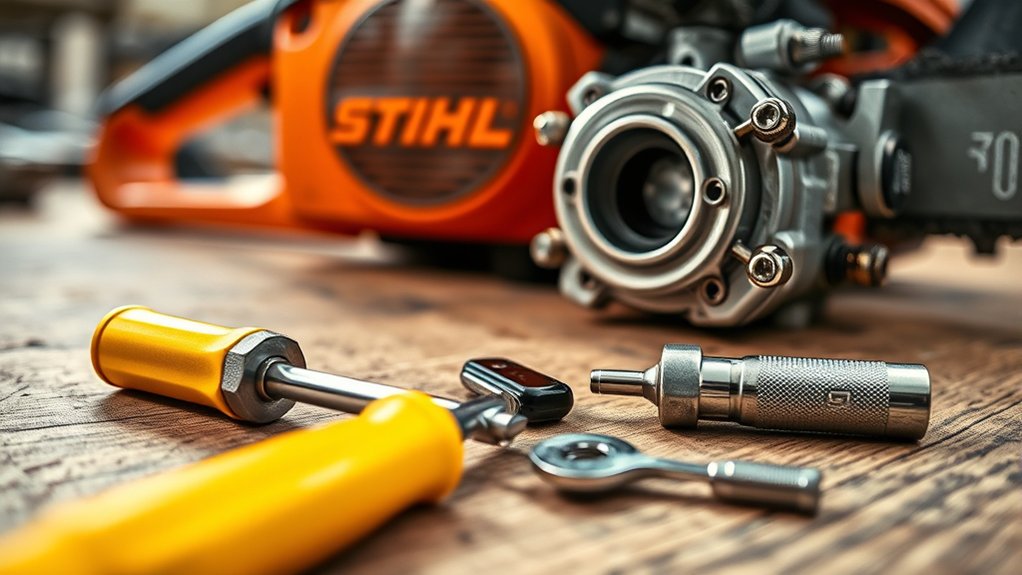
To adjust your Stihl carburetor effectively, having the right tools is essential. A specialized carburetor adjustment tool kit with the appropriate screwdrivers and wrenches designed for your specific Stihl model will make the process smoother. These tools ensure precise tuning and help avoid damage during adjustments.
Additionally, use a spark plug wrench that fits snugly to remove and check the spark plug easily. A multimeter is also helpful for performing electrical checks to diagnose any related issues.
Don’t forget safety gear such as gloves and glasses to protect yourself during the work. A small mirror and flashlight can assist in spotting hard-to-see screws, making the adjustment process more accurate.
Keeping these tools handy is key to mastering carburetor tuning on your Stihl equipment.
Key Takeaways
- Use a carburetor adjustment tool kit with specialized screwdrivers for precise tuning of Stihl carburetor screws.
- A spark plug wrench sized for Stihl models is essential for safe removal and installation of spark plugs.
- High-quality Phillips or flathead screwdrivers matching screw types and sizes prevent damage during adjustments.
- A multimeter helps diagnose electrical issues affecting carburetor performance and ignition components.
- Compressed air, small picks, and cleaning brushes are needed to clear debris and unclog carburetor jets.
Why Using the Right Tools Prevents Damage to Your Stihl Carburetor
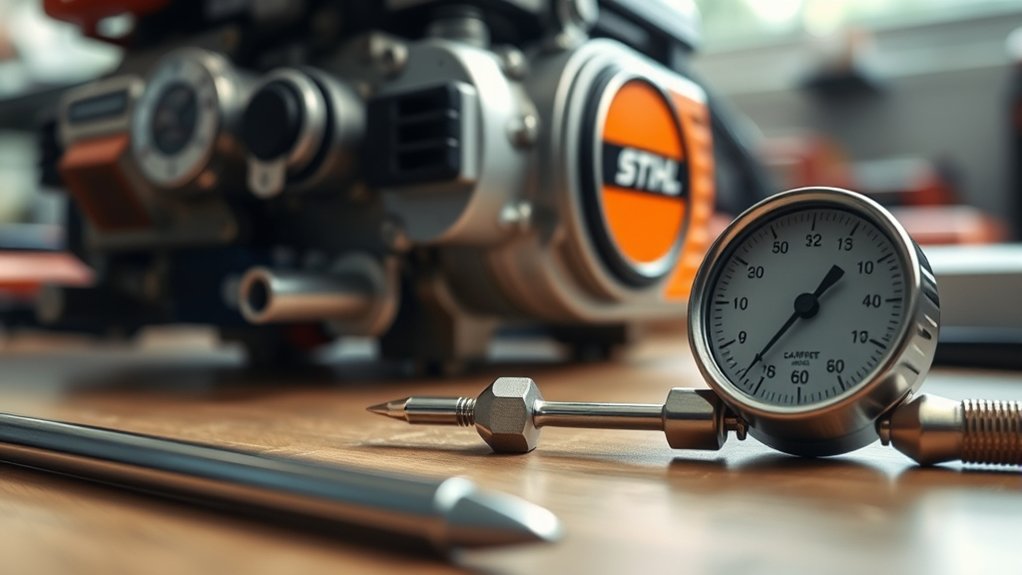
Although it might be tempting to use whatever tools you have on hand, using the right tools is essential to avoid damaging your Stihl carburetor. When you grab the correct screwdriver or wrench designed for your carburetor’s screws and bolts, you reduce the risk of stripping or rounding fasteners.
Using improper tools can cause slips that not only harm the carburetor but also make future adjustments more difficult. Precision tools fit perfectly, allowing you to make fine adjustments safely and effectively. Plus, the right tools provide better control, so you won’t overtighten or loosen parts unintentionally.
Essential Cleaning Tools to Prepare Your Stihl Carburetor for Adjustment
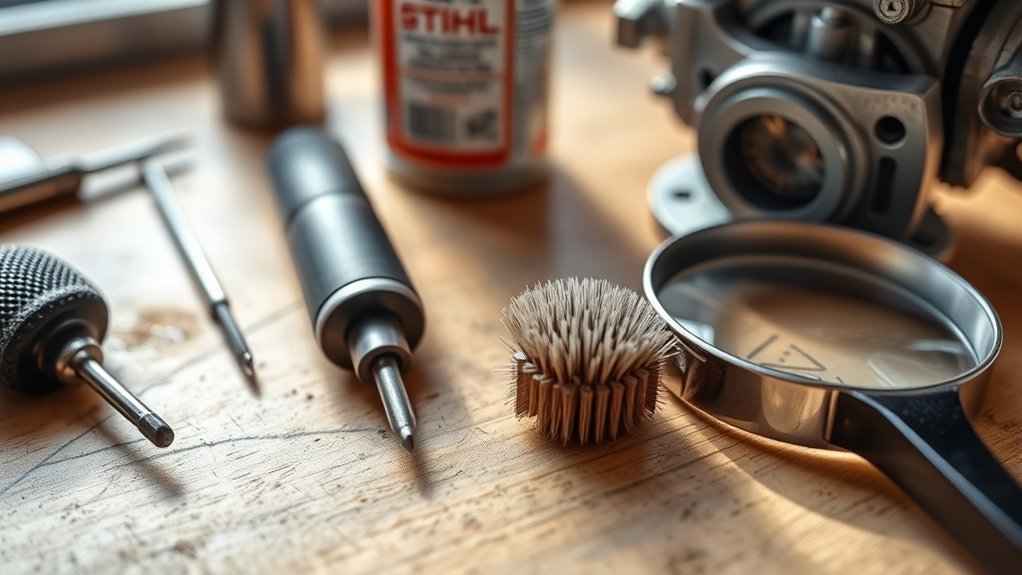
Before you start adjusting your Stihl carburetor, you’ll need the right cleaning tools to remove dirt and buildup effectively. Proper cleaning guarantees smooth adjustments and prolongs your equipment’s life.
Starting with the right cleaning tools ensures smooth Stihl carburetor adjustments and extends equipment life.
Here are the essential tools you should have on hand:
- Carburetor cleaner spray: Cuts through grime and varnish quickly.
- Compressed air can or air compressor: Blows away loosened debris from tight spots.
- Soft-bristled brush: Gently scrubs away stubborn dirt without damaging components.
- Small pick or needle tool: Clears clogged jets and tiny passages.
- Lint-free cloths: Wipes surfaces clean without leaving fibers behind.
With these tools ready, you’ll create the perfect environment for fine-tuning your carburetor with precision and confidence.
Identifying the Carburetor Adjustment Screws on Your Stihl Equipment
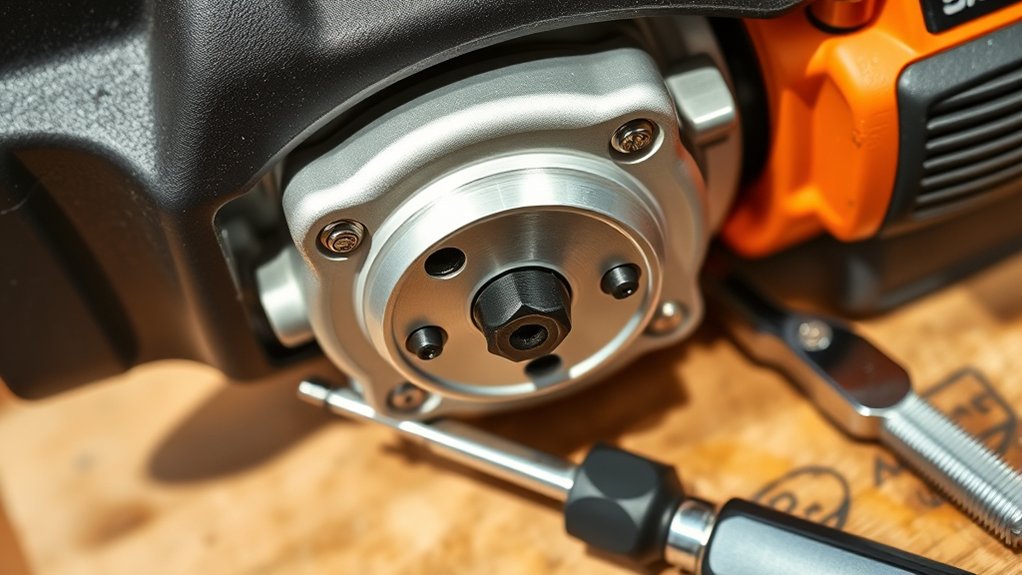
Before you start adjusting, you’ll need to locate the idle adjustment screws on your Stihl equipment. These screws control the engine’s idle speed and are usually easy to spot near the carburetor body.
Next, identify the mixture control screws, which manage the fuel-to-air ratio for smooth performance.
Locating Idle Adjustment Screws
Where can you find the idle adjustment screws on your Stihl carburetor? These screws are usually located on the side of the carburetor body, near the throttle linkage. To spot them easily, look for small, slotted screws designed for fine-tuning engine idle speed.
Here’s how to identify the idle adjustment screws on your Stihl equipment:
- Positioned close to the throttle lever or butterfly valve
- Smaller than other carburetor screws
- Often labeled with “T” or “LA” for idle speed
- Accessible without removing the carburetor from the machine
- Surrounded by a spring to keep settings stable
Knowing exactly where these screws are will help you adjust your Stihl carburetor efficiently without guessing.
Identifying Mixture Control Screws
Although the idle adjustment screws handle engine speed, the mixture control screws regulate the fuel-to-air ratio in your Stihl carburetor. You’ll typically find two mixture screws labeled “L” (low speed) and “H” (high speed). The “L” screw controls the fuel flow when the engine runs at low RPMs, while the “H” screw adjusts fuel delivery during high RPM operation.
These screws are usually located on the side of the carburetor body and may require a flathead screwdriver or a special carburetor adjustment tool. Before making changes, note their current positions by counting turns as you gently turn them clockwise until they stop, then back out. Identifying these screws clearly helps you make precise adjustments, ensuring your Stihl equipment runs efficiently and responds well across all speeds.
Choosing the Right Screwdrivers for Stihl Carburetor Tuning
You’ll need the right screwdriver to adjust your Stihl carburetor properly, whether it’s Phillips or flathead. Using the correct size guarantees you don’t strip the screws or damage your tool.
Always choose screwdrivers made from quality materials to get precise control and long-lasting performance.
Phillips Vs. Flathead
When tuning your Stihl carburetor, choosing the right screwdriver can make all the difference. You’ll mainly decide between Phillips and flathead screwdrivers, each suited for specific screws on your carburetor. Here’s what to take into account:
- Phillips screwdrivers have a cross-shaped tip that fits snugly into cross-recessed screws.
- Flathead screwdrivers feature a single flat blade, ideal for straight, slotted screws.
- Phillips tools offer better grip and reduce slipping during adjustment.
- Flathead screwdrivers provide more control in tight spaces or for delicate tuning.
- Using the wrong type can strip screws or damage the carburetor components.
Pick the screwdriver that matches your Stihl carburetor’s screws to ensure precise, damage-free tuning.
Screwdriver Size Importance
Since precision is key in tuning your Stihl carburetor, selecting the right screwdriver size guarantees you won’t strip screws or damage components. Using a screwdriver that’s too large can slip and mar the screw head, while one that’s too small won’t provide enough grip, making adjustments frustrating or ineffective.
Always match the screwdriver tip to the screw size exactly to assure smooth turning and accurate tuning. Keep a set of small to medium screwdrivers on hand, as carburetor screws vary in size. This careful choice helps you maintain control during fine adjustments, preventing costly mistakes and preserving the integrity of your Stihl equipment.
Quality Materials Matter
Although selecting the right size screwdriver is crucial, choosing one made from high-quality materials guarantees durability and precise control during Stihl carburetor tuning. When you pick a screwdriver built to last, you avoid stripped screws and ensure smooth adjustments.
Look for these features when selecting your tool:
- Hardened steel tips for wear resistance
- Magnetic tips to hold tiny screws securely
- Comfortable, non-slip handles for steady grip
- Rust-resistant coatings to extend lifespan
- Precision-machined tips for exact fit
Investing in quality screwdrivers means you won’t have to replace them frequently, saving time and money. Plus, the enhanced control helps you fine-tune your carburetor with confidence, achieving ideal engine performance every time.
Why a Carburetor Adjustment Tool Kit Is Essential
Because Stihl carburetors are finely tuned components, having the right adjustment tool kit guarantees you can make precise tweaks without risking damage. These kits include specialized screwdrivers and wrenches designed to fit Stihl’s unique carburetor screws, ensuring you don’t strip or misalign them. Using generic tools can lead to improper adjustments or even harm the carburetor’s delicate parts.
With the correct kit, you’ll easily access all adjustment points, making your tuning job efficient and accurate. Plus, having everything organized in one set saves you time searching for tools and minimizes frustration.
Ultimately, this kit isn’t just a convenience—it’s essential for maintaining your Stihl equipment’s performance and extending its lifespan.
How to Use a Spark Plug Wrench for Stihl Carburetor Adjustment
You’ll want to choose the right spark plug wrench that fits your Stihl model perfectly to avoid damage. Start by loosening the spark plug carefully, turning counterclockwise with steady pressure.
Removing it properly gives you better access for precise carburetor adjustments.
Selecting The Right Wrench
How do you guarantee a precise adjustment of your Stihl carburetor? Selecting the right wrench is key. A proper spark plug wrench lets you access tight spaces without damaging parts, assuring smooth tuning.
When choosing your wrench, consider these points:
- Fit: Ensure it matches your Stihl spark plug size accurately.
- Length: A longer handle provides better leverage for tight spots.
- Material: Durable, rust-resistant steel lasts through frequent use.
- Design: A swivel head or socket style offers flexibility.
- Grip: Comfortable, non-slip handles improve control during adjustments.
Using the right wrench reduces the risk of stripping or rounding the spark plug, helping you fine-tune your carburetor efficiently. Don’t settle for a generic tool—pick one designed specifically for Stihl equipment.
Proper Spark Plug Removal
Choosing the right spark plug wrench sets you up for smooth removal without damage. Begin by disconnecting the spark plug wire, then fit the wrench snugly over the plug. Turn counterclockwise gently to loosen it—don’t force it, or you risk stripping the threads.
Once loose, unscrew by hand to remove it completely. This step is crucial before adjusting your Stihl carburetor.
| Step | Tip |
|---|---|
| Disconnect Wire | Pull from the boot, not the wire |
| Select Wrench | Use the correct size (usually 5/8″) |
| Fit Wrench | Ensure a snug fit to avoid slipping |
| Loosen Plug | Turn counterclockwise gently |
| Remove Plug | Finish unscrewing by hand |
Proper removal helps maintain engine health and carburetor access.
Using a Fuel Line Clamp to Prevent Leaks
Although adjusting the carburetor is essential, preventing fuel leaks is just as important for safe and efficient operation. Using a fuel line clamp helps you secure the fuel line, stopping unwanted leaks and ensuring steady fuel flow.
When working with your Stihl carburetor, a fuel line clamp:
- Prevents fuel from dripping during adjustments
- Secures the hose to the carburetor and fuel tank
- Minimizes fire hazards caused by fuel spills
- Helps maintain consistent engine performance
- Makes cleanup easier by containing leaks
Make sure to pick the right size clamp for your fuel line, and tighten it just enough to hold the hose firmly without damaging it. This simple tool keeps your work safe and your Stihl running smoothly.
How a Tachometer Helps Fine-Tune Your Stihl Carburetor
When you want your Stihl carburetor to run at peak efficiency, a tachometer becomes an invaluable tool. It measures the engine’s RPM, letting you see if the carburetor adjustments hit the ideal speed range. By connecting the tachometer to your Stihl tool, you get real-time feedback while tweaking the low and high-speed screws.
This precise RPM data helps you avoid over-revving, which can damage the engine, or running too slow, which hinders performance. Using a tachometer ensures you fine-tune your carburetor for smooth idling and maximum power output. Without it, you’d rely on guesswork.
How a Multimeter Helps Spot Carburetor Problems
While a tachometer helps you fine-tune your Stihl carburetor’s RPM, a multimeter can reveal underlying electrical issues that affect performance. You’ll rely on it to check components like ignition coils and spark plugs, which influence how well your carburetor runs. Using a multimeter, you can quickly spot problems such as shorts or open circuits that cause poor engine function.
Here’s what a multimeter helps you diagnose:
- Continuity in spark plug wires
- Resistance of ignition coils
- Voltage across the battery and ignition system
- Faulty switches or connectors
- Electrical grounding issues affecting carburetor sensors
Why Safety Gear Should Be Part of Your Tool Set
Because working on a Stihl carburetor involves handling small parts, fuel, and sometimes sharp tools, you need safety gear to protect yourself from injury. Wearing gloves shields your hands from cuts and contact with harmful fuel or chemicals. Safety glasses prevent debris or fuel splashes from getting into your eyes, which can cause serious irritation or damage.
A mask is also helpful to avoid inhaling fumes, especially if you’re working in a less ventilated area. By including safety gear in your tool set, you guarantee a safer and more comfortable repair process. Don’t skip this step—protecting yourself lets you focus better and finish your carburetor adjustments without unnecessary risks.
Your health and safety always come first.
Using a Small Mirror and Flashlight to Access Hard-to-See Screws
Although some screws on your Stihl carburetor hide in tight spots, you can still reach them effectively with a small mirror and flashlight. These tools help you see and adjust screws that are otherwise obscured, preventing mistakes and frustration.
Use your mirror and flashlight to:
- Illuminate dark, cramped spaces clearly
- Reflect hard-to-see screw heads from awkward angles
- Reduce the need to disassemble parts unnecessarily
- Guarantee precise adjustments without guesswork
- Save time by quickly locating each screw
When You Need a Stihl-Specific Carburetor Adjustment Tool
Using a small mirror and flashlight helps you locate and see tricky screws on your Stihl carburetor, but adjusting them often requires a specialized tool designed specifically for Stihl models.
These tools fit perfectly into the unique screw slots and allow precise tuning without damaging delicate parts. When you notice difficulty turning screws with standard screwdrivers or when the carburetor screws have unique heads, it’s time to switch to your Stihl-specific adjustment tool.
| Tool Name | Purpose | When to Use |
|---|---|---|
| Stihl Carburetor Tool | Adjusts fuel mixture screws | When screws have unique Stihl slots |
| Flathead Screwdriver | General adjustments | For accessible, standard screws |
| Needle-nose Pliers | Holding small parts | When screws are too tiny or recessed |
| Mirror & Flashlight | Visibility aid | To locate hard-to-see screws |
| Cleaning Brush | Removes debris | Before making adjustments |
Storing and Maintaining Your Carburetor Tools for Longevity
To keep your Stihl carburetor tools in top condition, you’ll want to store and maintain them properly after each use. Neglecting this can lead to rust, wear, and inaccurate adjustments. Always clean your tools thoroughly to remove fuel residues and dirt.
Store them in a dry, cool place away from moisture to prevent corrosion. Use protective cases or toolboxes to organize and shield them from damage. Regularly inspect your tools for signs of wear or damage, and replace any worn parts promptly.
Here are some quick tips:
- Wipe tools clean with a cloth after use
- Apply a light oil coating to metal parts
- Keep tools in a dedicated, ventilated toolbox
- Avoid exposing tools to extreme temperatures
- Check calibration and functionality periodically
Proper care guarantees your tools last longer and perform reliably.
Frequently Asked Questions
How Often Should I Adjust My Stihl Carburetor?
You should adjust your Stihl carburetor at least once a season or whenever you notice performance issues. Regular adjustments keep your engine running smoothly and efficiently, especially after heavy use or fuel changes.
Can I Adjust the Carburetor Without Professional Help?
Yes, you can adjust the carburetor yourself if you follow the manual carefully. Just make sure you understand the steps and safety precautions to avoid damage.
If unsure, seeking professional help is safer.
What Symptoms Indicate a Carburetor Needs Adjustment?
You’ll notice rough idling, stalling, or poor acceleration when your carburetor needs adjustment. If your engine struggles to start or runs unevenly, those symptoms signal it’s time to fine-tune your carburetor for smoother performance.
Is It Safe to Use Generic Tools on a Stihl Carburetor?
You shouldn’t use generic tools on a Stihl carburetor because they might not fit properly, risking damage. Using the right tools guarantees precise adjustments and keeps your equipment running smoothly without causing harm or wear.
How Does Weather Affect Carburetor Performance?
Weather plays puppet master with your carburetor, controlling air-fuel mix. Cold air thickens fuel, hot air thins it out.
Humidity and altitude also tinker, so you’ll need to adjust for smooth engine dance.
Conclusion
You might think adjusting your Stihl carburetor is too tricky or requires expensive tools, but with the right kit and a bit of patience, it’s totally doable. Using proper screwdrivers, a carburetor adjustment tool, and safety gear not only protects your equipment but saves you time and money in the long run.
Grab these tools, follow the steps, and you’ll keep your Stihl running smoothly without the hassle or damage. Remember, having the right tools needed to adjust a Stihl carburetor is essential for a successful tune-up and long-lasting performance.

