


You’ll usually find your fuel filter either along the fuel line under your vehicle or inside the fuel tank as part of the fuel pump assembly.
The fuel filter plays a crucial role in keeping your fuel system clean by trapping contaminants before they reach the engine.
Older models often have a small, cylindrical filter located near the tank or engine, while newer vehicles tend to integrate the fuel filter within the fuel tank.
Filters placed near the engine or fuel tank catch impurities early, helping protect your fuel system from damage.
Knowing the fuel filter location helps you spot potential issues and maintain optimal performance.
Keep reading to uncover helpful tips on fuel filter replacement and care to keep your vehicle running smoothly.
Key Takeaways
- Fuel filters are commonly found along the fuel line under the vehicle or within the engine bay.
- Older vehicles usually have cylindrical filters mounted near the fuel tank or engine.
- Modern vehicles often have fuel filters integrated inside the fuel pump assembly within the fuel tank.
- Filters near the fuel tank can be external or in-tank strainers attached to the fuel pump inlet.
- Fuel filters near the engine are mounted along the fuel rail, intake manifold, or firewall for easy access.
What Is a Fuel Filter and Why Location Matters
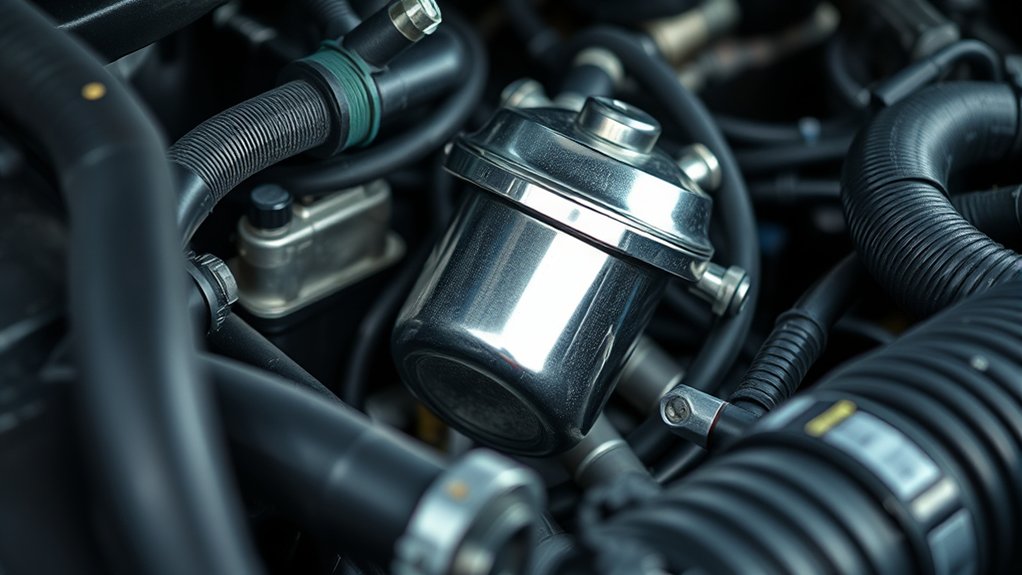
Although you might not think about it often, a fuel filter plays a crucial role in keeping your engine running smoothly by trapping dirt and debris before they reach the fuel injectors. Without a fuel filter, contaminants can clog or damage these injectors, leading to poor engine performance or even failure.
The location of the fuel filter matters because it affects how well it can protect your engine. Positioned correctly, the filter efficiently removes impurities right after the fuel leaves the tank, preventing buildup downstream. If the filter is placed too far from the engine or fuel pump, it might not catch all debris, risking damage.
Understanding what a fuel filter does and why its placement is important helps you appreciate this small but essential component.
Where Is the Fuel Filter Located in Your Vehicle?
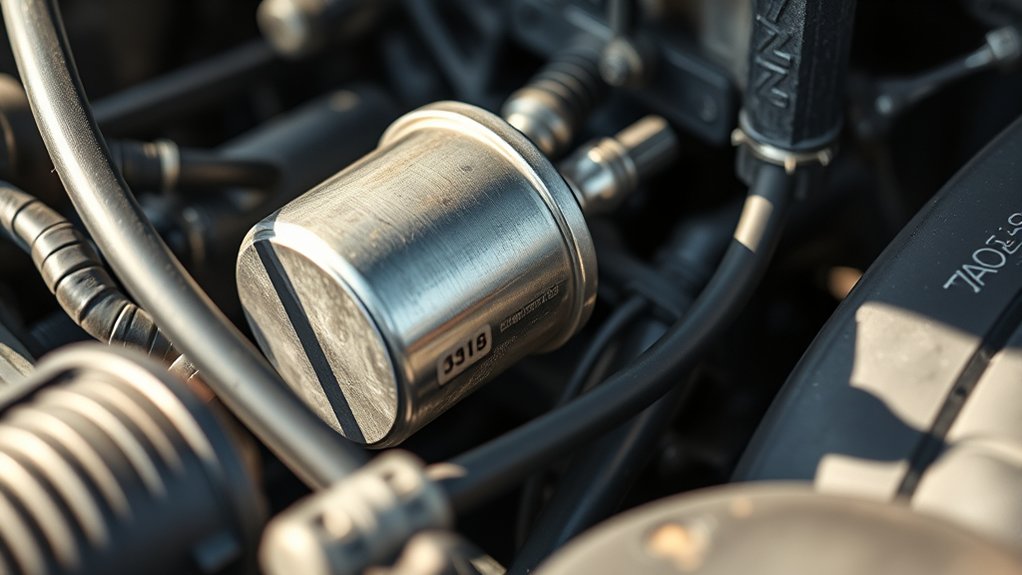
Knowing why the fuel filter’s placement matters leads naturally to understanding where it’s actually located in your vehicle. Typically, you’ll find the fuel filter along the fuel line, either under the car near the fuel tank or engine bay. In older vehicles, it’s often a small, cylindrical part mounted on the frame rail or near the fuel pump.
In many modern cars, the fuel filter is integrated within the fuel pump assembly inside the fuel tank, making it less visible and harder to access. To locate yours, check your owner’s manual or follow the fuel line from the tank to the engine. Knowing the exact spot helps when it’s time for inspection or replacement, ensuring your engine gets clean fuel efficiently.
Fuel Filter Placement Near the Fuel Tank
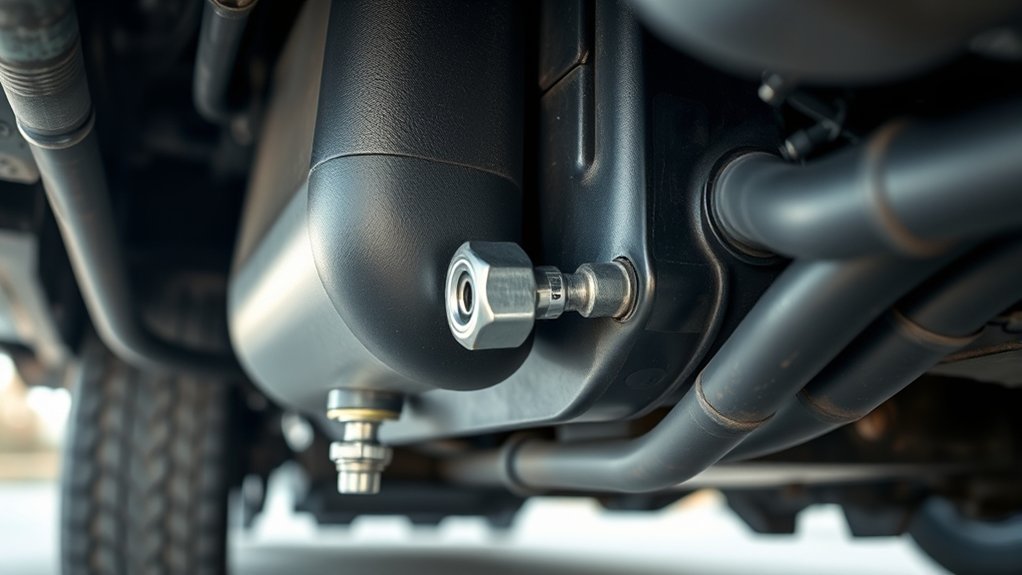
Placing the fuel filter near the fuel tank helps catch contaminants early, protecting your engine from damage. You’ll often find different types of filters designed specifically for this spot, like in-tank or inline filters.
Understanding these options can help you maintain your fuel system more effectively.
Advantages Of Tank Proximity
Why should you position the fuel filter close to the fuel tank? Placing the fuel filter near the tank helps catch contaminants early, protecting the fuel pump and engine from damage. This setup minimizes the risk of dirt or rust traveling through long fuel lines, improving overall fuel system reliability.
You’ll also benefit from easier maintenance since tank proximity means simpler access to the filter during replacement. Additionally, this position reduces pressure on the fuel pump because the filter removes debris before fuel reaches it, extending the pump’s lifespan. By filtering fuel right after it leaves the tank, you ensure cleaner fuel delivery, smoother engine performance, and fewer costly repairs down the road.
It’s a smart, efficient way to safeguard your vehicle’s fuel system.
Common Tank Filter Types
How do you choose the right fuel filter near your tank? You’ll typically find two common types: the in-tank strainer and the external fuel filter. The in-tank strainer acts as a basic filter, preventing large debris from entering the fuel pump.
It’s usually a mesh screen attached to the pump’s inlet. On the other hand, the external fuel filter, mounted close to the tank, provides finer filtration, capturing smaller contaminants before fuel reaches the engine. Both types serve crucial roles—one protects the pump, the other guarantees cleaner fuel delivery.
When selecting a filter, consider your vehicle’s design and fuel system requirements. Using the right tank filter helps maintain fuel flow and extends your engine’s life, so don’t overlook this essential component.
Fuel Filter Locations Near the Engine
Many vehicles position fuel filters close to the engine to guarantee efficient fuel delivery and protect critical components from contaminants. When you look under the hood, you’ll often find the fuel filter mounted along the fuel rail or near the intake manifold. This placement allows the filter to catch impurities just before fuel enters the engine, preventing clogging and potential damage.
In some models, the fuel filter is attached to the engine block or secured to the firewall for easy access during maintenance. By situating the filter near the engine, manufacturers assure that fuel pressure remains stable and that the engine receives a clean, consistent supply. Knowing this location helps you quickly inspect or replace the filter when needed, keeping your engine running smoothly.
Identifying Fuel Filters Inside the Fuel Line
Although fuel filters near the engine are common, you’ll often find additional filters located directly inside the fuel line itself. These in-line filters are usually small, cylindrical components designed to trap dirt and debris before fuel reaches critical engine parts. To identify them, look along the fuel line running from the fuel tank toward the engine.
The filter will often appear as a metal or plastic housing with fuel lines connected on both ends. You might notice clamps or quick-connect fittings securing it in place. In some cases, the filter is transparent, making it easier to spot contamination.
Knowing how to find these filters helps you maintain fuel system health and guarantees your engine runs smoothly without unexpected interruptions.
How Vehicle Make and Model Change Fuel Filter Location
Since vehicle manufacturers design fuel systems differently, you’ll find fuel filter locations vary widely depending on the make and model. For instance, in many older cars, the fuel filter is often mounted along the fuel line under the vehicle, near the fuel tank or engine. However, newer models tend to integrate the fuel filter within the fuel pump assembly inside the tank, making it less accessible.
Some trucks and SUVs place the filter under the hood, close to the engine bay for easier maintenance. European and Asian brands might have unique placements compared to American models. Knowing your vehicle’s specific make and model helps you pinpoint the filter’s location quickly, saving you time and effort when it’s due for inspection or replacement.
How to Access and Inspect the Fuel Filter Safely
Before you access the fuel filter, make sure you relieve the fuel system pressure to prevent fuel spray and reduce fire risk. Start by disconnecting the battery to avoid sparks. Locate the fuel filter based on your vehicle’s make and model.
When ready, wear safety goggles and gloves to protect against fuel exposure.
To safely access and inspect the fuel filter:
- Use a jack and stands if the filter is under the vehicle, ensuring stable support.
- Keep a rag or container handy to catch any fuel spills when loosening connections.
- Check the filter for rust, clogs, or leaks, and move fuel lines gently to avoid damage.
Following these steps helps you inspect the filter safely and prepare for replacement if needed.
Signs Fuel Filter Location Causes Engine Issues
When your engine starts misfiring or struggles to accelerate, the fuel filter’s location could be the culprit behind these issues. If the filter is clogged or dirty, it restricts fuel flow, causing your engine to hesitate or stall. You might also notice rough idling or difficulty starting your vehicle.
Because fuel filters are often near the fuel tank or engine bay, dirt and debris can accumulate more easily, especially if the protective casing is damaged. Additionally, a blocked fuel filter can trigger the check engine light. Paying attention to where the filter sits helps you identify these symptoms faster.
Addressing problems linked to the fuel filter location guarantees your engine runs smoothly and prevents more costly repairs down the road.
When to Replace Your Fuel Filter Based on Location
You should replace your fuel filter based on its location to keep your engine running smoothly. Filters in the engine compartment often need attention sooner, while underbody filters show specific signs before replacement.
Don’t forget to follow the maintenance schedule for cabin filters to guarantee clean air inside your vehicle.
Engine Compartment Filter Timing
How often should you replace the fuel filter located in your engine compartment? Generally, these filters need attention every 20,000 to 30,000 miles, but it depends on your vehicle and driving habits. Since engine compartment filters face heat and contaminants, timely replacement is crucial to maintain performance.
Here’s when you should consider swapping it out:
- After driving through dusty or dirty environments frequently
- If you notice decreased fuel efficiency or engine hesitation
- When your vehicle reaches the manufacturer’s recommended mileage interval
Replacing your fuel filter on time protects your engine and fuel system from clogging and damage. Keep an eye on these signs and mileage to ensure smooth engine operation and avoid costly repairs down the road.
Underbody Filter Replacement Signs
Where should you look to spot signs that your underbody fuel filter needs replacing? Start by inspecting the fuel lines near the filter for leaks or corrosion. If you notice fuel smells or wet spots on the ground beneath your vehicle, that’s a red flag.
Also, pay attention to how your engine runs—if you experience hesitation, rough idling, or difficulty starting, your filter may be clogged. Because underbody filters are exposed to road debris and elements, physical damage or rust can accelerate wear. Check the filter housing for dents, cracks, or rust buildup during routine maintenance.
If any of these signs appear, it’s time to replace the filter to maintain fuel flow and protect your engine from contaminants that could cause serious damage.
Cabin Filter Maintenance Schedule
Noticing signs of wear on your underbody fuel filter is just one part of keeping your fuel system in top shape. When it comes to the cabin filter, staying on a maintenance schedule guarantees clean air inside your vehicle and protects the fuel system from contaminants.
Typically, you should replace your fuel filter every 20,000 to 40,000 miles, but this depends on its location:
- Underbody fuel filters usually need more frequent checks due to exposure to dirt and moisture.
- In-tank filters last longer but still require replacement during major fuel system services.
- Inline cabin filters affect air quality and should be swapped every 15,000 to 25,000 miles.
Following this schedule keeps your engine running smoothly and your cabin air fresh.
Tools Needed to Locate and Change a Fuel Filter
Before you start locating and changing a fuel filter, you’ll need a few essential tools to make the job straightforward and efficient. First, grab a wrench set or fuel line disconnect tool, depending on your vehicle’s fittings. A screwdriver, usually flathead or Phillips, comes in handy for removing clamps or covers.
Don’t forget safety gear—gloves and safety glasses protect you from fuel spills. Have a container ready to catch any fuel that may leak during removal. A new fuel filter matching your vehicle’s specifications is vital.
Finally, keep some rags nearby to clean up any mess. With these tools at hand, you’ll be well-prepared to locate and replace your fuel filter without unnecessary hassle or delays.
Tips for Maintaining Your Fuel Filter for Better Performance
Although fuel filters often go unnoticed, maintaining them regularly plays an essential role in keeping your engine running smoothly. You should prioritize this simple yet important task to avoid costly repairs and improve fuel efficiency.
Here are key tips to maintain your fuel filter effectively:
- Follow the manufacturer’s replacement schedule: Changing the filter at recommended intervals prevents clogging and guarantees maximum fuel flow.
- Use clean fuel: Always fill up at reputable stations to reduce contaminants entering your system.
- Inspect for leaks and damage: Regularly check the filter and fuel lines for wear or leaks that could affect performance.
Frequently Asked Questions
Can a Clogged Fuel Filter Cause Poor Fuel Economy?
Yes, a clogged fuel filter can cause poor fuel economy because it restricts fuel flow, making your engine work harder. You’ll notice reduced performance and increased fuel consumption until you replace or clean the filter.
How Often Should the Fuel Filter Be Replaced?
You should replace your fuel filter every 20,000 to 40,000 miles or as recommended in your car’s manual. Regular replacement keeps your engine running smoothly and prevents clogging that can hurt performance and fuel economy.
Does Using Premium Fuel Affect the Fuel Filter Lifespan?
Using premium fuel usually doesn’t extend your fuel filter’s lifespan. However, it can reduce deposits that clog the filter.
You’ll still need to replace it regularly to keep your engine running smoothly and efficiently.
Can a Dirty Fuel Filter Damage the Fuel Pump?
Yes, a dirty fuel filter can damage the fuel pump. When the filter clogs, your pump works harder to push fuel through, causing it to overheat and wear out faster, leading to costly repairs you’ll want to avoid.
Is It Possible to Clean a Fuel Filter Instead of Replacing It?
You can’t really clean most fuel filters effectively—about 80% of clogged filters cause fuel flow issues. It’s better to replace them to keep your engine running smoothly and avoid costly damage to your fuel pump.
Conclusion
Knowing where your fuel filter is can save you time and headaches. For example, imagine you’re on a road trip and your engine sputters—discovering a clogged filter near the fuel tank quickly could prevent a breakdown.
Regularly checking and replacing your fuel filter, whether near the engine or fuel tank, keeps your vehicle running smoothly. Stay proactive, use the right tools, and maintain your filter for better performance and fewer surprises on the road.
Understanding the fuel filter location is key to effective maintenance. Proper care of your fuel filter ensures optimal engine function and longevity. Keep your vehicle in top shape by knowing where the fuel filter is and how to service it regularly.

