


You should install a fuel filter with the arrow or flow marking pointing from the fuel tank toward the engine. Correct fuel filter installation is essential to ensure proper fuel flow and engine performance.
This guarantees fuel flows correctly through the filter, preventing dirt from bypassing it and avoiding engine performance issues like sputtering or stalls.
Always check for markings like “IN” and “OUT” and confirm the fuel line routing before installation. Getting this right keeps your engine running smoothly.
Keep going to discover tools, signs of incorrect installs, and maintenance tips.
Key Takeaways
- Install the fuel filter with the arrow on the casing pointing from the fuel tank toward the engine.
- Identify inlet and outlet ports by markings like “IN,” “OUT,” or fuel flow arrows on the filter.
- Follow fuel lines from tank to engine to confirm correct flow direction before installation.
- Incorrect orientation can cause fuel delivery issues, engine performance problems, or damage.
- Always verify arrow direction and replace the filter with arrow pointing toward the engine.
Identifying Fuel Filter Orientation
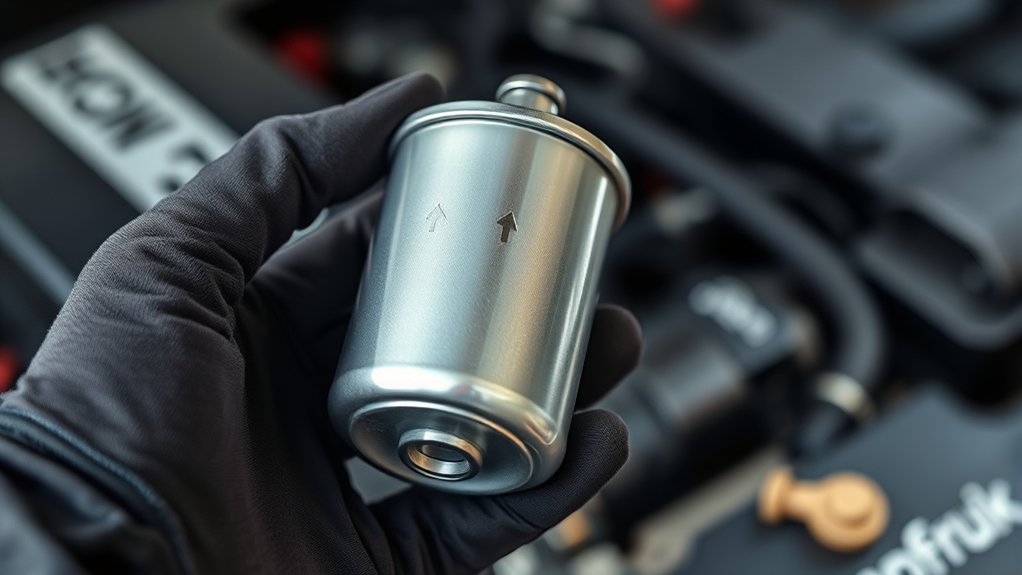
How can you quickly tell which way your fuel filter should face? Start by locating the inlet and outlet ports on the filter. The fuel flows from the tank through the inlet and exits via the outlet toward the engine.
Typically, the inlet port connects to the fuel line from the tank, while the outlet leads to the engine’s fuel system. You can also look at the filter’s shape: some have a tapered or directional design that naturally guides installation. If your filter has no visible markings, check the fuel lines’ routing—fuel always flows in one direction, so the filter must align accordingly.
What Fuel Filter Arrows and Symbols Mean
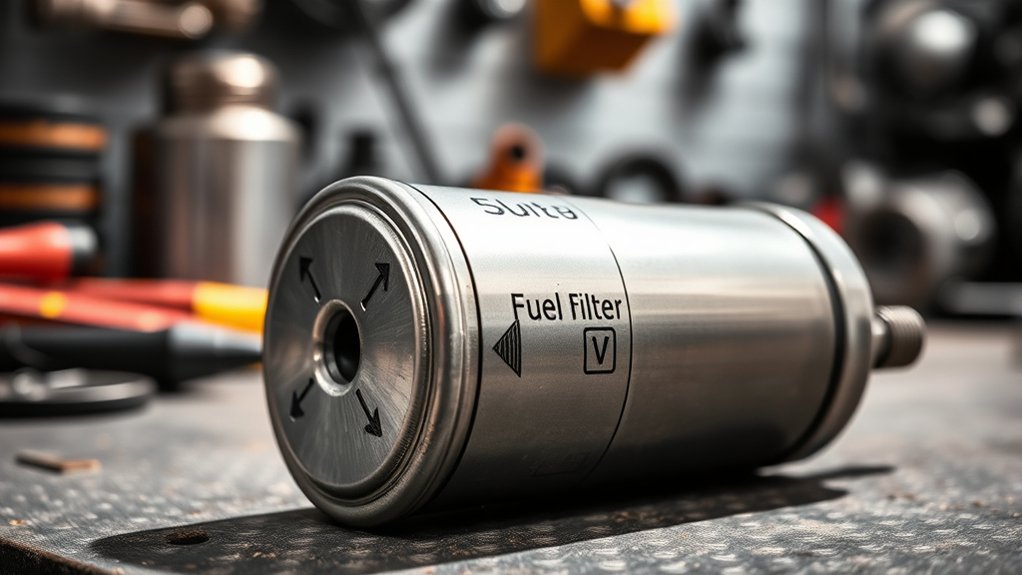
When you’ve identified the correct orientation of your fuel filter by examining the ports and fuel flow direction, the arrows and symbols on the filter can confirm your findings. Typically, a fuel filter has an arrow pointing in the direction the fuel should flow—from the fuel tank toward the engine. This arrow aligns with the flow of fuel through the fuel line.
Some filters also include symbols like a fuel pump icon or “IN” and “OUT” labels to mark the inlet and outlet sides. If you spot these markings, use them as a guide to install the filter properly. Ignoring these arrows or symbols can lead to incorrect installation, so always double-check to make sure the fuel flows through the filter as intended.
Why Fuel Filter Orientation Matters
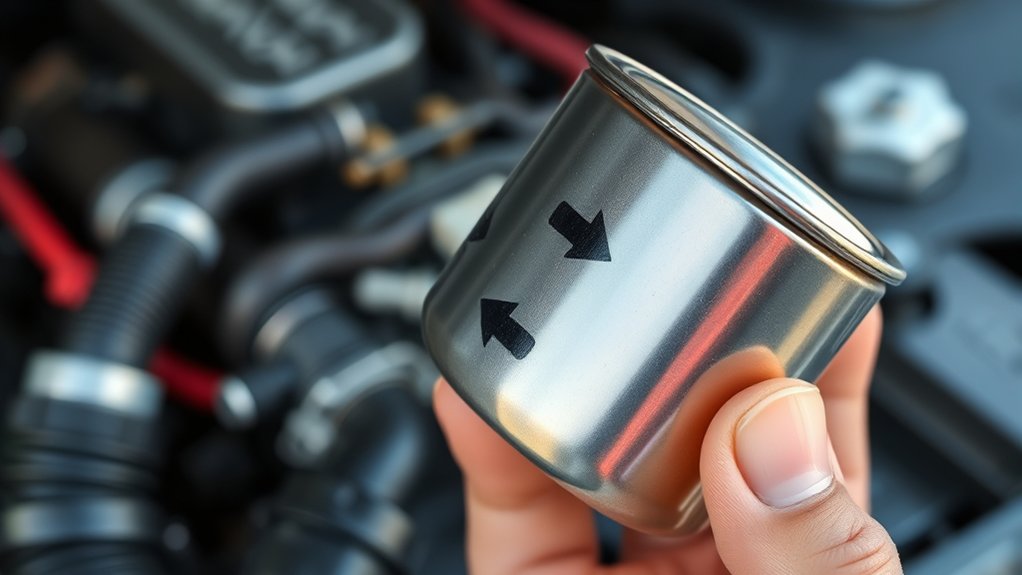
Why does fuel filter orientation matter so much? If you install it backward, fuel won’t flow properly, causing engine performance issues or even damage. The filter is designed to catch contaminants in one direction; reversing it lets dirt bypass the filter, risking clogged injectors or fuel lines.
Correct orientation ensures clean fuel reaches your engine, maintaining efficiency and longevity.
Here’s a quick look at why orientation counts:
| Problem if Backward | Result |
|---|---|
| Fuel flow restriction | Engine sputters or stalls |
| Contaminants bypass | Fuel system damage |
| Increased pressure | Fuel pump strain |
| Filter clogging faster | Reduced filter lifespan |
| Poor engine response | Decreased fuel efficiency |
Always align with the arrow to keep your engine running smoothly.
Tools Needed to Replace a Fuel Filter
Before you begin replacing your fuel filter, gathering the right tools will save you time and frustration. You’ll need a wrench set or socket set to loosen and tighten fuel line fittings. A screwdriver might be necessary if your filter is secured with clamps or brackets.
Have a container or rag ready to catch any fuel drips during removal. Safety gloves and eye protection are essential to protect yourself from fuel exposure. Additionally, a pair of pliers can help with stubborn clips or clamps.
Finally, keep your new fuel filter and any replacement seals or washers close by. Having everything organized before you start guarantees a smoother, safer replacement process without unnecessary interruptions.
How to Install a Fuel Filter Step by Step
Gathering the right tools makes installing your new fuel filter much easier. First, relieve the fuel system pressure by loosening the fuel cap and disconnecting the battery. Locate the old fuel filter, usually along the fuel line, then use wrenches or pliers to disconnect the fuel lines carefully, catching any spilled fuel.
Remove the old filter and note the flow direction marked by an arrow. Install the new filter with the arrow pointing toward the engine, ensuring correct flow direction. Reconnect the fuel lines securely, checking for tight fittings to prevent leaks.
Finally, reconnect the battery, tighten the gas cap, and start the engine to check for smooth operation. If everything runs well, your fuel filter installation is complete.
Mistakes to Avoid When Installing a Fuel Filter Backwards
If you install a fuel filter backwards, you risk restricting fuel flow and causing engine performance issues. To avoid problems, watch out for these mistakes:
- Ignoring the direction arrow on the filter — always align it with fuel flow.
- Forcing connections without checking compatibility — this can cause leaks or damage.
- Skipping a pressure test after installation — it ensures the filter works correctly.
- Neglecting to replace worn or cracked hoses — old hoses can lead to contamination or leaks despite a new filter.
How to Check Which Way Fuel Flows in Your Vehicle
To check which way fuel flows in your vehicle, start by identifying the fuel flow direction on your fuel lines. Look closely for flow arrows stamped or printed on the fuel filter itself.
These arrows guide you in installing the filter correctly and ensuring proper fuel delivery.
Identifying Fuel Flow Direction
How can you tell which way the fuel flows in your vehicle? Identifying the fuel flow direction is essential for installing the fuel filter correctly. Usually, fuel flows from the tank toward the engine, so you need to confirm this path before installation.
Here’s how you can identify the flow direction:
- Check the fuel filter itself—most have an arrow indicating flow direction.
- Follow the fuel line from the tank; fuel moves from the tank to the engine.
- Consult your vehicle’s owner manual for specific fuel system diagrams.
- Observe the fuel pump’s position; it pushes fuel toward the engine.
Inspecting Fuel Lines
Knowing the fuel flow direction helps when inspecting fuel lines to guarantee proper installation and operation. Start by visually tracing the lines from the fuel tank to the engine. Look for any signs of wear, cracks, or leaks that could disrupt fuel flow.
Pay close attention to the connectors and clamps to verify they’re secure and not causing any restrictions. You should also check the lines for any sharp bends or kinks that might impede flow or cause damage over time.
If your vehicle has clear or semi-transparent fuel lines, you can observe the fuel movement when the engine runs, confirming the flow direction. Regular inspection helps prevent fuel delivery issues and keeps your engine running smoothly.
Using Flow Arrows
Although fuel lines may look similar, you’ll want to identify the flow direction to guarantee proper filter installation. Most fuel filters have flow arrows stamped or molded onto their bodies. These arrows indicate the direction fuel should travel through the filter to ensure best performance.
To check which way fuel flows in your vehicle, follow these steps:
- Locate the fuel filter and look for an arrow on its casing.
- Trace the fuel lines from the fuel tank to the engine. Fuel flows from the tank side toward the engine side.
- Confirm the arrow points in the same direction as fuel flow, usually from the inlet to the outlet.
- If the arrow points the wrong way, reinstall the filter correctly to avoid fuel delivery issues.
Signs Your Fuel Filter Is Installed Wrong
Wondering why your vehicle isn’t running smoothly after a fuel filter replacement? One common reason is that the filter is installed backward. If you notice engine hesitation, loss of power, or difficulty starting, the fuel flow might be restricted due to incorrect orientation.
You might also detect rough idling or frequent stalling, as the fuel system struggles to deliver clean fuel properly. Additionally, a wrong installation can cause fuel leaks around the filter connections, posing safety risks. If your check engine light comes on soon after replacing the filter, it’s worth double-checking the installation direction.
Always verify the arrow on the filter points toward the engine to maintain proper fuel flow and avoid these performance issues. Correct installation keeps your engine running efficiently.
Gas vs. Diesel: How Fuel Filter Orientation Differs
How does fuel filter orientation differ between gas and diesel engines? You need to pay close attention because the design and flow requirements vary between the two. Diesel fuel filters often handle contaminants like water and larger particles, while gas filters focus more on fine particles.
Here’s what to keep in mind:
- Diesel filters usually have a water separator, so they must be oriented to allow water to collect and drain properly.
- Gas filters rely on a straightforward flow direction, marked by arrows on the housing, ensuring efficient particle trapping.
- Diesel filters often have a more robust housing and require a specific flow path to protect the fuel injection system.
- Gas filters might be more compact and flexible in orientation but still require correct flow direction for engine performance.
Always follow manufacturer instructions for your fuel type.
Maintenance Tips to Extend Your Fuel Filter’s Lifespan
Since your fuel filter plays a crucial role in protecting your engine, maintaining it properly can save you costly repairs down the road. First, check your owner’s manual for recommended replacement intervals and stick to them. Don’t wait for signs of clogging or poor performance—proactive replacement prevents debris buildup.
Use quality fuel to reduce contaminants entering the filter. Keep your fuel tank clean and avoid letting it run too low, which can cause sediment to reach the filter. Regularly inspect the filter and surrounding connections for leaks or damage.
When replacing the filter, make sure you install it in the correct direction to maintain proper fuel flow. Following these simple steps helps extend your fuel filter’s lifespan and keeps your engine running smoothly.
Frequently Asked Questions
How Often Should I Replace My Fuel Filter?
You should replace your fuel filter every 20,000 to 30,000 miles or as recommended in your vehicle’s manual. If you notice engine issues or poor performance, don’t wait—change it sooner to keep things running smoothly.
Can a Clogged Fuel Filter Cause Engine Misfires?
Over 30% of engine issues stem from fuel system problems. Yes, a clogged fuel filter can cause engine misfires by restricting fuel flow, leading your engine to run lean and misfire, so you should replace it promptly.
Are Fuel Filters Reusable or Disposable?
Fuel filters are usually disposable, so you should replace them when they get clogged. Reusable fuel filters are rare and need cleaning, but most vehicles use disposable ones to keep your engine running smoothly and efficiently.
What Are Common Symptoms of a Bad Fuel Filter?
You might notice your car struggling to start, losing power during acceleration, or even stalling unexpectedly.
Don’t ignore these signs—your fuel filter could be clogged, starving your engine and risking bigger, costly damage.
Can I Use Any Fuel Filter for My Vehicle Model?
You shouldn’t use just any fuel filter; you need one designed for your specific vehicle model. Using the wrong filter can cause poor performance or damage.
Always check your owner’s manual or consult a professional before buying.
Conclusion
Now that you know which way a fuel filter goes, you’re steering your vehicle’s performance in the right direction. Installing it correctly isn’t just a step—it’s the heartbeat of your engine’s fuel system.
Remember, the arrows on the filter are your guiding stars, pointing the way to smooth rides and long-lasting engines. Keep an eye on your filter’s flow, and you’ll keep your car running like a well-oiled dream. Proper fuel filter installation ensures optimal fuel flow and engine efficiency.

