

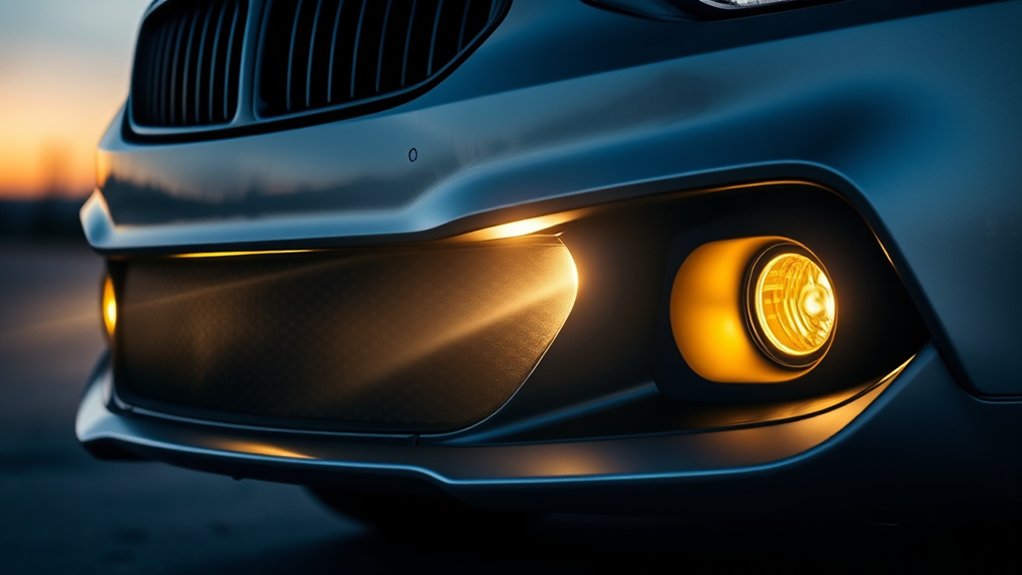
Fog lights on a car are essential lighting features designed to improve visibility in adverse weather conditions like fog, rain, or snow. These fog lights are small, usually round or rectangular lamps positioned low on the front bumper, near or below the headlights.
Their placement and design help reduce glare and illuminate the road close to the ground.
They often have clear or frosted lenses surrounded by chrome or plastic bezels. Designed to emit wide, low beams, fog lights help you see through difficult weather by cutting through the haze without reflecting light back into your eyes.
Modern versions often use sleek, LED designs that blend into the car’s style.
You can explore more about their placement, shapes, and usage next. Understanding what fog lights look like on a car can help you recognize their function and importance.
Key Takeaways
- Fog lights are small, round or rectangular lights positioned low on the front bumper near or below the headlights. They have clear or frosted lenses, often surrounded by plastic or chrome bezels for distinction. Modern fog lights feature sleek, aerodynamic designs, usually integrating LED technology for bright, focused illumination.
- Fog lights emit wide, low beams angled downward to reduce glare and improve visibility in foggy or adverse weather. They are typically located centrally or on inner bumper edges, illuminating close to the ground where fog is thickest.
What Are Fog Lights and Why Do They Matter
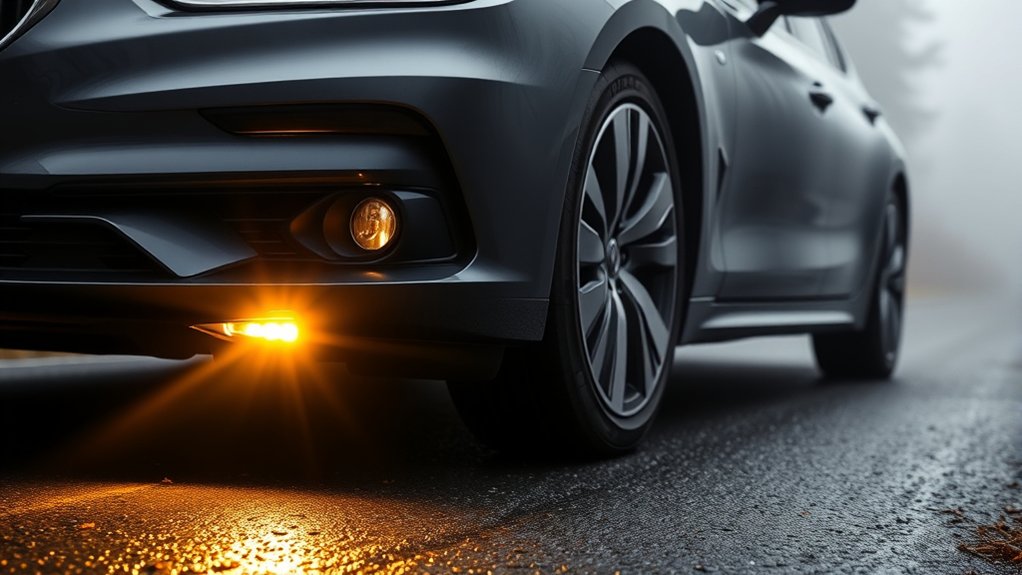
Have you ever wondered why fog lights are an essential feature on many vehicles? They’re designed specifically to improve your visibility when the weather conditions are less than perfect, like during fog, heavy rain, or snow. Unlike your regular headlights, fog lights emit a wide, low beam that cuts through fog and reduces glare, helping you see the road more clearly.
They also make your car more visible to other drivers, which is indispensable for safety. You’ll notice they produce a softer, yellowish light, which is easier on the eyes in foggy conditions. Using fog lights correctly can markedly reduce the risk of accidents, making them a critical part of your vehicle’s lighting system.
Where Are Fog Lights Usually Positioned on a Car
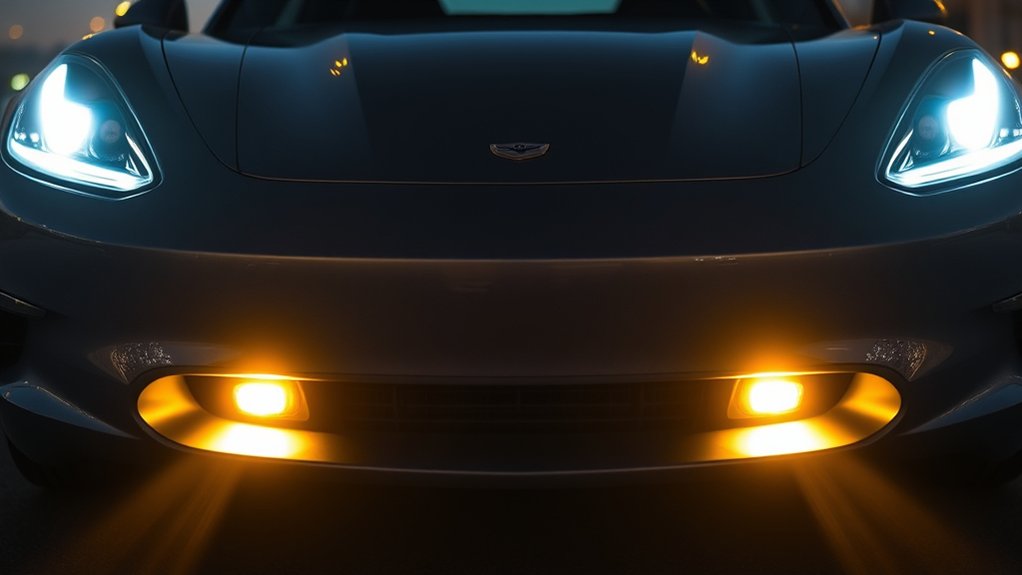
Fog lights play a key role in enhancing visibility during poor weather, but their effectiveness also depends on where they’re placed on your vehicle. Typically, you’ll find fog lights positioned strategically to cut through fog, rain, and snow without causing glare.
Fog lights improve visibility in bad weather by reducing glare through strategic placement on your vehicle.
Here are the three most common placements for fog lights on a car:
- Lower Front Bumper: This is the most typical spot, helping to illuminate the road close to the ground where fog is usually thickest.
- Near the Headlights: Sometimes fog lights sit just below or beside the headlights to complement them without overlapping their beam.
- Integrated into the Grille: Some cars have fog lights built into the grille area, maintaining a sleek look while serving their purpose.
Knowing these positions helps you spot fog lights easily and understand their function better.
How Do Fog Lights Differ From Headlights and Taillights?
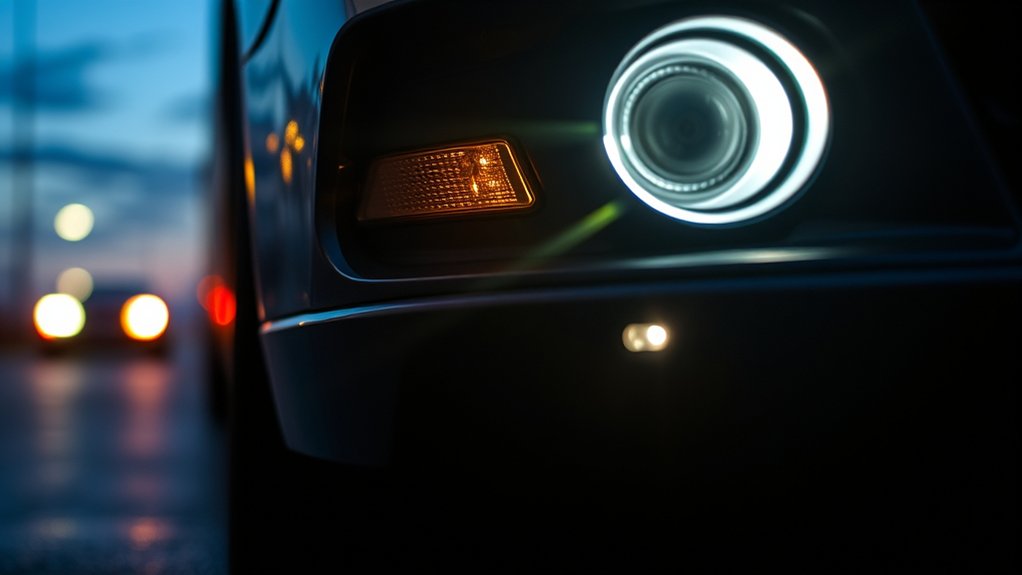
You’ll notice fog lights sit lower on the car compared to headlights and taillights, which affects how they shine. Unlike headlights that cast a wide, long beam and taillights that signal your presence, fog lights focus a low, wide beam to cut through fog and reduce glare.
Understanding these differences helps you see why each light serves a unique purpose on the road.
Light Placement Differences
Although headlights and taillights typically sit higher on a vehicle, fog lights are positioned lower on the front bumper to cut through fog and minimize glare. This distinct placement serves a practical purpose, and you’ll notice how it sets fog lights apart:
- Lower Mounting Height: Fog lights sit closer to the road, helping illuminate the surface directly in front of your car without reflecting off fog, rain, or snow.
- Central or Outer Bumper Location: Unlike headlights, which flank the vehicle’s front edges, fog lights are often mounted near the center or inner edges of the bumper to better target low, wide beams.
- Separate from Taillights: Taillights are at the rear, higher for visibility to other drivers. Fog lights focus solely on front visibility, so their placement is unique and functional.
Purpose And Beam Patterns
The unique placement of fog lights on your vehicle isn’t just about position—it directly influences how they function. Unlike your headlights that shine straight ahead and can reflect off fog or snow, fog lights are aimed low and wide. This beam pattern reduces glare, helping you see the road’s edges and lane markings in poor visibility.
They’re designed to cut through fog, rain, and dust without bouncing light back into your eyes. Unlike taillights, which alert drivers behind you, fog lights focus on improving your forward vision. So, when you turn on your fog lights, you’re activating a specialized beam pattern that enhances safety by improving visibility close to the ground, where fog is thickest and regular headlights might fail.
How to Spot Fog Lights on Different Car Models
Because fog lights vary widely across car models, spotting them can sometimes be tricky. To quickly identify fog lights, you’ll want to focus on a few key features:
- Location on the Car: Fog lights are usually positioned low on the front bumper, below the main headlights. This helps reduce glare in foggy conditions.
- Size and Shape: While shapes differ, fog lights tend to be smaller and rounder compared to headlights. Some models use rectangular or oval shapes, but they remain compact.
- Lens and Housing: Look for a distinct lens with a clear or frosted cover, often surrounded by a plastic or chrome bezel that sets them apart from other lights.
What Shapes, Sizes, and Colors Do Fog Lights Come In?
When you look closely at fog lights, you’ll notice they come in various shapes, sizes, and colors designed to enhance visibility in different conditions. Most commonly, fog lights are round or rectangular, fitting neatly into the car’s front bumper or lower grille. Some vehicles feature oval or uniquely styled fog lights to match their design.
Sizes vary but are generally compact to focus light low and wide. Regarding color, yellow and white are the most popular. Yellow fog lights cut through fog, rain, and snow better, reducing glare and improving contrast.
White fog lights provide a brighter, more natural light but might reflect off moisture more. You’ll rarely see other colors since they can hinder visibility or violate regulations. Selecting the right fog light shape and color depends on your driving needs and vehicle style.
How Fog Light Beams Differ From Headlights
Although fog lights and headlights both illuminate the road ahead, fog light beams differ markedly in design and function to help you see better in poor weather conditions. When you switch on your fog lights, notice these key differences:
Fog lights and headlights both illuminate the road, but fog lights are specially designed for better visibility in poor weather.
- Beam Pattern: Fog lights emit a wide, low, and flat beam that spreads across the road’s surface, minimizing glare and illuminating the edges of the road.
- Light Angle: They’re angled downward more sharply than headlights to reduce light reflection off fog, rain, or snow, helping you avoid blinding reflections.
- Color Temperature: Fog lights often use warmer tones, like yellow or amber, which penetrate fog better than the cooler, bluish-white light of headlights.
These differences guarantee your vision improves without causing discomfort or reduced visibility for other drivers.
How Fog Lights Improve Visibility in Foggy Conditions
How exactly do fog lights boost your visibility in thick fog? They cut through the haze by emitting a wide, low, and focused beam of light that reduces glare reflecting off water droplets in the fog. This helps you see the road surface and its edges more clearly.
Unlike your regular headlights, fog lights minimize the scattered light that can blind you, making it easier to spot lane markings, curbs, and obstacles. When you switch them on, you improve your ability to judge distances and react faster to potential hazards. This targeted illumination also reduces eye strain, so you stay more alert and confident while driving in foggy conditions.
Ultimately, fog lights give you a clearer, safer view when visibility is poor.
Why Fog Lights Are Positioned Low on Cars
Because fog tends to hover close to the ground, manufacturers position fog lights low on cars to cut beneath the fog layer. This placement helps you see better when visibility is poor. Here’s why it works:
Fog lights are placed low on cars to shine beneath the fog, improving visibility in poor conditions.
- Reduces Glare: Positioned low, fog lights minimize reflection off the fog back into your eyes, preventing blinding glare.
- Illuminates Road Surface: They focus light on the road directly ahead, highlighting lane markings and obstacles you need to spot.
- Improves Contrast: By lighting the lower part of the environment, fog lights boost contrast between objects and the fog, making it easier for you to navigate.
This strategic location enhances your safety in foggy conditions by optimizing how the light interacts with fog and the road.
What Makes Modern Fog Lights Different?
When you look closely at modern fog lights, you’ll notice they’ve evolved considerably from older models. Today’s fog lights use LED technology, which offers brighter, more focused illumination while consuming less energy. Unlike traditional halogen bulbs, LEDs last longer and resist vibration better, so they’re more reliable in tough weather.
You’ll also see that modern fog lights often have sharper, sleeker designs that blend seamlessly with a car’s styling, rather than sticking out awkwardly. Many come with adjustable beam patterns to reduce glare for oncoming drivers. Plus, some newer models integrate with smart vehicle systems, automatically activating in foggy conditions or low visibility.
These improvements make modern fog lights more efficient and user-friendly than ever before.
How to Maintain and Replace Fog Lights
To keep your fog lights working well, you’ll want to regularly clean the lenses and check the electrical connections. If a fog light burns out or gets damaged, replacing it is usually straightforward.
Let’s walk through the key steps to maintain and replace your fog lights effectively.
Cleaning Fog Light Lenses
Although fog lights are designed to improve visibility in poor conditions, their effectiveness can quickly diminish if the lenses get dirty or cloudy. You should clean them regularly to keep your fog lights bright and clear.
Here’s how you can do it:
- Use a soft cloth and mild soap mixed with water to gently wipe off dirt and grime. Avoid abrasive materials that can scratch the lens.
- For cloudy lenses, apply a plastic polish or a fog light restoration kit, following the product instructions carefully to restore clarity.
- Rinse thoroughly with clean water and dry the lenses completely to prevent water spots.
Checking Electrical Connections
Since fog lights rely on electrical components, checking their connections regularly guarantees they work properly and last longer. Start by turning off your car and locating the wiring harness behind each fog light. Inspect the connectors for corrosion, dirt, or loose wires, which can cause flickering or failure.
If you spot corrosion, clean it gently with a contact cleaner and a small brush. Make sure each connector fits snugly to prevent moisture intrusion. Also, check the wiring for any cracks or fraying, and secure loose wires away from heat or moving parts.
Regularly testing the fog lights while adjusting these connections helps you catch issues early. Keeping these electrical parts in good shape assures consistent fog light performance and safety in poor visibility conditions.
Step-by-Step Replacement Guide
When your fog lights start dimming or stop working altogether, you’ll want to replace them promptly to maintain safe driving conditions.
Here’s a simple step-by-step guide to help you do it:
- Access the Fog Light Housing – Locate the fog lights under your bumper. You may need to remove screws or clips to open the housing or access the bulbs from behind.
- Remove the Old Bulb – Carefully twist or pull out the old bulb, depending on your car model. Avoid touching the glass part of the new bulb with your fingers to prevent damage.
- Install the New Bulb – Insert the new bulb securely into the socket, reattach the housing, and test the light to ensure it works correctly before finishing up.
When Should You Use Fog Lights and Are They Legal?
If you encounter thick fog, heavy rain, or snow, turning on your fog lights can improve visibility without blinding other drivers. Fog lights sit low on your vehicle, casting a wide, low beam that cuts through poor weather conditions better than regular headlights. However, you shouldn’t use them in clear weather, as their brightness can annoy or temporarily blind other drivers.
Legality varies by location, so check your local laws before using fog lights. In most places, it’s legal to use them only during adverse weather conditions or low visibility situations. Using fog lights unnecessarily may result in fines.
Frequently Asked Questions
Can Fog Lights Be Used During Heavy Rain or Snow?
Yes, you can use fog lights during heavy rain or snow. They help improve your visibility by cutting through the fog, rain, or snow close to the road, making it safer for you and other drivers.
Fog lights are designed to illuminate the area directly in front of your vehicle. This focused light reduces glare and reflections that can occur in adverse weather conditions.
Using fog lights properly ensures better road visibility and enhances safety for everyone on the road.
Do Fog Lights Consume More Power Than Regular Headlights?
No, fog lights don’t consume more power than regular headlights. They usually use lower wattage bulbs, so you won’t drain your battery faster.
You can use them efficiently without worrying about extra energy consumption.
Are LED Fog Lights Better Than Halogen Ones?
Yes, LED fog lights are better than halogen ones because they use less power, last longer, and provide brighter, clearer light.
You’ll notice improved visibility in foggy conditions while saving energy and reducing replacements.
Can Fog Lights Affect Other Drivers’ Visibility?
Yes, fog lights can affect other drivers’ visibility if you use them improperly. You shouldn’t turn them on in clear conditions since their bright, low-mounted beams might blind or distract oncoming drivers, causing unsafe situations.
How Do Fog Lights Impact a Car’s Resale Value?
Like a well-chosen accessory, fog lights can boost your car’s resale value by making it look more practical and stylish.
Buyers often appreciate added safety features, so you’ll likely get a better price when selling.
Conclusion
Now that you know what fog lights look like and why they matter, you’re better equipped to spot them and use them wisely. They’re usually low and wide, designed to cut through the thickest fog like a hot knife through butter.
Remember, using them properly keeps you safe and legal on the road. So, keep an eye on their condition and don’t hesitate to replace them when needed—it’s better to be safe than sorry! Proper maintenance and understanding the importance of fog lights help ensure clear visibility and safer driving in foggy conditions.

