

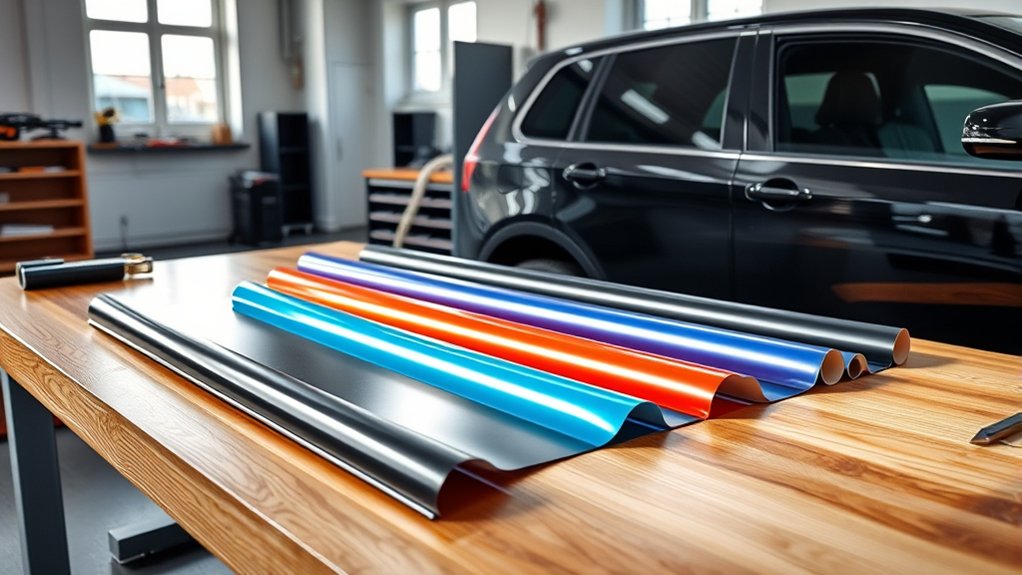
You’ll want vinyl that offers durability, strong adhesion, and weather resistance to keep your car decals looking vibrant. Choosing the right vinyl for car decals is essential to ensure longevity and maintain a fresh appearance.
Cast vinyl stands out for long-lasting flexibility and fade resistance, making it a top choice for high-quality decals.
Calendar vinyl works well for budget-friendly, short-term projects.
Reflective and metallic vinyl add safety and style with eye-catching effects.
Printable options let you customize designs with vivid colors to match your personal taste.
Plus, selecting vinyl suited to your car’s surface guarantees a secure fit without damage.
Keep exploring to discover the best choices for your needs and create decals that truly shine.
Key Takeaways
- Durable cast vinyl is the top choice for long-lasting car decals due to its flexibility, UV resistance, and strong adhesive properties.
- Calendar vinyl is ideal for temporary or seasonal decals, offering affordability but less durability and faster fading.
- Printable vinyl options come in matte, glossy, and clear finishes, providing vibrant designs and strong adhesion for automotive surfaces.
- Reflective and metallic vinyls enhance visibility and aesthetics, combining durability with stylish, weather-resistant finishes.
- Proper surface preparation and using vinyl suited for smooth or textured finishes ensures optimal adhesion and decal longevity.
Key Features to Consider When Choosing Vinyl for Car Decals
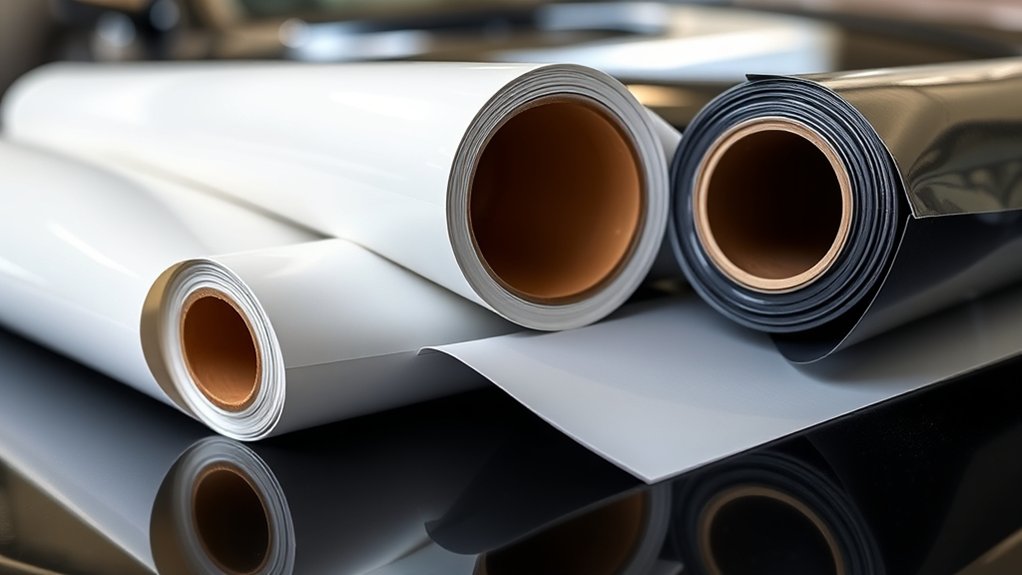
When choosing vinyl for car decals, you’ll want to focus on durability, adhesive quality, and weather resistance. These factors ensure your decal stays put and looks great over time. You should also consider the vinyl’s thickness; thicker vinyl generally withstands wear better.
Look for a material that resists fading from UV rays, so your design remains vibrant under sunlight. The adhesive should be strong enough to stick firmly without damaging your car’s paint when removed. Additionally, flexibility matters—vinyl that conforms well to curves and contours will give you a smoother, more professional finish.
Finally, check if the vinyl is compatible with your printing method, whether you’re using a cutter or a printer. These key features help you pick the right vinyl for lasting, attractive car decals.
Durable Cast Vinyl: Best for Long-Lasting Car Decals
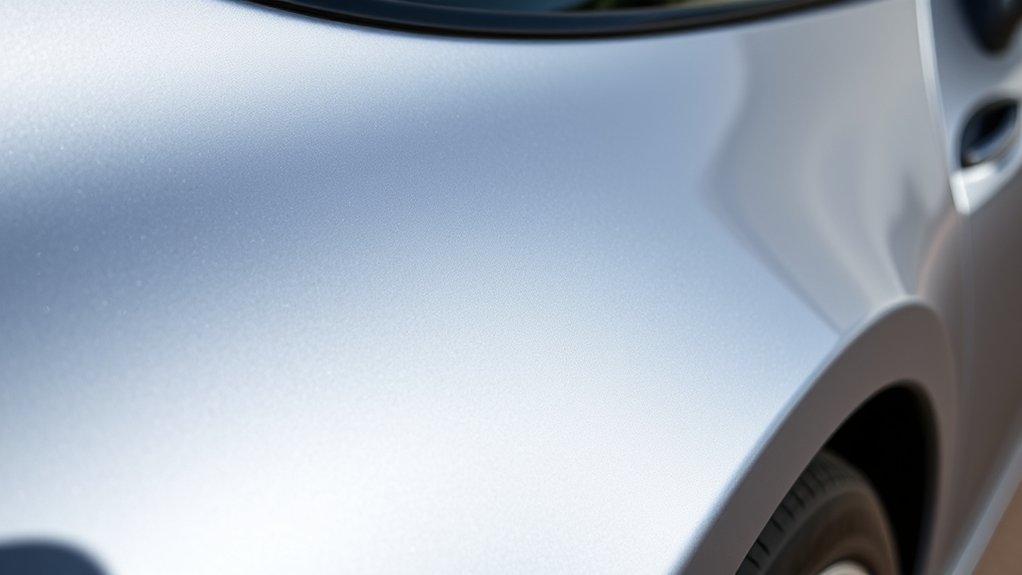
To make certain your car decals last through all kinds of weather and wear, durable cast vinyl stands out as a top choice. This type of vinyl is made by casting a liquid vinyl onto a surface, creating an ultra-thin, flexible material that conforms perfectly to your car’s curves. It resists fading, cracking, and peeling, even under intense sun exposure or harsh rain.
If you want decals that maintain their vibrant colors and sharp details for years, cast vinyl is your best bet. It also handles car washes and road debris without losing adhesion. While it’s pricier than other options, the long-term durability and professional finish make it worth the investment for anyone serious about high-quality, lasting car decals.
Affordable Calendar Vinyl for Temporary Car Decals
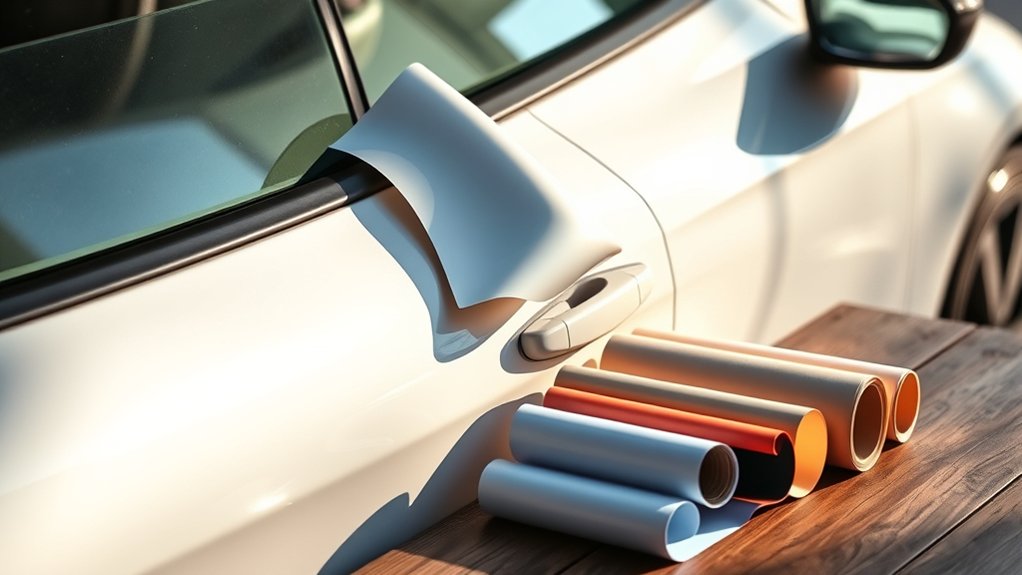
Although durable cast vinyl offers long-lasting performance, you might prefer a more budget-friendly option for short-term use. Affordable calendar vinyl is perfect for temporary car decals that last a few months to a year. It’s a calendared PVC material that’s thinner and less flexible than cast vinyl, making it easier to cut and apply for short-term projects.
You’ll find it’s great for promotions, seasonal decorations, or event-specific decals where durability isn’t the top priority. Keep in mind, calendar vinyl tends to shrink and fade faster than cast vinyl, so it’s not suited for year-round exposure. Still, it’s a smart choice when you want decent quality without spending too much.
Specialty Reflective and Metallic Vinyl for Car Decals
Ever wondered how to make your car decals stand out, especially at night or under direct sunlight? Specialty reflective and metallic vinyl is your answer. Reflective vinyl enhances visibility by bouncing light back to its source, making your decals highly noticeable during nighttime driving or low-light conditions.
Metallic vinyl, on the other hand, adds a sleek, shiny finish that catches the eye in daylight, giving your car a premium look. Both types are durable and weather-resistant, ensuring your decals maintain their impact over time. When choosing between them, think about whether you want safety-focused visibility or a flashy, stylish effect.
Using these specialty vinyls can elevate your car’s appearance while serving practical purposes, making your decals both functional and visually striking.
Printable Vinyl Options for Custom Car Decals
When choosing printable vinyl for your custom car decals, you’ll want to take into account the different types available, like glossy or matte finishes. It’s important to pick a vinyl that offers strong durability and reliable adhesion to withstand the elements.
Understanding these factors will help you create decals that look great and last long on your vehicle.
Types Of Printable Vinyl
What makes printable vinyl ideal for custom car decals? It’s the versatility and ease of use. You can print vibrant designs directly onto the vinyl, making your decals stand out with detailed colors and graphics.
Here are the main types you’ll encounter:
| Type | Best For |
|---|---|
| Matte Printable | A non-glossy, subtle finish |
| Glossy Printable | Bright, shiny, eye-catching |
| Clear Printable | Transparent backgrounds |
Each type serves different visual purposes. Matte vinyl reduces glare, glossy vinyl enhances color vibrancy, and clear vinyl lets you showcase your design without a white background.
Choosing the right printable vinyl depends on the look you want to achieve for your custom car decals.
Durability And Adhesion
Choosing the right printable vinyl affects more than just the look of your custom car decals—it also impacts how well they hold up over time. You want vinyl that sticks firmly to your vehicle’s surface and resists peeling, cracking, or fading.
Look for vinyl with strong adhesive properties designed specifically for automotive use; these guarantee your decals stay put through rain, sun exposure, and car washes. Durability also depends on the vinyl’s material—cast vinyl tends to be more flexible and long-lasting than calendared vinyl, especially on curved surfaces.
Weather Resistance: Which Vinyl Holds Up Best?
You want your car decals to stay vibrant and intact no matter the weather. That means choosing vinyl that handles harsh conditions, resists UV rays, and tolerates moisture and temperature changes.
Let’s explore which types of vinyl hold up best over time.
Durability Under Harsh Conditions
Although many types of vinyl look great initially, their ability to withstand harsh weather varies considerably. When you pick vinyl for car decals, durability under rain, wind, and temperature changes is vital. Some vinyls can crack, peel, or fade quickly, ruining your design and wasting money.
Think about how your vinyl will handle torrential rain that tries to seep underneath. Blistering heat causing expansion and warping. Freezing cold that makes the material brittle.
Strong winds tugging and lifting edges. Choosing a high-quality, weatherproof vinyl ensures your decals stay intact and vibrant. You want material designed for automotive use, resisting moisture and extreme conditions without breaking down.
This tough vinyl saves you time and replacement costs.
UV Resistance Comparison
Weather resistance doesn’t stop at handling moisture and temperature extremes—UV exposure plays a major role in how long your vinyl decals last. When you choose vinyl, look for materials specifically formulated with UV inhibitors. Cast vinyl generally offers superior UV resistance compared to calendared vinyl, meaning it holds color and integrity longer under intense sunlight.
If your car spends a lot of time outdoors, cast vinyl reduces fading and cracking risks. Some brands add extra UV protection layers, extending lifespan further. While calendared vinyl can work for shorter-term or less sun-exposed applications, it tends to degrade faster under UV rays.
Moisture And Temperature Tolerance
Because car decals face constant exposure to moisture and fluctuating temperatures, choosing vinyl that can withstand these conditions is essential for durability. You want vinyl that won’t peel, crack, or fade when rain, snow, or heat hits your car.
Look for vinyls with strong moisture resistance and temperature tolerance to guarantee longevity.
Consider these factors when picking vinyl for your car decals:
- Resistant to water absorption, preventing bubbling or lifting
- Flexible enough to handle temperature changes without cracking
- Adhesives that stay strong in cold and heat
- Durable finishes that repel moisture and resist warping
Vinyl Adhesion: Choosing the Right Vinyl for Your Car’s Surface
When you choose vinyl for your car decals, you need to take into account how well it will stick to your vehicle’s surface. Different vinyl types offer varied adhesion levels, so picking one that bonds securely with your car’s paint or finish is essential. For smooth, non-porous surfaces like factory paint, cast vinyl provides excellent adhesion and flexibility.
If your car has a textured or matte surface, look for vinyl with stronger adhesive formulas designed for rougher textures. Remember, improper adhesion can cause peeling or bubbling, reducing your decal’s lifespan. Always clean your car’s surface thoroughly before application to maximize stickiness.
Frequently Asked Questions
How Do I Properly Clean the Car Surface Before Applying Vinyl?
You should wash the area with soap and water, then dry it thoroughly.
Next, wipe the surface with isopropyl alcohol to remove oils and residue.
Avoid using wax or polish before applying your vinyl decal.
Can Vinyl Decals Be Removed Without Damaging the Car Paint?
When Sarah removed her vinyl decal, she used a hairdryer to warm it up, making it peel off easily without damaging the paint.
You can do the same—heat the vinyl gently, then peel it slowly for safe removal.
What Tools Are Needed to Apply Vinyl Decals Smoothly?
You’ll need a squeegee or credit card, a spray bottle with soapy water, a sharp utility knife, and a microfiber cloth. These tools help you apply vinyl decals smoothly without bubbles or wrinkles.
Using a squeegee or credit card ensures even pressure and helps avoid air pockets. The spray bottle with soapy water allows for repositioning the decal during application.
A sharp utility knife is essential for trimming excess vinyl cleanly. Finally, a microfiber cloth helps smooth out the decal and remove any remaining moisture or dust.
How Long Does It Take to Apply a Vinyl Decal?
You might expect it to take forever, but applying a vinyl decal usually takes just 15 to 30 minutes. With patience and care, you’ll transform your surface smoothly, avoiding frustration and enjoying satisfying results quickly.
Are There Any Legal Restrictions on Car Decal Sizes or Placements?
Yes, you’ve got to follow local laws on decal size and placement. Avoid obstructing windows, license plates, or lights. Check state regulations because rules vary, and ignoring them could lead to fines or your decal’s removal.
Conclusion
Choosing the right vinyl for your car decals isn’t just about sticking something on your ride—it’s about making a statement that lasts. Whether you want the durability of cast vinyl or the eye-catching shine of metallic options, your choice drives the look and lifespan of your decal.
So, why settle for less when you can pick the perfect vinyl that sticks with you through every mile and memory? Your car deserves nothing less!
When selecting vinyl for car decals, consider factors like durability, finish, and ease of application. The best vinyl for car decals ensures your design remains vibrant and intact through all weather conditions. Choosing high-quality vinyl for car decals truly makes all the difference in style and longevity.

