

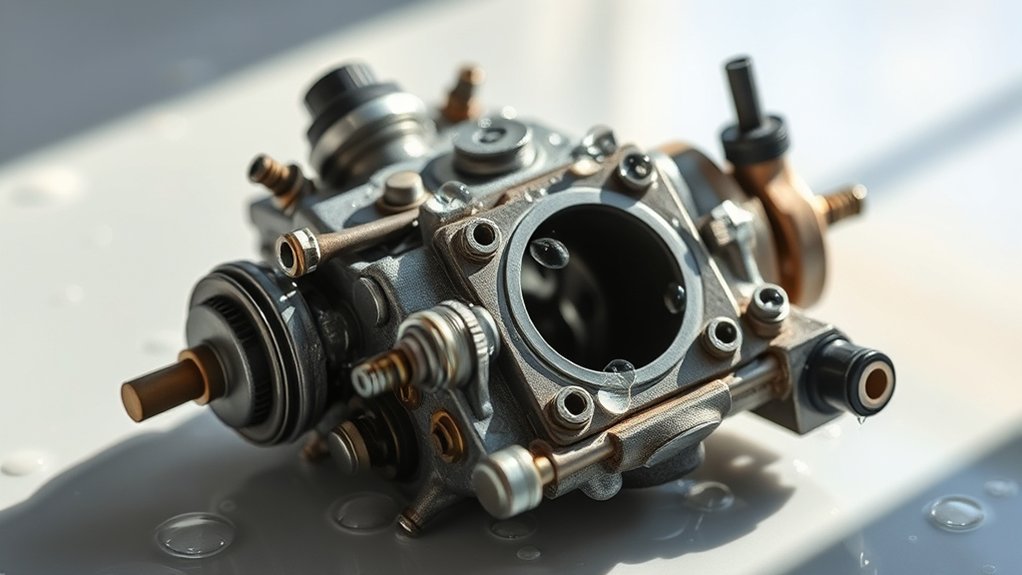
Yes, Seafoam can effectively clean a carburetor by dissolving light gum, varnish, and sludge without the need to disassemble it. This popular fuel additive works by mixing with fuel or air, allowing it to reach tricky spots inside the carburetor.
As a result, it helps restore fuel flow and smooth out engine performance, making it a convenient option for routine maintenance.
Seafoam is best suited for light deposits. If your carburetor has heavy buildup or damaged parts, this treatment might not be sufficient to fully resolve issues.
Keep reading to learn how to use Seafoam properly and when it’s time to seek professional help for carburetor cleaning or repair.
Key Takeaways
- Seafoam effectively dissolves and removes light varnish, gum, and sludge from carburetor jets, floats, throttle body, and surfaces.
- It improves fuel flow and engine performance by cleaning deposits but does not fix damaged or worn carburetor parts.
- Best used for mild buildup, applied via fuel tank, direct spray, or soaking carburetor parts for thorough cleaning.
- Seafoam may harm delicate gaskets or seals in older carburetors and can loosen deposits that clog jets if not used cautiously.
- For severe buildup or persistent carburetor issues, professional cleaning or repair is recommended beyond Seafoam’s capabilities.
How Does Seafoam Work Inside an Engine?
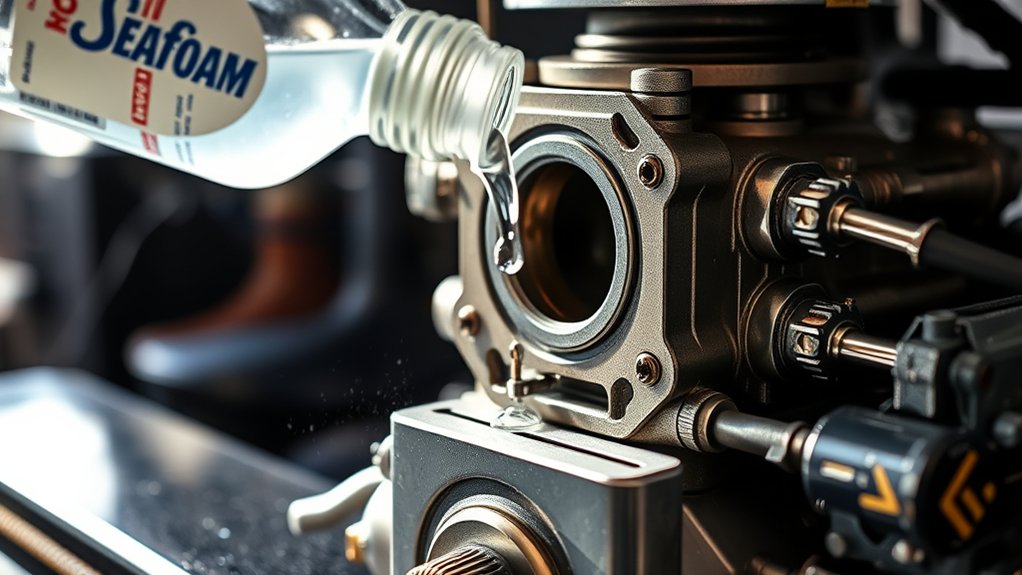
Although you might not see the effects immediately, Seafoam works inside your engine by dissolving and loosening carbon deposits, varnish, and sludge. When you add it to your fuel or intake, it mixes with gasoline or air, reaching hard-to-clean areas.
As it burns during combustion, Seafoam breaks down stubborn residues that reduce engine efficiency. This process helps restore smooth operation and improves fuel economy. You’ll notice cleaner intake valves and combustion chambers over time.
Seafoam also lubricates upper cylinder components, reducing wear and tear. By preventing buildup, it keeps your engine running cooler and smoother. Using Seafoam regularly can save you from costly repairs by maintaining your engine’s internal cleanliness and performance without harsh chemicals or aggressive scrubbing.
Which Carburetor Parts Can Seafoam Clean?
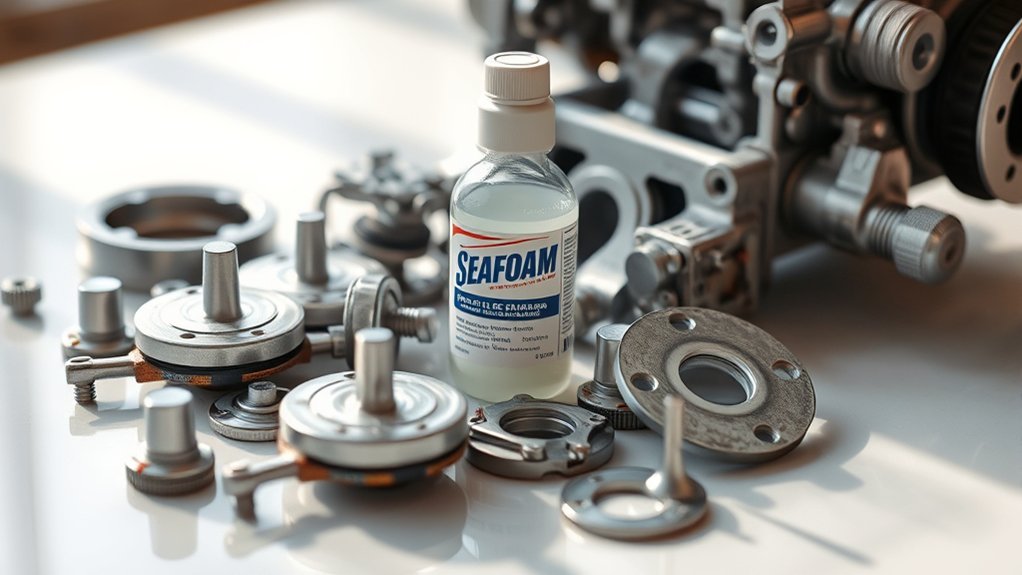
When you use Seafoam, it targets several key carburetor parts that often collect dirt and buildup, such as jets, floats, and the throttle body. These components are essential for fuel flow and air mixing, so keeping them clean helps your engine run smoothly. Seafoam’s formula penetrates deposits that can cause rough idling and poor performance.
Here are the main parts Seafoam can effectively clean:
- Jets – clearing clogged fuel passages to restore proper fuel delivery.
- Floats – removing sticky residue that can affect fuel level control.
- Throttle body – dissolving grime that hinders smooth throttle operation.
Can Seafoam Remove Gum and Varnish From Carburetors?
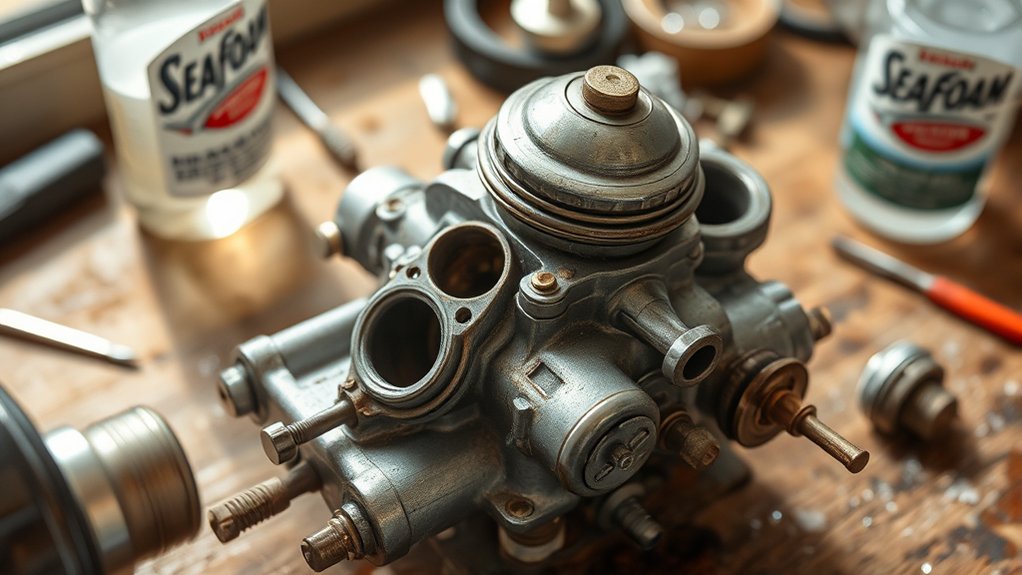
You might wonder if Seafoam can tackle the stubborn gum and varnish buildup inside your carburetor. It’s known for its ability to dissolve varnish and break down gum deposits effectively.
Let’s explore how well it works to restore your carburetor’s performance.
Effectiveness On Gum Removal
How well does Seafoam tackle gum and varnish buildup in carburetors? When you use Seafoam, you’ll find it excels at breaking down sticky gum deposits that clog jets and passages. Here’s why you’ll appreciate its gum-removal power:
- Penetrates Deeply: Seafoam seeps into tight carburetor spots where gum hides, loosening stubborn buildup quickly.
- Prevents Re-accumulation: It leaves behind a clean surface, reducing the chance gum will stick again soon.
- Easy Application: You can spray or soak parts, making the cleaning process less frustrating and more effective.
While Seafoam effectively softens and removes gum, remember that serious buildup might need repeated treatments or manual scrubbing for best results.
Still, it’s a reliable choice for keeping your carburetor running smoothly.
Varnish Dissolving Properties
Besides tackling gum buildup, Seafoam also shines at dissolving varnish deposits in carburetors. When varnish forms from old fuel, it hardens and clogs critical passages. You’ll find Seafoam’s petroleum-based formula breaks down these sticky, resinous layers efficiently.
Using it regularly prevents varnish buildup, ensuring smoother fuel flow and better engine performance. Here’s a quick overview:
| Feature | Seafoam Effectiveness | User Tip |
|---|---|---|
| Varnish Removal | High | Apply before buildup |
| Residue Left | Minimal | Wipe off excess after |
| Application Ease | Simple | Spray or soak |
| Engine Safety | Safe for carburetors | Follow instructions |
| Frequency Needed | Periodic maintenance | Every few months |
Seafoam’s varnish dissolving helps you keep your carburetor clean and running smoothly.
When Is Seafoam Effective for Carburetor Cleaning?
You’ll find Seafoam works best when cleaning light to moderate deposits in your carburetor. Applying it correctly, whether through the fuel system or directly, makes a big difference in results.
However, keep in mind its limits, as heavy buildup may require more intensive methods.
Ideal Cleaning Scenarios
Although Seafoam works well in many situations, it’s most effective for cleaning carburetors when you notice rough idling, hesitation during acceleration, or buildup caused by fuel deposits. You’ll want to use it when:
- Your engine struggles to maintain a steady idle, making driving frustrating.
- You feel a lag or stumble as you press the gas, indicating clogged passages.
- You’ve stored your vehicle for months, and old fuel has left varnish and gunk inside.
In these cases, Seafoam can break down deposits and restore smoother performance without the hassle of disassembly. It’s a smart choice when you want a quick, effective fix that targets common carburetor issues causing drivability problems.
Just make sure your symptoms match these scenarios for the best results.
Seafoam Application Methods
Knowing when Seafoam works best sets you up to apply it correctly for carburetor cleaning. You’ll want to use Seafoam when your engine is running rough, idling poorly, or showing signs of fuel system buildup.
One common method is adding Seafoam directly into the fuel tank, allowing it to flow through the carburetor and dissolve deposits gradually. Alternatively, you can spray Seafoam into the carburetor throat with the engine running at a low RPM, breaking down varnish and gunk on contact.
Another effective approach is removing the carburetor and soaking its parts in Seafoam for a thorough clean. Each method targets buildup differently, so choose based on your symptoms and how deep a clean you need. Always follow product instructions for safe use.
Limitations And Effectiveness
While Seafoam can effectively break down light deposits and varnish in your carburetor, it’s not a cure-all for severe buildup or mechanical issues. You’ll find it most effective when used early, before deposits harden or clog passages.
However, if your carburetor has heavy corrosion or damaged parts, Seafoam won’t fix those problems.
Use Seafoam when you notice:
- Minor engine roughness or hesitation linked to fuel delivery.
- Slight idle instability caused by varnish buildup.
- Preventive maintenance to keep your carburetor running smoothly.
How Do You Use Seafoam Without Taking Apart Your Carburetor?
If you want to clean your carburetor without taking it apart, Seafoam offers a simple solution. Start by adding Seafoam directly to your fuel tank. Use the recommended amount based on your tank size—usually about one ounce per gallon of fuel.
This allows the product to flow through the fuel system, reaching the carburetor and dissolving deposits. Next, run the engine for at least 15 to 30 minutes to let Seafoam work effectively. For tougher buildup, you can also spray Seafoam into the carburetor’s air intake while the engine idles, helping to break down varnish and gum without disassembly.
Always follow the instructions on the Seafoam bottle to avoid overuse. This method cleans internally without the hassle of dismantling your carburetor.
How to Tell If Seafoam Is Actually Helping Your Carburetor
Although Seafoam can be a powerful cleaner, you’ll want to watch for clear signs that it’s improving your carburetor’s performance. To know if it’s working, pay close attention to your engine’s behavior after treatment.
Here are three key indicators:
- Smoother Idle and Acceleration – Your engine should run more steadily without sputtering or hesitation.
- Improved Fuel Efficiency – Notice if your gas mileage gets better, indicating cleaner fuel passage.
- Reduced Smoke and Odor – Less exhaust smoke and a cleaner smell mean fewer carbon deposits burning off.
If you see these improvements, Seafoam is helping your carburetor. Keep monitoring, as continued use might enhance results.
If not, consider other maintenance options.
Why Seafoam Can’t Fix Deep Carburetor Problems
Even the best cleaner can’t fix serious mechanical issues inside your carburetor. Seafoam works by dissolving varnish, gum, and light deposits, but it can’t repair worn-out parts or fix damaged components like cracked floats, broken linkages, or warped throttle plates.
If your carburetor has significant wear, corrosion, or physical damage, Seafoam won’t restore proper function. You’ll need to rebuild or replace the carburetor to address those deep problems. Relying solely on Seafoam in such cases may waste time and mask symptoms temporarily without solving the root cause.
It’s important to recognize when cleaning isn’t enough so you can take appropriate action and avoid further engine issues or breakdowns.
What Are the Risks of Using Seafoam on Older or Sensitive Carburetors?
Recognizing when Seafoam can’t fix deep carburetor problems leads you to contemplate its effects on older or sensitive carburetors. Using Seafoam on these can pose unexpected risks. You need to be cautious because:
- Material Degradation: Older carburetors often have delicate gaskets and seals that Seafoam’s solvents might deteriorate, causing leaks or malfunctions.
- Clogging Risks: Seafoam can loosen stubborn deposits, but if those particles don’t flush out completely, they might clog tiny jets or passages, worsening performance.
- Chemical Sensitivity: Sensitive carburetors may react adversely to Seafoam’s chemical composition, potentially damaging components designed for milder cleaners.
If you don’t consider these risks, you could damage your carburetor further. Always assess your carburetor’s condition before applying Seafoam and proceed with care.
How Often Should You Use Seafoam for Carburetor Maintenance?
You should use Seafoam for carburetor maintenance based on your engine’s condition and mileage. Typically, applying it every few thousand miles helps keep the carburetor clean.
Watch for signs like rough idling or poor fuel economy to know when it’s time to reapply.
Recommended Usage Frequency
Although the ideal frequency varies based on your vehicle’s condition and usage, using Seafoam for carburetor maintenance every 3,000 miles or during regular tune-ups keeps your engine running smoothly. You want to avoid buildup that can cause rough idling or poor fuel efficiency.
Here’s a simple guide to help you stay on track:
- Use Seafoam at every oil change to maintain cleanliness and prevent deposits.
- Apply it before long trips to ensure your carburetor is performing at its best.
- Treat your engine during seasonal maintenance to prevent fuel system issues caused by inactivity.
Signs For Reapplication
When your engine starts to idle roughly or fuel efficiency drops, it’s a clear sign to reapply Seafoam for carburetor maintenance. These symptoms often indicate buildup or varnish inside your carburetor, restricting fuel flow. You might also notice hesitation during acceleration or black smoke from the exhaust—both signs that your carburetor needs attention.
If you’ve been driving in dusty or harsh conditions, consider applying Seafoam more frequently, as contaminants accumulate faster. Don’t wait for severe symptoms; routine checks can catch issues early. Keep an eye on your engine’s performance and listen for unusual sounds.
Using Seafoam at the first sign of trouble helps maintain smooth running and prevents costly repairs down the line. Trust these signs to guide your reapplication timing effectively.
How Can You Prevent Carburetor Buildup Before It Starts?
Since buildup starts with contaminants in your fuel, keeping your gas clean and fresh plays an essential role in preventing carburetor problems. You can take simple steps to protect your carburetor and avoid frustrating performance issues.
Keeping your fuel clean and fresh is key to preventing carburetor buildup and performance issues.
Here’s how you can act proactively:
- Use High-Quality Fuel: Always fill up with reputable gasoline to reduce impurities that clog your carburetor.
- Add Fuel Stabilizers: If you don’t use your vehicle often, fuel stabilizers keep gas fresh longer, preventing varnish and gum buildup.
- Run Your Engine Regularly: Regular use helps burn off deposits before they harden, keeping the carburetor cleaner.
How Does Seafoam Stack Up Against Other Carburetor Cleaning Methods?
If you want an effective and convenient way to clean your carburetor, Seafoam offers a popular alternative to traditional methods. You don’t need to disassemble parts, and it works while the engine runs.
Compared to manual cleaning or ultrasonic methods, Seafoam is less labor-intensive but may not remove heavy buildup as thoroughly.
| Method | Ease of Use | Effectiveness |
|---|---|---|
| Seafoam | High | Moderate |
| Manual Cleaning | Low (time-consuming) | High (deep clean) |
| Ultrasonic Cleaning | Medium | Very High |
| Carb Cleaner Spray | Medium | Moderate |
| Fuel Additives | High | Low to Moderate |
Seafoam fits well if you want quick maintenance without heavy dismantling.
What Are Alternatives When Seafoam Doesn’t Work?
Although Seafoam works well for many carburetor cleaning tasks, you might find it falls short on stubborn deposits or severe blockages. When that happens, don’t worry—you have other options to get your carburetor back in shape.
Here are three alternatives you can try:
- Carburetor Cleaner Spray: This stronger, more aggressive solvent can dissolve tough varnish and gum that Seafoam can’t touch. Use it carefully and in a well-ventated area.
- Ultrasonic Cleaning: If you want a thorough clean, ultrasonic tanks vibrate and break down deposits without harsh scrubbing.
- Manual Disassembly and Cleaning: Sometimes, the best way is to take the carburetor apart and clean each piece by hand with brushes and solvent.
These methods can save you frustration and restore your carburetor’s performance quickly.
When Should You Get a Pro to Clean or Rebuild Your Carburetor?
When you’ve tried alternatives like carburetor cleaner sprays or ultrasonic cleaning but still face issues, it might be time to call in a professional. If your engine continues to run rough, stalls frequently, or struggles to start despite your efforts, a pro has the tools and expertise to diagnose deeper problems.
Rebuilding a carburetor involves disassembling, inspecting, and replacing worn parts, which can be tricky without experience. You should also seek professional help if you notice fuel leaks, persistent flooding, or if your carburetor hasn’t been serviced in years. Attempting complex repairs on your own risks causing more damage.
Trusting a skilled mechanic guarantees your carburetor is cleaned or rebuilt correctly, restoring reliable performance and saving you time and frustration.
Frequently Asked Questions
Is Seafoam Safe for Use in Fuel-Injected Engines?
Yes, Seafoam is safe for fuel-injected engines. You can add it to your fuel tank to clean injectors and combustion chambers. Just follow the instructions carefully to avoid any potential issues with your engine’s fuel system.
Can Seafoam Improve Fuel Economy?
Yes, Seafoam can improve fuel economy by cleaning your engine’s fuel system and removing deposits that hinder performance.
You’ll notice smoother operation and better mileage when your engine runs more efficiently after treatment.
Does Seafoam Remove Water From the Fuel System?
Think of Seafoam as a sponge for your fuel system—it does help remove water, preventing damage and corrosion. You can trust it to absorb that unwanted moisture, keeping your engine running smoother and more efficiently.
How Long Does It Take for Seafoam to Work?
You’ll usually see Seafoam start working within 10 to 15 minutes after adding it to your fuel system.
For best results, let it run through your engine for at least 30 minutes to break down deposits effectively.
Can Seafoam Damage Rubber or Plastic Engine Parts?
Seafoam generally won’t damage rubber or plastic engine parts if you use it as directed. However, prolonged exposure or overuse might cause deterioration, so you should apply it carefully and avoid soaking sensitive components.
Conclusion
Just like a trusty toolkit in a mechanic’s hands, Seafoam can be your go-to for keeping your carburetor clean and humming smoothly. It tackles gum and varnish before they become villains in your engine’s story.
But remember, if the problem’s deeply rooted, calling in a pro is your best sequel. Use Seafoam wisely, and you’ll keep your engine running like a well-oiled legend.
In conclusion, Seafoam is an effective carburetor cleaner that helps maintain engine performance. Regular use can prevent buildup and keep your carburetor functioning properly. For stubborn issues, professional cleaning might still be necessary.

